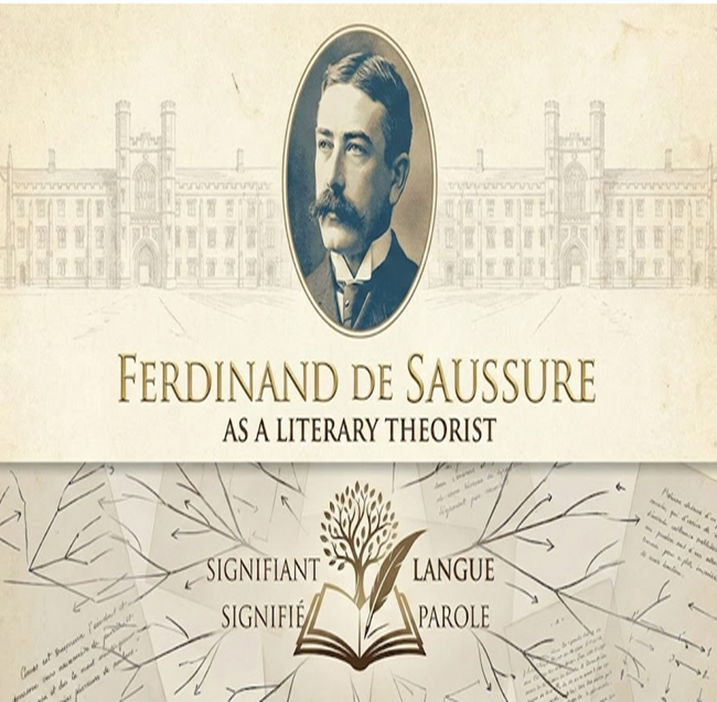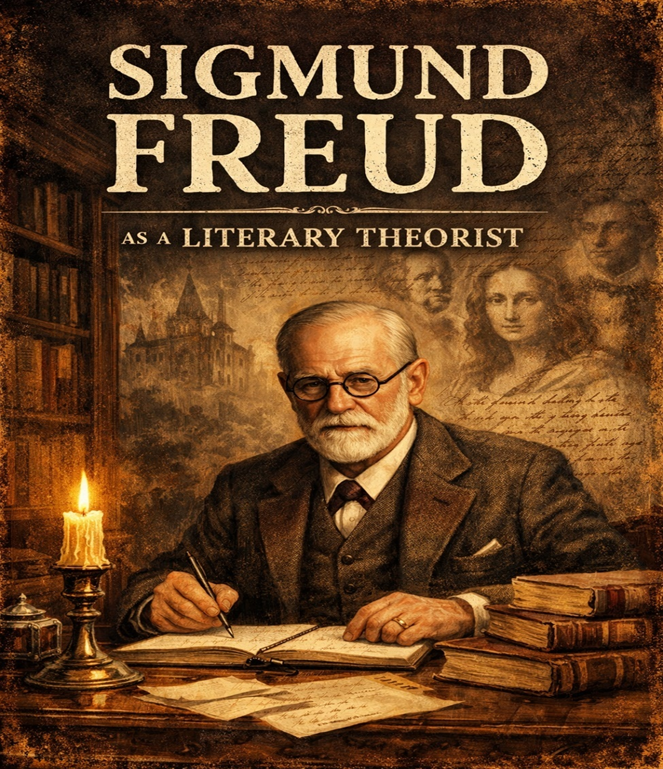
Sigmund Freud as a Literary Theorist

Sigmund Freud as a Literary Theorist is distinguished by a clinician’s interpretive rigor applied to imaginative writing: even sympathetic critics note that his theories “bear the unmistakable stamp of the doctor’s consulting-room,” yet that same clinical method built a “bridge” from case-history to the analysis of cultural and artistic forms (Jung 59).

Sigmund Freud as a Literary Theorist
Introduction: Sigmund Freud as a Literary Theorist

Sigmund Freud as a Literary Theorist is distinguished by a clinician’s interpretive rigor applied to imaginative writing: even sympathetic critics note that his theories “bear the unmistakable stamp of the doctor’s consulting-room,” yet that same clinical method built a “bridge” from case-history to the analysis of cultural and artistic forms (Jung 59). Educated in medicine and research “at the University of Vienna in 1873,” Freud developed his approach through late-nineteenth-century neurology and the emerging study of hysteria; Jung recalls that Freud “owed his initial impetus to Charcot, his great teacher at the Salpêtrière,” and that work with Breuer on traumatic memories and affects laid foundations for psychoanalysis (Byrd 46; Jung 60). His major writings then formalized a new hermeneutics of depth—Die Traumdeutung (The Interpretation of Dreams) appears as a landmark of 1900 (Freud, On Creativity 301)—and, crucially for literary criticism, he argued that meaning is structured by unconscious conflict: neurosis (and, by extension, symbolic representation) turns on the “suppression of a part of instinctual life and the repression of the ideas” representing it, with “symptoms” emerging as compromises between opposing psychic currents (Freud, Writings 49). Freud’s larger intellectual posture was disillusioning and diagnostic—he confessed that “a great part of my life’s work … has been spent [trying to] destroy illusions” (Kaye 34)—which, in literary studies, translates into reading texts as aestheticized wish, displacement, and cultural symptom rather than as transparent moral statement.

Major Works of Sigmund Freud as a Literary Theorist
  • 🔵 The Interpretation of Dreams (1900)
    • Establishes the core interpretive premise for psychoanalytic criticism: dreams (and, by extension, literary images) are structured by repression and “disguised wish-fulfilments” (Jung 63).
    • Canonizes the dream as a privileged route into latent meaning: “the dream is the via regia to the unconscious” (Jung 63).
  • 🟣 Jokes and Their Relation to the Unconscious (1905)
    • Frames wit as an “applied” laboratory for unconscious processes—explicitly extending repression-based interpretation to comic language (Jung 64).
    • Connects joking to truth-telling under disguise: “In joke, as we know, even the truth may be told” (Freud, On Creativity 233).
  • 🟢 “The Relation of the Poet to Day-Dreaming” (1908)
    • Provides Freud’s most direct bridge between psychic life and literary production: “every child at play behaves like an imaginative writer” (Freud, On Creativity 45).
    • Defines the writer’s method as controlled fantasy-work: “the writer does the same as the child at play; he creates a world of phantasy” (Freud, On Creativity 45).
    • Supplies a practical biographical-historicist heuristic for criticism: a present “actual experience” stirs childhood memory and “arouses a wish that finds a fulfilment in the work” (Freud, On Creativity 52).
  • 🔴 Delusions and Dreams in Jensen’s “Gradiva” (1907)
    • Foundational for “psychoanalysis and literature” because it targets fictional dreams: “dreams that have never been dreamt at all—dreams created by imaginative writers” (Freud, Writings 171).
    • Reasserts the thesis of latent desire: the dream “revealed itself … as a wish of the dreamer’s represented as fulfilled” (Freud, Writings 4).
  • 🟠 “The ‘Uncanny’” (1919)
    • Reorients aesthetics toward negative affect and interpretive disturbance: the uncanny “belongs to all that is terrible … dread and creeping horror” (Freud, On Creativity 123).
    • Models how literary effects (doubling, animation of the inanimate, compulsive repetition) can be read as returns of repressed or “primitive” modes of thought—i.e., fear as a meaning-bearing symptom rather than a merely “atmospheric” mood (Kaye 31).
  • 🟡 Totem and Taboo (1912–13)
    • Offers a cultural-mythic framework frequently used in literary theory (ritual, taboo, collective fantasy), grounded in ambivalence: Freud argues taboo’s origin involves “an innate ambivalence inherent in taboo” (Freud, Sexuality and the Psychology of Love 68).
    • Articulates a durable psychoanalytic reduction of religious authority (often applied to literary representations of “the sacred”): “God is nothing other than an exalted father” (Freud qtd. in Butts 170).
  • 🟤 Civilization and Its Discontents (1930)
    • Widely applied in literary/cultural studies for interpreting texts as negotiations between instinct and social regulation; Freud’s civilizational diagnosis is blunt: “what we call our [Christian] civilization is largely responsible for our misery” (Freud qtd. in Byrd 51).
    • Provides a working definition of “civilization” usable as a critical lens on narratives of progress and modernity: it includes “all those respects in which human life has raised itself above its animal status” (Freud qtd. in Miri 136).
  • 🟩 “The Moses of Michelangelo” (written 1913; published 1914) / Freud’s art-criticism corpus
    • Demonstrates Freud’s “applied psychoanalysis” to visual art as a close-reading practice; he describes the essay as a “love-child,” recalling how he “stood every day in the church … studied it … sketched it” to “capture” its meaning (Freud, On Creativity 304).
Major Literary Ideas of Sigmund Freud as a Literary Theorist
Major literary idea (Freud)Explanation for literary analysisKey quotation with MLA in-text citation
🔵 Literature as structured fantasyFreud treats imaginative writing as a socially acceptable continuation of childhood play: the text builds an alternative “world” that can stage intense affects without collapsing into reality.“every child at play behaves like an imaginative writer” (Freud, On Creativity 45).
🟣 Wish as the engine of imaginative productionFreud’s basic causal claim: fantasies (and many narratives) are driven by dissatisfaction and aim at symbolic gratification—useful for reading plot as “wish-work” rather than mere event-sequence.“Unsatisfied wishes are the driving power behind phantasies” (Freud, On Creativity 48).
🟢 Time-structure of fantasyFreud models fantasy as temporally braided: a present stimulus activates an infantile memory and projects a future fulfilment—useful for reading flashback, obsession, and recurring motifs as desire’s timeline.“past, present and future are threaded… on the string of the wish” (Freud, On Creativity 49).
🟠 Biographical trigger + childhood memoryFreud proposes a working heuristic for psycho-biographical criticism: an “actual experience” reactivates childhood memory and crystallizes as a wish fulfilled in the work—useful for framing authorial “material” without reducing the text to gossip.“Some actual experience… stirred up a memory… arouses a wish that finds a fulfilment in the work” (Freud, On Creativity 52).
🔴 Myth as collective wish-fantasyFreud extends the fantasy model from the individual to the collective: myths/legends can be read as culturally “distorted” deposits of shared desires—useful for archetypal and nationalist readings.“myths… are distorted vestiges of the wish-phantasies of whole nations” (Freud, On Creativity 53).
🟡 The artist’s “tolerance” for the unconsciousFreud differentiates the artist’s method from the clinician’s: the writer attends to unconscious developments and gives them form rather than censoring them—useful for theorizing creativity as managed access to unconscious material.“He directs his attention to the unconscious… and lends them artistic expression instead of suppressing them” (Freud, Writings 106).
🟤 Latent vs. manifest meaning (censorship)Freud provides the classic hermeneutic model for depth-interpretation: surface content is “distorted” by censorship; interpretation translates it into latent thoughts—transferable to symbolic, oblique, or “coded” literary language.“translating the manifest content… into the latent dream-thoughts” (Freud, Writings 76).
🟩 Wish + repression as motive forceFreud insists that (unconscious) wish-energy supplies the drive behind symbolic constructions; repression shapes what can appear—useful for reading omissions, gaps, and substitutions as motivated, not random.“the co-operation of a wish (usually an unconscious one) is required” (Freud, Writings 107).
⚫ Repression and symptom-formation (compromise)Freud’s symptom model becomes a general tool for reading “symptomatic” textual moments—contradictions, compulsions, repeated images—as compromises between desire and prohibition.“symptoms [are]… compromises in the conflict” (Freud, Sexuality 7).
🟧 Sublimation and “cultural achievement”Freud links culture/art to redirected libido: frustrated instinct becomes productive energy—useful for interpreting art as transformed desire rather than “pure” transcendence.“the grandest cultural achievements… [are] brought to birth by… sublimation” (Freud, On Creativity 196).
🟦 Humour/jokes as licensed truthFreud treats joking as a mode where censored truths can surface safely—useful for reading satire, irony, and comic relief as disclosure under cover of play.“In joke… even the truth may be told” (Freud, On Creativity 234).
🟥 The uncanny as aesthetic dreadFreud theorizes a distinct aesthetic affect (not simply “fear”): the uncanny organizes texts around dread/horror and interpretive disturbance—useful for Gothic, psychological realism, and modernist estrangement.“related to what is frightening—to what arouses dread and horror” (Freud, Writings 194).
🟪 Doubling + repetition as uncanny mechanismsFreud shows how motifs like doubles and involuntary repetition generate uncanny helplessness—useful for reading mirrored characters, recurring scenes, and circular plots as affect-machines.“repetition of the same thing… arouse[s] an uncanny feeling” (Freud, Writings 213).
🟫 Drama as safe “release” of suppressed impulsesFreud frames theatrical pleasure as controlled discharge: the stage lets audiences “blow off steam,” finding enjoyment even in defeat/suffering—useful for tragedy, catharsis, and spectatorship studies.“give way… to… suppressed impulses… and ‘blow off steam’” (Freud, Writings 112).
Theoretical Terms/Concepts of Sigmund Freud as a Literary Theorist
Term / ConceptCore meaning (Freud)Typical use in literary analysis
UnconsciousA large domain of mental activity not directly accessible to awareness; consciousness gives only partial, unreliable “news.”Read plots/symbols as expressions of what characters/narrators/authors cannot avow; track gaps, slips, contradictions, and symptomatic motifs.
RepressionDefensive exclusion of unacceptable wishes/impulses from consciousness, often returning as symptoms.Interpret recurring images/events as “return of the repressed”; explain narrative detours, silences, and compulsive repetitions.
Return of the repressedRepressed material reappears indirectly (symptoms, dreams, compulsions, uncanny effects).Identify disguised re-emergence of forbidden desire (e.g., haunting, obsession, intrusive memories).
LibidoPsychic energy of the sexual instincts; a driving force shaping conflict and symptom-formation.Trace desire as the engine of character motivation and narrative pressure; map erotic investments onto themes/objects.
Libido-theory (of neuroses)Neuroses arise from conflict involving sexual instincts and ego defenses; fixation and gratification paths matter.Explain “neurotic” characterization and symbolic symptom-structures in plots (e.g., compulsions, inhibitions, phobias).
EgoOrganizing “I” that mediates between instinct, norms, and reality; often not master “in its own house.”Analyze narration/character as a management system (control, rationalization, selective memory), including breakdowns and lapses.
IdReservoir of instinctual drives operating by pleasure/wish logic.Read raw desire/aggression as the pressure behind choices, fantasies, and symbolic substitutions.
SuperegoInternalized authority (law, prohibition, guilt, ideal standards).Interpret guilt, punitive plots, moral masochism, or harsh inner “judges” shaping confession, punishment, or sacrifice arcs.
Psychic conflictStruggle among incompatible demands (instinct vs. defense; desire vs. norm).Treat narrative tension as dramatized psychic struggle; read crises as eruptions of conflict-management failure.
NarcissismLibido investment in the self; development from narcissism to object-love, with narcissism persisting.Explain vanity, grandiosity, wounded pride, rivalry, and “narcissistic injury” driving revenge, withdrawal, or self-destruction.
CathexisAttachment/investment of libidinal energy in an idea/object/person.Map “charged” objects (letters, portraits, relics) as libidinally loaded; track shifts of investment across the plot.
Object-choice / Object-loveDirection of libido toward external objects rather than the self.Explain attachment patterns (obsessive love, idealization, triangulation) and why certain figures become narrative “centers of gravity.”
FixationArrest of libido at an earlier developmental point.Read regressions and character “stuckness” as developmental residues; connect adult conflict to early attachments or traumas.
SublimationTransformation of instinctual energy into socially valued activity (art, thought, work).Interpret artistic creation within the text as redirected desire; read style as a “civilized” outlet of unruly drives.
Dream-workMechanisms that transform latent wishes into manifest dream content.Treat texts (especially symbolic ones) like dreams: decode distortions, substitutions, and narrative disguises.
CondensationMultiple ideas/wishes compressed into one image or event.Identify “overdetermined” symbols (one figure/object doing many psychic jobs at once).
DisplacementEmotional intensity shifted from a threatening target to a safer one.Explain misdirected anger/love; interpret “minor” objects/scenes as carrying major affect.
SymbolizationIndirect representation of wishes/conflicts via symbols.Build symbol-systems (doors, water, shadows, doubles) as encoded desire, fear, or guilt.
Primary vs. secondary processPrimary: associative, wish-driven; secondary: logical, reality-oriented.Contrast fantasy logic with rational narration; show where the text slides into primary-process imagery or breaks realism.
Oedipus complexChild’s desire and rivalry structured around parental triangle and prohibition.Analyze triangulated desire, rivalry with authority figures, “father-law,” forbidden love, and the formation of guilt/identity.
Castration anxietyFear of loss/punishment linked to prohibition and sexual difference.Read threats, humiliation, “loss” motifs, and crises of masculinity/power as symbolic castration narratives.
Penis envyConceptualization of female development via perceived lack (historically contested).Used (often critically) to discuss gendered desire, compensation, rivalry, and how texts encode patriarchal psychic economies.
FetishismSubstitution that manages anxiety by fixing desire onto an object/part.Read obsessive objects (shoes, hair, fabrics, relics) as anxiety-management devices sustaining desire while disavowing conflict.
The Uncanny (Das Unheimliche)The frightening as the strangely familiar—often tied to repressed material returning.Interpret doubles, automata, repetition, haunted houses, déjà vu, and eerie homeliness as repressed content resurfacing.
Repetition compulsionDrive to repeat distressing patterns beyond pleasure.Explain cyclical plots, recurring failures, return-to-origin structures, and characters “reliving” trauma.
Pleasure principleTendency to seek gratification and reduce tension.Read plot momentum as gratification-seeking (romance, revenge, confession), with detours as defensive compromises.
Reality principleModification of pleasure-seeking under external constraints.Analyze compromise formations: delayed gratification, renunciation, strategic rationality, and socially negotiated desire.
Defense mechanisms (e.g., projection, denial, rationalization)Ego strategies to manage anxiety/conflict.Diagnose unreliable narration, scapegoating, moralizing, misrecognition, and “explaining away” as textual defenses.
TransferenceRedirection of feelings from earlier figures onto a present figure.Read intense attachments/hostilities as displaced past relations (mentor, ruler, lover as parental substitute).
OverdeterminationA symptom/text element has multiple causes and meanings.Justifies layered readings: one symbol/event can legitimately carry several psychic “sources” simultaneously.
Application of Theoretical Ideas of Sigmund Freud as a Literary Theorist To Literary Works
  • 🔵 William Shakespeare, Hamlet: repression, the uncanny, and desire as interpretation
    • The Ghost as “uncanny” return: the play’s dread intensifies because what should remain buried reappears as a demand for meaning—“‘So the dead do live on and appear on the scene / of their former activities!’” (Freud, Writings on Art and Literature 248). Hamlet’s world is immediately reorganized by that return: “The time is out of joint” (Shakespeare 1.5.188).
    • Uncanny affect as a critical signal: Freud defines the uncanny as “related to what is frightening—to what arouses dread and horror” (Freud, Writings 193–94). In Hamlet, that affect marks points where “knowledge” cannot stay merely rational (the Ghost’s command, Hamlet’s paralysis, the contagion of suspicion).
    • Soliloquy as dramatized fantasy-work: Freud argues that imaginative making continues childhood play—“every child at play behaves like an imaginative writer” (Freud, On Creativity and the Unconscious 45). Hamlet’s interior speeches function like staged, public “day-dreaming” in which he tests wishes and prohibitions: “To be, or not to be” (Shakespeare 3.1.56).
    • Symptoms as compromise formations: Freud’s clinical model maps cleanly onto Hamlet’s oscillations, where action is repeatedly deferred and rerouted into language, performance, and self-accusation.
  • 🔴 William Shakespeare, Macbeth: guilt, symptom-formation, and compulsive repetition
    • Lady Macbeth’s sleepwalking as symptom: Freud describes neurotic symptoms as “equivalent to compromises in the conflict” between libido and repression (Freud, Sexuality and the Psychology of Love 7). Her body “speaks” what consciousness cannot master: “Out, damned spot! out, I say!” (Shakespeare 5.1.30).
    • Repetition as the structure of dread: Freud notes that the “factor of the repetition of the same thing… arouse[s] an uncanny feeling” (Freud, Writings 213). In Macbeth, recurrence (blood imagery, knocking, sleeplessness, “again and again” returns to fear) is not decorative—it is the compulsion of a guilty psyche.
    • The uncanny as the repressed returning as anxiety: Freud maintains that the uncanny often involves “something repressed which recurs” (Freud, Writings 240). Macbeth’s “Stars, hide your fires” (Shakespeare 1.4.50) reads as an explicit wish for repression—followed by its inevitable return in hallucination and panic.
    • Ambition as wish-fantasy under moral censorship: Freud’s model of fantasy as wish-fulfilment clarifies how Macbeth’s “vaulting ambition” repeatedly fabricates necessity, prophecy, and destiny to disguise desire as fate.
  • 🟢 Mary Shelley, Frankenstein: the Double, projection, and the uncanny familiar
    • The Creature as the “double” turned terrifying: Freud writes, “The ‘double’… has become a vision of terror” (Freud, On Creativity 144). Shelley externalizes Victor’s disavowed drives and ambitions into a living mirror that will not stay hidden.
    • Uncanny logic: the familiar made alien by repression: Freud argues the uncanny is “nothing new or alien, but something… familiar… alienated… through… repression” (Freud, Writings 240). Victor’s horror is therefore not merely at “otherness,” but at the return of his own authorship and desire in embodied form.
    • Desire for origin and rivalry with the creator: the Creature frames the relationship in biblical/tragic terms—“I ought to be thy Adam; but I am rather the fallen angel” (Shelley ch. 10). Read Freudianly, the text stages a violent family romance: creator/creation becomes father/son rivalry and demand for recognition.
    • Involuntary recurrence as fate: Freud’s emphasis on involuntary repetition generating an “uncanny atmosphere” (Freud, On Creativity 144). aligns with the novel’s relentless returns—each attempt to escape the act of creation re-circles Victor back to it.
  • 🟣 Emily Brontë, Wuthering Heights: wish-fantasy, fixation, and identity-fusion
    • Fusion of self and object-choice: Catherine’s declaration—“I am Heathcliff” (Brontë ch. 9)—is usefully read as extreme libidinal investment where the “object” is not external but constitutive of the self (a psychoanalytic grammar of attachment rather than a merely romantic trope).
    • Fantasy as driven by dissatisfaction: Freud states, “happy people never make phantasies, only unsatisfied ones… Unsatisfied wishes are the driving power behind phantasies” (Freud, On Creativity 48). Brontë’s plot repeatedly shows desire intensifying precisely where social reality blocks it (class, inheritance, respectability).
    • Past–present–future threaded by desire: Freud’s temporal model—“past, present and future are threaded… on the string of the wish” (Freud, On Creativity 49). clarifies how the novel’s structure works: memory and revenge are not background; they are the wish’s timeline narratively enforced.
    • Repetition as compulsion rather than choice: the text’s cyclical returns (names, pairings, wounds re-enacted across generations) can be read through Freud’s account of repetition producing helplessness and uncanny pressure, especially where characters seem “driven” more than deciding.
Representative Quotations of Sigmund Freud as a Literary Theorist
#Representative Freudian quotation (for literary theory)Explanation (how literary critics use it)
1“every child at play behaves like an imaginative writer” (Freud, On Creativity and the Unconscious 45).Grounds Freud’s core analogy: literature is continuous with fantasy/play, so texts can be read as structured psychic productions (not mere “decorative” inventions).
2“Now the writer does the same as the child at play; he creates a world of phantasy” (Freud, On Creativity and the Unconscious 45).Justifies treating plots, symbols, and narration as organized wish-scenarios—aesthetic constructions that separate themselves from reality while carrying heavy affect.
3“Unsatisfied wishes are the driving power behind phantasies” (Freud, On Creativity and the Unconscious 48).Provides the engine for psychoanalytic reading: narrative pressure often comes from lack, frustration, and compensation, not simply from external events.
4“So past, present and future are threaded… on the string of the wish” (Freud, On Creativity and the Unconscious 49).Helps critics explain why texts braid time: memory, flashback, prophecy, obsession, and recurrence can be read as desire organizing temporality.
5“nocturnal dreams are fulfil-ments of desires… in exactly the same way as day-dreams are” (Freud, On Creativity and the Unconscious 50).Authorizes “dream-like” reading of literature: poems/fiction can be interpreted via wish-fulfilment plus disguise (distortion, symbol, indirection).
6“Some actual experience… stirred up a memory… [which] arouses a wish that finds a fulfilment in the work” (Freud, On Creativity and the Unconscious 52).A classic template for psycho-biographical criticism: texts may crystallize where present triggers re-activate childhood memory and convert it into art.
7“myths… are distorted vestiges of the wish-phantasies of whole nations” (Freud, On Creativity and the Unconscious 53).Extends individual psychoanalysis to culture: myths/legends (and “mythic” literature) can be read as collective fantasy, ideologically and emotionally charged.
8“the frightening element can be shown to be something repressed which recurs” (Freud, Writings on Art and Literature 217).Defines the psychoanalytic core of the uncanny: Gothic/modernist dread often signals repressed content returning in displaced, aesthetic form.
9“nothing new or alien, but something… familiar… alienated… only through… repression” (Freud, Writings on Art and Literature 217).A practical rule for textual interpretation: what feels “strange” in a work may be over-familiar psychic material made strange by defense and censorship.
10“the repetition of the same thing… arouse[s] an uncanny feeling” (Freud, Writings on Art and Literature 212).Helps critics read pattern as meaning: recurring scenes, names, motifs, and cyclic plots can function as compulsion, anxiety, or unresolved conflict, not mere style.
Criticism of the Ideas of Sigmund Freud as a Literary Theorist
  • 🔴 Questionable “scientificity” and verification problems
    • Critics argue Freudian readings can become self-sealing: any textual evidence can be re-described as disguise, displacement, or resistance, making claims difficult to test against alternatives.
    • Jung contends psychoanalytic theory “has no intention of passing as a strict scientific truth,” and its public authority often exceeds what “a simple statement” of scientific truth would require.
  • 🟠 Overgeneralization from clinical cases to art and culture
    • A recurrent objection is that Freud’s interpretive model was developed in therapy and then exported to literature, myth, and art—sometimes beyond what the evidence base can sustain.
    • Jung notes that Freud’s dream theory “stirred up problems” that would require “a more compendious equipment than the limited experiences of the consulting-room.”
  • 🟡 One-sidedness and theoretical rigidity
    • Many scholars accept Freud’s insights while criticizing the tendency to treat one explanatory axis (especially sexuality/repression) as the master key for all symbolic meaning.
    • Jung argues the Freudian theory is “at best a partial truth” and therefore can develop “the rigidity of a dogma.”
  • 🟢 Victorian/Eurocentric cultural bias
    • Freud is often criticized for universalizing what may be historically local—reading “civilized” (late-19th-century European) norms back into the psyche as if timeless.
    • Jung explicitly warns that a theory “based on a Victorian prejudice” is of “secondary importance to science” once it claims cross-cultural scope; when the sexual theory “branches out” into other fields, its “one-sidedness and inadequacy leap to the eye.”
  • 🔵 Biographical reductionism and “gossip” explanations
    • In literary criticism, Freudian method is sometimes faulted for collapsing artworks into the author’s private life, turning interpretation into a hunt for scandal, trauma, or sexual motive.
    • Jung illustrates this risk via Freud’s Leonardo analysis: a genuinely “scientific clue” (a “mythological motif”) is displaced by the more sensational claim about a “slip-up” by Leonardo’s father—effective rhetorically, weaker as interpretation.
  • 🟣 Gender essentialism and androcentric assumptions
    • Feminist and gender-oriented critiques target Freud’s frameworks of femininity (e.g., penis envy, “inferiority,” masculinity as norm), arguing they encode patriarchal assumptions as developmental “laws.”
    • Freud’s own account describes women as sharing “the contempt felt by men for a sex which is the lesser in so important a respect,” a formulation frequently challenged in later theory.
    • Freud also records direct disagreement from within psychoanalytic debate (e.g., Karen Horney’s critique that penis envy is overestimated), indicating the contested status of these claims even in early reception.
  • 🟤 Determinism and reductive explanatory habits
    • Critics argue Freudian interpretation can become determinist—treating diverse motives (ethical, political, aesthetic) as ultimately reducible to a narrow causal set.
    • A representative critical-theory objection is captured in Adorno’s remark: “in psycho-analysis, nothing is true except exaggerations,” often used to flag psychoanalysis’ tendency toward overreach.
  • Neglect of form, language, and historical poetics
    • Literary scholars often object that “symptom reading” can underplay form (genre, prosody, narrative technique, intertextuality) by treating the text chiefly as evidence of psychic content.
    • The criticism here is methodological: psychoanalysis may explain why a motif is charged, but not how literary craft produces meaning (tone, syntax, plot architecture, rhetoric).
  • 🟩 Competing psychoanalytic schools expose non-uniqueness
    • The existence of powerful alternative psychoanalytic explanations (e.g., Adler, Jung, later object-relations and Lacanian frameworks) is used to argue that Freudian readings are not uniquely compelled by the text.
    • Jung underscores this point by contrasting Freud’s pleasure/sexual emphasis with Adler’s “power drive,” noting that each “one-sidedness” can appear persuasive—thereby highlighting the limits of any single master theory.
  • 🟧 Blind spots about power, race, and social structures
    • Contemporary criticism often argues that classical Freudian interpretation over-centers the private family drama and under-theorizes structural forces (colonialism, racism, class, institutions) that also shape subjectivity and literature.
    • Even within psychoanalytic discourse, there is acknowledged division over whether psychoanalysis should interrogate social ills (race, gender inequality, class antagonisms) or remain confined to individual therapy.
Suggested Readings on Sigmund Freud as a Literary Theorist

Books

  • Freud, Sigmund. On Creativity and the Unconscious: Papers on the Psychology of Art, Literature, Love, Religion. Selected, with introduction and annotations by Benjamin Nelson, Harper Torchbooks, 1958.
  • Freud, Sigmund. Writings on Art and Literature. Foreword by Neil Hertz, Stanford University Press, 1997.
  • Weber, Samuel. The Legend of Freud. University of Minnesota Press, 1982.
  • Brooks, Peter. Reading for the Plot: Design and Intention in Narrative. Harvard University Press, 1992.

Academic Articles

  • Brooks, Peter. “Freud’s Masterplot.” Yale French Studies, no. 55/56, 1977, pp. 280–300. JSTOR, https://www.jstor.org/stable/2930440. Accessed 16 Dec. 2025.
  • Felman, Shoshana. “Turning the Screw of Interpretation.” Yale French Studies, no. 55/56, 1977, pp. 94–207. JSTOR, https://www.jstor.org/stable/2930436. Accessed 16 Dec. 2025.
  • Cixous, Hélène. “Fiction and Its Phantoms: A Reading of Freud’s Das Unheimliche (The ‘Uncanny’).” New Literary History, vol. 7, no. 3, 1976, pp. 525–548. JSTOR, https://www.jstor.org/stable/468561. Accessed 16 Dec. 2025.
  • Brooks, Peter. “Fictions of the Wolfman: Freud and Narrative Understanding.” Diacritics, vol. 9, no. 1, 1979, pp. 72–81. JSTOR, https://www.jstor.org/stable/464701. Accessed 16 Dec. 2025.

Websites

“Walking Both Sides of an Invisible Border” by Alootook Ipellie: A Critical Analysis

“Walking Both Sides of an Invisible Border” by Alootook Ipellie first appeared in 1991 in Gatherings: The En’owkin Journal of First North American Peoples.

"Walking Both Sides of an Invisible Border" by Alootook Ipellie: A Critical Analysis
Introduction: “Walking Both Sides of an Invisible Border” by Alootook Ipellie

“Walking Both Sides of an Invisible Border” by Alootook Ipellie first appeared in 1991 in Gatherings: The En’owkin Journal of First North American Peoples (Theytus Books) and was later reprinted in the journal’s retrospective volume. The poem’s main idea is the lived, bodily split of an Inuk subject caught between cultures—an “invisible border / Separating my left and right foot”—experienced as abandonment (“I feel like an illegitimate child / Forsaken”), unjust punishment (“Sentenced to a torture chamber / Without having committed a crime”), and colonial coercion (“forced / To learn an alien culture / With an alien language”). Its popularity comes from the clarity and memorability of its central metaphor and its sharp survival-ironies: the speaker “resort[s] to fancy dancing” and calls himself “the world’s premier choreographer,” repeatedly inventing “a brand new dance step” to keep living in “two different worlds” where “two opposing cultures…are unable to integrate,” ending with an open question—“When will the invisible border / Cease to be”—that makes the struggle feel ongoing and widely relatable.

Text: “Walking Both Sides of an Invisible Border” by Alootook Ipellie

It is never easy

Walking with an invisible border

Separating my left and right foot

I feel like an illegitimate child

Forsaken by my parents

At least I can claim innocence

Since I did not ask to come

Into this world

Walking on both sides of this

Invisible border

Each and every day

And for the rest of my life

Is like having been

Sentenced to a torture chamber

Without having committed a crime

Understanding the history of humanity

I am not the least surprised

This is happening to me

A non-entity

During this population explosion

In a minuscule world

I did not ask to be born an Inuk

Nor did I ask to be forced

To learn an alien culture

With an alien language

But I lucked out on fate

Which I am unable to do

I have resorted to fancy dancing

In order to survive each day

No wonder I have earned

The dubious reputation of being

The world’s premier choreographer

Of distinctive dance steps

That allow me to avoid

Potential personal paranoia

On both sides of this invisible border

Sometimes this border becomes so wide

That I am unable to take another step

My feet being too far apart

When my crotch begins to tear apart

I am forced to invent

A brand new dance step

The premier choreographer

Saving the day once more

Destiny acted itself out

Deciding for me where I would come from

And what I would become

So I am left to fend for myself

Walking in two different worlds

Trying my best to make sense

Of two opposing cultures

Which are unable to integrate

Lest they swallow one another whole

Each and every day

Is a fighting day

A war of raw nerves

And to show for my efforts

I have a fair share of wins and losses

When will all this end

This senseless battle

Between my left and right foot

When will the invisible border

Cease to be

Annotations: “Walking Both Sides of an Invisible Border” by Alootook Ipellie
Stanza / Key LinesConcise Annotation (Meaning & Function)Literary Devices
“It is never easy… Into this world”Introduces lifelong psychological division; the speaker frames identity conflict as imposed and involuntary, evoking emotional abandonment and innocence.🔹 Extended Metaphor (invisible border) 🔹 Simile (“like an illegitimate child”) 🔹 Symbolism (border = identity split) 🔹 Pathos 🔹 Confessional Tone
“Walking on both sides… Without having committed a crime”Daily existence is equated with unjust punishment, emphasizing systemic oppression and inherited suffering.🔹 Simile (torture chamber) 🔹 Hyperbole 🔹 Victimization Imagery 🔹 Irony (punishment without guilt)
“Understanding the history of humanity… In a minuscule world”Personal marginalization is contextualized within global human history, suggesting dehumanization amid modern overpopulation.🔹 Allusion (human history) 🔹 Understatement (“not the least surprised”) 🔹 Metaphor (“non-entity”) 🔹 Diction (bureaucratic/impersonal)
“I did not ask to be born an Inuk… Which I am unable to do”Asserts cultural coercion and linguistic alienation while underscoring lack of agency in identity formation.🔹 Repetition (“I did not ask”) 🔹 Cultural Conflict 🔹 Juxtaposition (native vs alien) 🔹 Irony (fate as false fortune)
“I have resorted to fancy dancing… On both sides of this invisible border”Survival requires performative adaptability; identity becomes a strategic performance to avoid psychological harm.🔹 Extended Metaphor (dance = coping) 🔹 Satire 🔹 Irony 🔹 Motif (performance) 🔹 Symbolism
“Sometimes this border becomes so wide… Saving the day once more”Identity strain reaches physical extremity; creativity becomes an emergency response to existential rupture.🔹 Grotesque Imagery 🔹 Personification (border widening) 🔹 Dark Humor 🔹 Hyperbole 🔹 Metaphor
“Destiny acted itself out… And what I would become”Fate is portrayed as an external force, negating personal choice and reinforcing determinism.🔹 Personification (destiny acting) 🔹 Determinism 🔹 Fatalistic Tone
“So I am left to fend for myself… Lest they swallow one another whole”Cultural duality is irreconcilable; integration threatens annihilation rather than harmony.🔹 Metaphor (cultures swallowing) 🔹 Binary Opposition 🔹 Imagery 🔹 Postcolonial Theme
“Each and every day… Between my left and right foot”Daily life is militarized; internal identity conflict is framed as perpetual warfare.🔹 Extended Metaphor (war) 🔹 Anaphora 🔹 Internal Conflict 🔹 Symbolism (left/right foot)
“When will the invisible border / Cease to be”Ends with unresolved yearning, emphasizing the permanence of division and absence of closure.🔹 Rhetorical Question 🔹 Ellipsis (implied silence) 🔹 Symbolism 🔹 Open Ending
Literary And Poetic Devices: “Walking Both Sides of an Invisible Border” by Alootook Ipellie
DeviceExample from the PoemSpecific Explanation
Alienation 🟣“I did not ask to be born an Inuk”The speaker articulates social and cultural estrangement caused by being Indigenous in a dominant colonial culture, emphasizing enforced otherness rather than chosen difference.
Allusion 🔵“Understanding the history of humanity”A broad historical reference that situates the speaker’s personal suffering within a long global history of marginalization and domination.
Anaphora 🟢“Each and every day”Repetition at the start of lines reinforces the relentlessness and inescapability of identity conflict in daily life.
Binary Opposition 🟠“left and right foot”The body is split into opposing halves to dramatize irreconcilable cultural identities existing within one individual.
Determinism 🔴“Destiny acted itself out”Suggests the speaker’s origin and identity were pre-decided by historical and colonial forces, leaving no room for personal agency.
Extended Metaphor 🟤“Invisible border” (throughout the poem)The border consistently represents cultural, linguistic, and psychological division, shaping every aspect of the speaker’s existence.
Grotesque Imagery ⚫“When my crotch begins to tear apart”A disturbing bodily image externalizes psychological strain, showing how identity conflict causes figurative self-destruction.
Hyperbole 🟡“Sentenced to a torture chamber”Exaggerates suffering to emphasize the cruelty of living between cultures without belonging fully to either.
Imagery 🟩“My feet being too far apart”Physical imagery makes abstract identity tension concrete, allowing readers to visualize cultural dislocation.
Irony 🟦“I lucked out on fate”Verbal irony exposes the false promise of fate; what is described as “luck” is actually cultural loss and suffering.
Metaphor 🟧“A war of raw nerves”Identity struggle is likened to warfare, highlighting emotional exhaustion and constant psychological combat.
Motif 🟨“dance / dancing”Recurrent dance imagery symbolizes adaptive performance—altering behavior to survive conflicting cultural expectations.
Paradox 🟥“Walking in two different worlds”The speaker exists simultaneously in opposing cultural realities, a logically impossible yet lived condition.
Pathos 🟪“Forsaken by my parents”Emotional appeal underscores abandonment—not literal parents, but cultural and historical guardianship.
Personification 🟫“Destiny acted itself out”Fate is given human agency, reinforcing the sense that impersonal forces actively shape Indigenous lives.
Postcolonial Theme 🟠“alien culture / alien language”Highlights cultural imperialism where Indigenous identity is subordinated to colonial norms.
Repetition 🔁“I did not ask”Reiterates lack of consent in birth, culture, and language, stressing imposed identity formation.
Rhetorical Question“When will the invisible border / Cease to be”Expresses despair and unresolved identity conflict rather than expecting an answer.
Simile 💠“like an illegitimate child”Compares the speaker’s identity to social rejection, intensifying themes of exclusion and shame.
Symbolism ⭐“Invisible border”Symbolizes unseen yet powerful barriers—cultural, racial, linguistic—that structure Indigenous existence.
Themes: “Walking Both Sides of an Invisible Border” by Alootook Ipellie
  • 🌍 Cultural Bifurcation and Identity Split
    “Walking Both Sides of an Invisible Border” by Alootook Ipellie dramatizes cultural bifurcation by turning identity conflict into an embodied condition, where the speaker’s motion is governed by an “invisible border” separating the left and right foot, so that walking itself becomes a daily negotiation between incompatible cultural demands. Because he “did not ask to be born an Inuk,” and because he is “forced / To learn an alien culture / With an alien language,” the poem frames hybridity not as enrichment but as coerced doubleness, produced by history rather than desire. The border functions as a persistent inner frontier, one that structures perception, language, and belonging, while also generating a sense of illegitimacy and abandonment, as the speaker feels “like an illegitimate child / Forsaken by my parents.” Through this sustained metaphor, Ipellie shows how colonial modernity fractures identity into opposing registers that cannot be harmonized without loss, and yet must be inhabited, “each and every day,” as a lifelong condition.
  • ⚖️ Colonial Injustice and Historical Determinism
    “Walking Both Sides of an Invisible Border” by Alootook Ipellie foregrounds colonial injustice by translating structural domination into the idiom of punishment, sentencing, and dispossession, so that Indigenous existence appears as a penalty imposed without guilt. When the speaker says it is “like having been / Sentenced to a torture chamber / Without having committed a crime,” he exposes how colonial power operates through systemic coercion rather than ethical accountability, converting life into ordeal while refusing to name itself as violence. The poem also expands personal suffering into historical critique, since the speaker’s awareness of “the history of humanity” makes him “not the least surprised” that he has been reduced to “a non-entity” in a “minuscule world,” thereby linking Inuit marginalization to global patterns of conquest and demographic domination. Destiny “decid[es]” what he will become, and this determinism functions as an indictment of the political order that normalizes Indigenous disempowerment as fate.
  • 💃 Survival, Adaptation, and Creative Resistance
    “Walking Both Sides of an Invisible Border” by Alootook Ipellie presents survival as a form of creative resistance, in which the speaker’s adaptability becomes both coping mechanism and critique of the conditions that demand constant reinvention. By “resort[ing] to fancy dancing” to live through each day, he converts cultural improvisation into an art of endurance, while the irony of calling himself “the world’s premier choreographer” reveals how resilience is won at a cost, because it is required to manage “distinctive dance steps” that ward off “personal paranoia.” When the border widens so drastically that he cannot “take another step,” and when the body threatens to “tear apart,” invention returns as necessity: he must create “a brand new dance step,” a gesture that suggests agency within constraint, and self-making within oppression. The theme thus emphasizes that resistance is not always overt confrontation; it can also be the disciplined, imaginative labor of staying whole while living in fracture.
  • ⚔️ Psychological Conflict and Perpetual Struggle
    “Walking Both Sides of an Invisible Border” by Alootook Ipellie culminates in a sustained depiction of psychological conflict, portraying the self as a site of continuous warfare produced by irreconcilable cultural pressures. The speaker insists that “each and every day / Is a fighting day,” a phrase intensified by “a war of raw nerves,” because the psyche must repeatedly absorb the shocks of living in “two different worlds” whose “opposing cultures” cannot integrate “lest they swallow one another whole.” The physical image of feet pulled apart becomes a psychological diagram of divided loyalty and chronic strain, generating exhaustion, anxiety, and instability, even as the speaker registers “wins and losses” that suggest a struggle measured in small survivals rather than triumphs. Crucially, the poem refuses neat closure, ending in a question—“When will the invisible border / Cease to be”—so that readers remain inside the ongoingness of the conflict, confronted with the persistence of colonial aftermath rather than the comfort of resolution.
Literary Theories and “Walking Both Sides of an Invisible Border” by Alootook Ipellie
Literary TheoryHow it applies to “Walking Both Sides of an Invisible Border” by Alootook Ipellie
🧭 Postcolonial TheoryThe poem foregrounds colonization as a lived structure that fractures Indigenous subjectivity and produces coerced hybridity; the speaker rejects voluntarism—“I did not ask to be born an Inuk / Nor did I ask to be forced / To learn an alien culture / With an alien language”—and depicts daily life as an imposed condition of division—“Walking on both sides of this / Invisible border / Each and every day / And for the rest of my life.” The “border” becomes a metaphor for colonial partitioning of self and culture, while the image of being “Sentenced to a torture chamber / Without having committed a crime” frames colonial rule as systemic injustice rather than individual failing.
⚙️ New HistoricismThe poem can be read as a cultural text embedded in histories of assimilation, schooling, and linguistic displacement, where personal voice is inseparable from institutional power; Ipellie situates the speaker’s pain within “the history of humanity,” and connects marginalization to modern global conditions—“a non-entity / During this population explosion / In a minuscule world.” “Destiny acted itself out / Deciding for me where I would come from / And what I would become” reads like a critique of historical forces and governance systems that assign identities and life-chances, showing how the subject is produced by sociohistorical scripts rather than purely private psychology.
🧠 Psychoanalytic CriticismThe poem dramatizes psychic splitting and chronic anxiety through the embodied metaphor of feet divided by an “invisible border,” suggesting a fragmented self forced to manage incompatible internal demands; the speaker feels abandoned—“I feel like an illegitimate child / Forsaken by my parents”—and describes life as punitive—“Sentenced to a torture chamber”—which frames trauma as internalized and persistent. His “fancy dancing” operates as a coping mechanism to avoid “personal paranoia,” and the moment when the border widens so far that “my crotch begins to tear apart” externalizes psychic rupture as bodily threat, implying that identity conflict can escalate into breakdown unless continuously managed.
🎭 ExistentialismThe speaker confronts absurdity, thrownness, and meaning-making under constraint: he insists, “I did not ask to come / Into this world,” and later, “Destiny…Deciding for me where I would come from / And what I would become,” emphasizing existence as unchosen and conditions as imposed. Yet he still must act—“So I am left to fend for myself / Walking in two different worlds / Trying my best to make sense”—which aligns with existential responsibility amid coercive structures. The recurring questions—“When will all this end… / When will the invisible border / Cease to be”—intensify the existential tension between the desire for resolution and the reality of ongoing struggle.
Critical Questions about “Walking Both Sides of an Invisible Border” by Alootook Ipellie

❓ Question 1: How does the metaphor of the “invisible border” structure the poem’s exploration of identity?

“Walking Both Sides of an Invisible Border” by Alootook Ipellie constructs identity through the sustained metaphor of an “invisible border,” which functions as the poem’s central organizing principle and conceptual framework. This border is not geographical but psychological, cultural, and linguistic, dividing the speaker internally rather than spatially. By locating the border between the speaker’s “left and right foot,” Ipellie internalizes colonial and cultural conflict, transforming identity into a site of perpetual imbalance. The metaphor structures the poem episodically, as each stanza revisits the border in new forms—punishment, performance, warfare—thereby reinforcing its permanence. Moreover, the invisibility of the border underscores its insidious power: although unseen, it dictates movement, behavior, and self-perception. The metaphor thus allows Ipellie to dramatize Indigenous hybridity as an embodied experience, revealing how colonial histories produce fractured selves who must constantly negotiate incompatible cultural demands without the possibility of resolution or stable belonging.


🟣 Question 2: In what ways does the poem critique colonial assimilation and cultural coercion?

“Walking Both Sides of an Invisible Border” by Alootook Ipellie offers a pointed critique of colonial assimilation by foregrounding the absence of consent in the speaker’s cultural formation. The repeated assertion “I did not ask” emphasizes that neither birth, language, nor cultural displacement was chosen, thereby exposing assimilation as an imposed and violent process rather than a benign exchange. The description of learning an “alien culture” and “alien language” frames colonial education as estrangement from one’s original identity, producing a subject who must survive by adaptation rather than integration. Importantly, Ipellie avoids overt political rhetoric and instead embeds critique within lived experience, showing how assimilation penetrates the body, psyche, and daily routine. The speaker’s resort to “fancy dancing” functions as a metaphor for performative compliance, suggesting that Indigenous survival often depends on strategic mimicry. Through this lens, the poem exposes colonialism as an ongoing condition that fractures identity while disguising coercion as cultural progress.


🟠 Question 3: How does bodily imagery intensify the poem’s psychological conflict?

“Walking Both Sides of an Invisible Border” by Alootook Ipellie employs bodily imagery to translate abstract identity conflict into visceral, tangible experience, thereby intensifying its psychological impact. The division of the body—particularly the feet pulled “too far apart”—renders cultural duality as physical strain, making inner conflict legible through pain and imbalance. The most striking image, in which the speaker’s body threatens to tear apart, uses grotesque exaggeration to convey the violence of living between incompatible worlds. This strategy collapses the distinction between mental and physical suffering, suggesting that colonial trauma is not merely ideological but somatic. Furthermore, the body becomes a site of resistance and creativity, as the speaker invents new “dance steps” to avoid collapse. Such imagery underscores resilience while refusing romanticization, showing survival as a continuous act of improvisation. By grounding psychological fragmentation in corporeal terms, Ipellie ensures that identity conflict is experienced not as theory but as lived, painful reality.


🔴 Question 4: Why does the poem end without resolution, and what is the significance of this open ending?

“Walking Both Sides of an Invisible Border” by Alootook Ipellie deliberately concludes without resolution to reflect the enduring nature of Indigenous identity conflict under colonial modernity. The final rhetorical question—asking when the invisible border will cease—remains unanswered, signaling that the struggle is ongoing rather than episodic. This open ending resists the conventional narrative of reconciliation or integration, which often simplifies or neutralizes colonial trauma. Instead, Ipellie presents identity as a permanent condition of negotiation, shaped by historical forces that cannot be undone by individual will alone. The absence of closure also places ethical responsibility on the reader, compelling recognition rather than comfort. By refusing resolution, the poem mirrors the lived reality of many Indigenous subjects whose cultural divisions persist across generations. The ending thus transforms uncertainty into a political statement, asserting that true resolution requires structural and historical change, not merely personal adaptation or symbolic inclusion.

Literary Works Similar to “Walking Both Sides of an Invisible Border” by Alootook Ipellie
  1. 🟦 “I Lost My Talk” by Rita Joe — Like Ipellie, Joe frames colonial assimilation as a theft of language and selfhood, depicting Indigenous identity as forced to negotiate an “alien” tongue and culture while enduring the lasting psychic aftershock of that rupture.
  2. 🟥 “Indian Boarding School: The Runaways” by Louise Erdrich — Similar to Ipellie’s “invisible border,” Erdrich renders the body and daily life as sites of institutional violence, where Indigenous children are disciplined into cultural division and survival becomes a tense, continual escape from imposed identity.
  3. 🟩 “An American Sunrise” by Joy Harjo — Harjo, like Ipellie, writes from the aftermath of dispossession, linking personal voice to collective history and showing how Indigenous presence persists in a world structured by colonial borders, removal, and enforced re-mapping of belonging.
  4. 🟨 “In My Country” by Jackie Kay — Echoing Ipellie’s “two different worlds,” Kay explores a split sense of belonging and the pressure of competing cultural claims, portraying identity as lived between registers that do not easily integrate without producing tension and self-interrogation.
Representative Quotations of “Walking Both Sides of an Invisible Border” by Alootook Ipellie
QuotationContext & Theoretical PerspectiveExplanation
“Walking with an invisible border / Separating my left and right foot”Context: Opening image of divided self | Theory: Postcolonial Identity / HybridityThe body is split to symbolize internalized colonial division, presenting identity as a site of permanent imbalance rather than harmony.
🟣 “I feel like an illegitimate child / Forsaken by my parents”Context: Emotional self-definition | Theory: Psychological AlienationThe simile frames Indigenous identity as socially rejected, evoking abandonment by both native and dominant cultures.
🔴 “Sentenced to a torture chamber / Without having committed a crime”Context: Daily lived experience | Theory: Structural ViolenceThe speaker equates existence with unjust punishment, highlighting oppression without guilt or agency.
🔵 “Understanding the history of humanity / I am not the least surprised”Context: Reflective historical awareness | Theory: Historical Materialism / Postcolonial HistoryPersonal suffering is linked to long histories of domination, normalizing injustice as systemic rather than accidental.
🟠 “A non-entity / During this population explosion”Context: Self-erasure | Theory: Dehumanization under ModernityThe speaker presents himself as invisible within mass society, critiquing modern systems that erase Indigenous presence.
🟨 “I did not ask to be born an Inuk”Context: Assertion of non-consent | Theory: Anti-Essentialism / Identity PoliticsRejects romanticized notions of identity by stressing birth and culture as imposed, not chosen.
🟦 “To learn an alien culture / With an alien language”Context: Cultural displacement | Theory: Linguistic ImperialismLanguage becomes a tool of domination, alienating the speaker from Indigenous epistemology.
🟢 “I have resorted to fancy dancing / In order to survive each day”Context: Survival strategy | Theory: Performance Theory (Goffman)Identity is performed strategically, suggesting survival depends on adaptive self-presentation.
“When my crotch begins to tear apart”Context: Extreme bodily strain | Theory: Embodied TraumaGrotesque bodily imagery externalizes psychological rupture caused by irreconcilable identities.
“When will the invisible border / Cease to be”Context: Poem’s unresolved ending | Theory: Postcolonial Pessimism / Open TextThe unanswered question denies closure, emphasizing the permanence of colonial identity conflict.
Suggested Readings: “Walking Both Sides of an Invisible Border” by Alootook Ipellie

Books

Academic articles

  • Desrochers-Turgeon, Émélie. “Between Lines and Beyond Boundaries: Alootook Ipellie’s Entanglements of Space.” Études/Inuit/Studies, vol. 44, no. 1–2, 2020, pp. 53–84. JSTOR, https://www.jstor.org/stable/27078825. Accessed 28 Dec. 2025.
  • McMahon-Coleman, Kimberley L. “Dreaming an Identity Between Two Cultures: The Works of Alootook Ipellie.” Kunapipi: Journal of Postcolonial Writing, vol. 28, no. 1, 2006, pp. 108–125. University of Wollongong Research Online, https://ro.uow.edu.au/ndownloader/files/50395965. Accessed 28 Dec. 2025.

Poem websites

“Arabic Coffee” by Naomi Shihab Nye: A Critical Analysis

“Arabic Coffee” by Naomi Shihab Nye first appeared in Painted Bride Quarterly (Winter 1984) and was later gathered into her poetry collection Yellow Glove (1986), before being re-collected for 19 Varieties of Gazelle: Poems of the Middle East (2002). 

"Arabic Coffee" by Naomi Shihab Nye: A Critical Analysis
Introduction: “Arabic Coffee” by Naomi Shihab Nye

“Arabic Coffee” by Naomi Shihab Nye first appeared in Painted Bride Quarterly (Winter 1984) and was later gathered into her poetry collection Yellow Glove (1986), before being re-collected for 19 Varieties of Gazelle: Poems of the Middle East (2002).  Across its brief domestic scene, the poem elevates coffee-making into a ritual of inheritance and resilience: the father’s practice (“Two times. No sugar”) becomes a method of remembering hardship without letting it dominate the household, as “The hundred disappointments” and the “dreams” are placed together so that “none was / more important than the others, / and all were guests,” and the serving tray becomes “an offering” that invites conversation rather than division. The poem’s popularity endures because its imagery is intimate yet culturally expansive—the coffee as “the center of the flower,” the “spot of grounds” where “luck lives,” and the closing assurance, “There is this, / and there is more”—making it readily teachable and widely resonant in public readings and educational settings.

Text: “Arabic Coffee” by Naomi Shihab Nye

It was never too strong for us:

make it blacker, Papa,

thick in the bottom,

tell again how the years will gather

in small white cups,

how luck lives in a spot of grounds.

 Leaning over the stove, he let it

boil to the top, and down again.

Two times. No sugar in his pot.

And the place where men and women

break off from one another

was not present in that room.

The hundred disappointments,

fire swallowing olive-wood beads

at the warehouse, and the dreams

tucked like pocket handkerchiefs

into each day, took their places

on the table, near the half-empty

dish of corn. And none was

more important than the others,

and all were guests. When

he carried the tray into the room,

high and balanced in his hands,

it was an offering to all of them,

stay, be seated, follow the talk

wherever it goes. The coffee was

the center of the flower.

Like clothes on a line saying

You will live long enough to wear me,

a motion of faith. There is this,

and there is more.

Annotations: “Arabic Coffee” by Naomi Shihab Nye
Line / segmentAnnotation (what the line is doing)Devices
1. “It was never too strong for us:”Opens with a domestic, intimate standard—coffee strength becomes a measure of shared taste and belonging (“for us”). The colon signals instruction and ritual.🧠 Symbolism • 👥 Inclusive voice • ✂️ Caesura/Setup
2. “make it blacker, Papa,”A direct plea to the father; “blacker” intensifies not only color but identity and authenticity (coffee as cultural practice).📣 Apostrophe • 🖼️ Imagery • 🧠 Symbolism
3. “thick in the bottom,”Sensory detail emphasizes texture/sediment—traditional Arabic/Turkish-style coffee—anchoring the poem in material realism.🖼️ Imagery • 📦 Cultural reference
4. “tell again how the years will gather”The father’s storytelling turns time into something collectable; memory is communal and repeatable (“tell again”).🔁 Repetition (tell again) • 🧪 Metaphor (years gather) • 🧱 Enjambment
5. “in small white cups,”Miniaturizes the vast (“years”) into cups: the household contains history. Visual contrast (white cups / black coffee) quietly frames duality.🖼️ Imagery • 🎭 Contrast • 🧠 Symbolism
6. “how luck lives in a spot of grounds.”Superstition/folk belief: grounds become a habitat for luck (fortune-telling). Abstract “luck” is given physical residence.🧍 Personification (luck lives) • 🧪 Metaphor • 🧠 Symbolism • 📦 Cultural reference
7. “Leaning over the stove, he let it”The father’s posture conveys care and attentiveness; the line leans forward syntactically too, pushing into the next action.🖼️ Imagery • 🧱 Enjambment
8. “boil to the top, and down again.”A rhythmic rise/fall: coffee-making mirrors cycles of life, hope, setback, return.🖼️ Imagery • 🎭 Contrast (up/down) • 🧠 Symbolism
9. “Two times. No sugar in his pot.”Fragments create firmness and austerity; “no sugar” suggests discipline, seriousness, or unsoftened truth.✂️ Caesura/Fragment • 🧠 Symbolism • 🎭 Contrast (sweetness withheld)
10. “And the place where men and women”Begins a social boundary—gender separation is named as a “place,” implying a cultural rule.🧱 Enjambment • 📦 Cultural reference • 🧠 Symbolism
11. “break off from one another”The phrase implies injury/severing; separation is made tactile, not abstract.🧪 Metaphor (break off) • 🖼️ Imagery
12. “was not present in that room.”The room becomes an exception—coffee creates a temporary social peace where division cannot enter.🎭 Paradox/Contrast • 🧠 Symbolism • 🕯️ Tone shift (toward harmony)
13. “The hundred disappointments,”Uses a large number to amplify accumulated grief; sets up an inventory of burdens.🔥 Hyperbole/Amplification • ✂️ Caesura/Listing
14. “fire swallowing olive-wood beads”Striking image: fire consumes prayer beads—religion, memory, and labor-loss collide; “swallowing” gives fire appetite.🧍 Personification (fire swallowing) • 🖼️ Imagery • 🧠 Symbolism
15. “at the warehouse, and the dreams”Grounds loss in an economic/workplace setting; pivots from material damage to interior life (“dreams”).🎭 Contrast • 🧱 Enjambment
16. “tucked like pocket handkerchiefs”Dreams are carefully folded away—small, private, practical comforts.🟰 Simile • 🖼️ Imagery • 🧠 Symbolism
17. “into each day, took their places”Daily life becomes a container; disappointments and dreams sit down together as if they are family members.🧍 Personification • 🧪 Metaphor • 🧱 Enjambment
18. “on the table, near the half-empty”Table as a social center; “half-empty” suggests scarcity but also survival (there is still something).🖼️ Imagery • 🧠 Symbolism
19. “dish of corn. And none was”Plain food signals modest means; the sentence begins leveling—no hierarchy among experiences.🖼️ Imagery • 👥 Inclusive voice
20. “more important than the others,”Explicit ethic of equality: grief, loss, and hope are all acknowledged without ranking.👥 Inclusive voice • 🎭 Contrast (refuses hierarchy)
21. “and all were guests. When”Personifies experiences as visitors; hospitality becomes the poem’s moral grammar.🧍 Personification • 🧠 Symbolism • 🧱 Enjambment
22. “he carried the tray into the room,”Ceremonial movement: the tray is an emblem of service and dignity.🖼️ Imagery • 🧠 Symbolism
23. “high and balanced in his hands,”Balance suggests mastery and composure—holding life steady despite history’s weight.🖼️ Imagery • 🧠 Symbolism
24. “it was an offering to all of them,”Coffee becomes sacramental: hospitality as a form of devotion shared with every “guest” (sorrow included).🧠 Symbolism • 🧪 Metaphor (offering)
25. “stay, be seated, follow the talk”Imperative welcome: inclusion is enacted through speech and presence, not merely served.📣 Direct address/Imperative • 👥 Inclusive voice • 🎶 Sound (rhythmic triad)
26. “wherever it goes. The coffee was”Conversation is allowed to roam—freedom within the room; coffee anchors that roaming.🧠 Symbolism • 🧱 Enjambment
27. “the center of the flower.”Central metaphor: coffee as the flower’s heart—beauty, life, and cohesion radiate from it.🧪 Metaphor • 🖼️ Imagery • 🧠 Symbolism
28. “Like clothes on a line saying”Starts a new comparison; everyday objects become communicative—humble domestic life speaks hope.🟰 Simile • 🧍 Personification (clothes saying) • 🖼️ Imagery
29. “You will live long enough to wear me,”The clothes “promise” a future self; survival and continuity appear as a simple, persuasive prophecy.🧍 Personification • 🧠 Symbolism • 🕯️ Tone shift (toward hope)
30. “a motion of faith. There is this,”Names the underlying spiritual logic: the ritual is faith enacted physically (“motion”). “There is this” asserts presence.🧠 Symbolism • 🧪 Metaphor (faith as motion) • ✂️ Caesura
31. “and there is more.”Closes with expansion beyond the visible: abundance of meaning, memory, and future beyond the cup.🔁 Repetition/Parallelism (“there is…”) • 🧠 Symbolism • 🕯️ Concluding uplift
Literary And Poetic Devices: “Arabic Coffee” by Naomi Shihab Nye
Device (A–Z)Example from the poemExplanation (how it works here)
🎶 Alliteration“boil to the top, and down again”Repeated consonant emphasis sharpens rhythm and highlights the ritual’s motion.
🌀 Ambiguity“luck lives in a spot of grounds”“Luck” can mean fortune-telling, emotional hope, or cultural belief—multiple meanings operate at once.
🔁 Anaphora“There is this, / and there is more.”Repeated syntactic framing intensifies emphasis and gives the ending a widening, abundant feel.
📣 Apostrophe (Direct Address)“make it blacker, Papa,”Direct address increases intimacy and centers the father’s presence.
🎵 Assonance“small white cups”Echoed vowel sounds soften the line and support the gentle domestic mood.
✂️ Caesura (Pause/Fragmentation)“Two times. No sugar in his pot.”Short fragments create firmness, restraint, and a measured ceremonial cadence.
⚖️ Contrast“men and women break off… / was not present in that room.”The poem contrasts social division with a rare space of unity formed around coffee.
🧾 Diction“offering,” “guests,” “faith”Elevated word-choice turns a household act into ethical/spiritual hospitality.
🧱 Enjambment“the years will gather / in small white cups,”Line breaks propel meaning forward, echoing the flow of talk and memory.
🪢 Extended MetaphorCoffee as “offering,” “center of the flower,” “motion of faith”A connected chain of metaphors makes coffee the governing image of community, memory, and belief.
🔥 Hyperbole“The hundred disappointments,”Exaggeration conveys accumulated hardship without itemizing every loss.
🖼️ Imagery“thick in the bottom,” “small white cups,” “half-empty dish of corn”Concrete sensory detail grounds the poem in lived material experience.
🧭 Imperative Mood“stay, be seated, follow the talk”Commands enact welcome; hospitality becomes active, not merely described.
🧪 Metaphor“the years will gather”Time is treated as something that can collect—memory condensed into daily ritual.
☕ Motif (Hospitality/Ritual)Tray, cups, “guests,” “offering,” “be seated”Repeated serving-and-receiving elements build a motif of inclusion and communal endurance.
🎭 ParadoxDisappointments and dreams “took their places… and all were guests”Pain and hope are welcomed together—an unexpected harmony that re-frames suffering.
🧍 Personification“luck lives…,” “fire swallowing…,” “clothes… saying”Abstract forces/objects are given life, making belief, loss, and hope vividly active.
🟰 Simile“tucked like pocket handkerchiefs”Dreams are compared to small folded cloths—private, portable comforts saved for daily life.
🕯️ Symbolism“No sugar,” “half-empty dish of corn,” “coffee”Objects carry moral/emotional meanings: austerity, scarcity, endurance, communal belonging.
🌗 Tone ShiftFrom “disappointments” to “a motion of faith… there is more”The poem moves from hardship to affirmation, ending in resilient hope.
Themes: “Arabic Coffee” by Naomi Shihab Nye
  • Hospitality as an Ethical Practice
    ARABIC COFFEE” by Naomi Shihab Nye presents hospitality not as a decorative custom but as an ethical stance that orders the room, disciplines pain, and makes community possible without coercion. The father’s insistence that the coffee “was never too strong for us” and his refusal of sugar establish a sober, deliberate ritual, yet the warmth of that ritual is intensified by its inclusiveness: “none was / more important than the others, / and all were guests.” In this logic, hospitality is not selective; it receives disappointments and hopes on the same table, granting each a seat without letting any single narrative dominate. When he carries the tray “high and balanced,” the gesture becomes a civic act within the home, a practiced welcome that quietly resists fragmentation, inviting everyone to “stay, be seated,” and to “follow the talk wherever it goes,” as though conversation itself were a form of shelter.
  • 🌿 Intergenerational Memory and Cultural Transmission
    ARABIC COFFEE” by Naomi Shihab Nye explores how cultural memory moves through ordinary actions, so that what is “told again” becomes as sustaining as what is consumed. The father leans over the stove and lets the pot “boil to the top, and down again. / Two times,” a repetition that resembles the workings of memory, which rises, recedes, and returns until it becomes shareable. The poem frames years as something that “will gather / in small white cups,” suggesting that inheritance is not merely historical information but a lived texture condensed into daily rituals. Even “luck” is reimagined as something that “lives in a spot of grounds,” a grounded, material faith rather than an abstract optimism. In this way, the poem dramatizes transmission as intimate pedagogy—made from voice, repetition, and shared attention—so that the family’s story is preserved not by monuments, but by the continuing practice of making and serving.
  • 🕊️ Suspension of Social Division and Gendered Separation
    ARABIC COFFEE” by Naomi Shihab Nye imagines a brief, hard-won space where social partitions lose their authority, and where the household becomes a site of reconciliation rather than a stage for inherited separations. The poem explicitly notes that “the place where men and women / break off from one another / was not present in that room,” a line that functions less as simple description than as an argument about possibility: the room is protected from the habitual scripts that divide bodies, voices, and roles. This absence is achieved not by grand declarations but by shared ritual—coffee-making, table-setting, and talk—which reorganize relationships around mutual presence. The disappointments (including the striking image of “fire swallowing olive-wood beads”) enter the scene, yet they do not fracture it; instead, they are seated beside everyday nourishment, “near the half-empty / dish of corn,” so that vulnerability becomes communal rather than isolating, and unity is enacted as practice.
  • 🌸 Faith, Endurance, and the Metaphor of Everyday Beauty
    ARABIC COFFEE” by Naomi Shihab Nye builds a theology of the ordinary, in which endurance is not heroic spectacle but the quiet conviction that meaning can be renewed through daily gestures. The coffee becomes “the center of the flower,” an image that fuses beauty with necessity, implying that sustenance and aesthetics are not opposites but mutually reinforcing forms of care. The poem deepens this faith through surprising comparisons—“Like clothes on a line saying / You will live long enough to wear me”—where even laundering becomes an emblem of futurity, and the future is imagined as wearable, inhabitable time. This is why the serving is “a motion of faith”: the father’s offering does not deny sorrow, since “The hundred disappointments” sit openly on the table, yet it refuses despair’s monopoly by letting dreams remain “tucked like pocket handkerchiefs / into each day.” The ending—“There is this, / and there is more”—seals endurance as a disciplined hope.
Literary Theories and “Arabic Coffee” by Naomi Shihab Nye
TheoryCore lens (what it looks for)References from the poem (textual anchors)What the theory reveals in “Arabic Coffee”
🌍 Postcolonial TheoryDiaspora, cultural memory, identity under displacement; everyday practices as “home-making” and resistance to erasure.“make it blacker, Papa,”; “tell again how the years will gather / in small white cups”; “luck lives in a spot of grounds.”Coffee functions as a diasporic archive: a portable tradition that preserves heritage through taste, ritual, and story. The father’s repeated telling (“tell again”) stages cultural continuity against the pressures that fragment communities and histories.
🏠 Cultural Studies / New HistoricismCultural rituals as social texts; domestic objects as carriers of history, class, labor, and tradition.“Leaning over the stove…”; “Two times. No sugar in his pot.”; “near the half-empty dish of corn”; “he carried the tray… it was an offering.”The poem elevates household practice into a micro-history: scarcity (“half-empty”) and restraint (“no sugar”) hint at socio-economic realities, while the tray/serving ritual formalizes hospitality as a cultural institution—history lived in ordinary spaces.
👥 Feminist Theory (Gender Studies)Gendered space, inclusion/exclusion, family roles; how domestic settings negotiate social power.“the place where men and women / break off from one another / was not present in that room.”; “stay, be seated, follow the talk”The poem marks a temporary suspension of gender segregation: the room becomes an egalitarian enclave. Hospitality and conversation create a social order where separation is “not present,” suggesting domestic ritual as a subtle site of gender renegotiation.
🧠 Psychoanalytic / Trauma & Memory StudiesHow memory, loss, and coping are managed; ritual as containment; the psyche’s work of integrating pain and hope.“The hundred disappointments”; “fire swallowing olive-wood beads”; “the dreams / tucked like pocket handkerchiefs / into each day”; “a motion of faith. There is this, / and there is more.”Coffee-time becomes a container where grief and hope are seated together as “guests.” The poem depicts coping through ritual: disappointments are acknowledged without domination (“none was more important”), while faith appears as embodied motion—an everyday practice that stabilizes the self and family.
Critical Questions about “Arabic Coffee” by Naomi Shihab Nye
  1. 🔶 Critical Question 1: How does the poem convert an everyday drink into a symbolic center of family and culture?
    “Arabic Coffee” by Naomi Shihab Nye converts the drink into a symbolic center by making every procedural detail—“make it blacker,” “thick in the bottom,” and the coffee that rises and falls “Two times”—carry cultural meaning, so that brewing becomes a form of inherited knowledge rather than mere preparation. The speaker’s request to “tell again how the years will gather / in small white cups” ties memory to a repeatable ritual, suggesting that the family’s past is not stored in formal histories but distilled into shared domestic practice. Even “luck” is relocated into the material world—“a spot of grounds”—which implies that belief is learned through touch, habit, and interpretation rather than through doctrine. Because the coffee is “the center of the flower,” it functions as a quiet organizing principle: it gathers people, stabilizes talk, and turns a private room into a cultural microcosm where identity is enacted daily.
  2. 🟦 Critical Question 2: What does the poem imply about suffering, and why does it insist on seating disappointments alongside dreams?
    “Arabic Coffee” by Naomi Shihab Nye implies that suffering is real, cumulative, and historically textured, yet it must not be granted tyrannical authority over the household’s emotional economy. The phrase “The hundred disappointments” signals not a single wound but an inventory of repeated losses—intensified by the image of “fire swallowing olive-wood beads”—and the poem’s ethics lie in how these losses are handled rather than in whether they exist. By placing disappointments on the table beside “the dreams / tucked like pocket handkerchiefs / into each day,” the poem refuses the false choice between mourning and living, since both are treated as legitimate presences. The key democratic assertion—“none was / more important than the others, / and all were guests”—turns the table into a model of balanced attention, where pain is acknowledged, hope is protected, and endurance becomes a practiced equilibrium rather than a denial.
  3. 🟩 Critical Question 3: How does the poem address gendered or social separation through the idea of an absent “place,” and what is at stake in that absence?
    “Arabic Coffee” by Naomi Shihab Nye addresses separation by describing it as a “place” where “men and women / break off from one another,” and then declaring that this place “was not present in that room,” which subtly argues that division is constructed and therefore, at least temporarily, resistible. The stakes are high because the poem suggests that domestic space can either reproduce social partitions or suspend them through shared ritual and shared speech, and here the coffee service becomes the mechanism of suspension. When the father brings the tray “high and balanced,” the gesture is not only hospitable but also integrative, inviting everyone to “stay, be seated, follow the talk / wherever it goes,” so that conversation becomes a commons rather than a segregated exchange. In this room, mutual recognition displaces hierarchy, implying that unity is not an abstract ideal but a practiced arrangement of bodies, voices, and attention.
  4. 🟥 Critical Question 4: What is the poem’s argument about faith and futurity, and how do its metaphors produce hope without sentimentality?
    “Arabic Coffee” by Naomi Shihab Nye argues that faith is enacted through ordinary continuities—brewing, serving, speaking—so that hope appears not as naïve positivity but as a disciplined commitment to making life shareable despite accumulated disappointments. The metaphor of coffee as “the center of the flower” fuses beauty with necessity, implying that endurance requires both sustenance and meaning, while the startling image of clothes on a line “saying / You will live long enough to wear me” turns routine labor into a quiet prophecy of survival. Importantly, the poem does not erase hardship; it seats it at the table, and it insists on unsweetened realism—“No sugar”—which keeps hope from becoming escapist. The offering of the tray, balanced and inclusive, becomes “a motion of faith,” culminating in the spare, expansive claim, “There is this, / and there is more,” a creed of surplus that refuses closure and keeps the future open.
Literary Works Similar to “Arabic Coffee” by Naomi Shihab Nye
  1. 🍲 “Eating Together” by Li-Young Lee — Like Nye’s “Arabic Coffee,” it uses a shared meal as a quiet ritual through which family memory and loss are held and voiced.
  2. 🍊 “Persimmons” by Li-Young Lee — Similar in how food becomes cultural memory: taste and naming carry identity, belonging, and immigrant experience through intimate domestic scenes.
  3. 🧺 “Immigrant Picnic” by Gregory Djanikian — Echoes Nye’s poem by centering a family gathering around food to explore immigrant negotiation of culture (and the humor/tenderness of generational difference).
  4. 🥖 “The Latin Deli: An Ars Poetica” by Judith Ortiz Cofer — Closely aligned in treating a food-space (deli/coffee ritual) as a community archive, where hospitality preserves diasporic stories and identities.
Representative Quotations of “Arabic Coffee” by Naomi Shihab Nye
QuotationContext in the poemTheoretical perspective and explanation
☕ “It was never too strong for us:”The speaker begins by framing coffee not as taste alone but as a shared family standard, where “strength” becomes a metaphor for what the household can bear together.Ethics of care — The line implies a relational threshold, because what is “too strong” is negotiated within kinship, and the poem positions care as practical calibration rather than sentimental feeling.
🟤 “make it blacker, Papa,”The child-speaker addresses the father directly, turning instruction into intimacy, and making the act of brewing a site of affectionate authority.Reader-response / affect theory — The direct address invites readers to inhabit the tenderness of the moment, and the emotional charge emerges through tone and intimacy rather than through explicit autobiography.
⚪ “tell again how the years will gather / in small white cups,”Coffee becomes a vessel for time and story, as the father’s repeated narration gathers the family’s past into a visible, repeatable ritual.Cultural memory studies — Memory is staged as material and iterable, since “years” are condensed into an everyday object, and tradition persists through repeated performance rather than archival record.
🍀 “how luck lives in a spot of grounds.”The poem relocates “luck” from abstraction to residue, suggesting that hope is read in what remains after boiling, settling, and waiting.Symbolic anthropology / ritual theory — The “grounds” function like a cultural sign-system, because the smallest remainder carries interpretive weight, and belief is enacted through ordinary practice.
🔥 “boil to the top, and down again. / Two times.”The father’s method is precise and repetitive, and the movement of rise-and-fall resembles the cycle of pressure, restraint, and return embedded in lived experience.Phenomenology — The poem foregrounds process and bodily attentiveness, so meaning arises from felt motion and repetition, and experience becomes legible through sensory procedure.
🍬 “No sugar in his pot.”The father’s coffee is unsweetened, which marks a deliberate aesthetic and moral choice: bitterness is acknowledged rather than disguised.Stoic realism / trauma-informed reading — The refusal of sugar can be read as disciplined acceptance, because sweetness is not used to deny hardship, yet the ritual still sustains community and steadiness.
🟣 “the place where men and women / break off from one another / was not present in that room.”The poem names gendered (and social) separation only to declare its absence, temporarily creating a shared space where division does not govern interaction.Feminist cultural critique — By treating separation as a “place” that can be absent, the poem implies constructedness rather than inevitability, and it imagines a counter-space where social scripts are suspended through hospitality.
🌾 “The hundred disappointments,”Disappointments are counted and brought to the table, which suggests a history of loss that is neither hidden nor allowed to become the sole organizing principle of the household.New Historicism — Private ritual bears public history, because personal objects and meals become archives of collective upheaval, and the domestic scene quietly registers larger socio-historical pressures.
🕊️ “none was / more important than the others, / and all were guests.”Sorrow, dreams, and daily life are arranged without hierarchy, so the table becomes a model of ethical equality, where each element receives recognition without domination.Levinasian ethics / hospitality studies — The “guest” logic extends dignity to everything present, and the poem frames ethical life as hosting the other—pain included—without collapsing the self into despair.
🌸 “There is this, / and there is more.”The ending refuses closure, offering a restrained promise that reality contains surplus—beyond what is visible, beyond what has already happened.Postcolonial humanism — The line resists reductive narratives of identity and suffering, because it asserts abundance alongside endurance, and it affirms a capacious future without requiring a single doctrinal conclusion.
Suggested Readings: “Arabic Coffee” by Naomi Shihab Nye

Books

  1. Nye, Naomi Shihab. Yellow Glove. Breitenbush Books, 1986. https://books.google.com/books/about/Yellow_Glove.html?id=9R4gAQAAIAAJ (accessed 22 Dec. 2025).
  2. Nye, Naomi Shihab. 19 Varieties of Gazelle: Poems of the Middle East. Greenwillow Books, 2002. https://archive.org/details/19varietiesofgaz00nyen (accessed 22 Dec. 2025).

Academic Articles

  1. Mukattash, Eman K. “‘Self-Wrought Homemaking’: Revisiting the Concept of the ‘Home’ in the Poetry of Naomi Shihab Nye and Lisa Suhair Majaj.” American & British Studies Annual, vol. 12, 2019, pp. 103–117. https://absa.upce.cz/index.php/absa/article/download/2329/2059/4315(accessed 22 Dec. 2025).
  2. Alkahtib, Wafa Yousef. “Homesickness and Displacement in Arab American Poetry.” Modern Applied Science, vol. 13, no. 3, 2019. https://doi.org/10.5539/mas.v13n3p165 (accessed 22 Dec. 2025).

Poem Websites

  1. Nye, Naomi Shihab. “Arabic Coffee.” Women Writing Birmingham, 15 May 2017. https://womenwritingbham.wordpress.com/2017/05/15/arabic-coffee/ (accessed 22 Dec. 2025).
  2. Nye, Naomi Shihab. ““Arabic Coffee,” a poem by Naomi Shihab Nye.” Come From Away (Dr. Marielle Risse), 24 Aug. 2019. https://mariellerisse.com/2019/08/24/arabic-coffee-a-poem-by-naomi-shihab-nye/ (accessed 22 Dec. 2025).

“The Village” by George Crabbe: A Critical Analysis

“The Village” by George Crabbe first appeared in May 1783, published in London as The Village; a poem, in two books (J. Dodsley), and it quickly distinguished itself by rejecting the “flattering dream” of pastoral convention in favor of a rigorously anti-idyll, social-realist portrait of rural hardship.

"The Village" by George Crabbe: A Critical Analysis
Introduction: “The Village” by George Crabbe

“The Village” by George Crabbe first appeared in May 1783, published in London as The Village; a poem, in two books (J. Dodsley), and it quickly distinguished itself by rejecting the “flattering dream” of pastoral convention in favor of a rigorously anti-idyll, social-realist portrait of rural hardship. From its opening claim that the “real picture of the poor / Demands a song—the Muse can give no more,” Crabbe frames village life not as decorative scenery but as a moral and economic problem—labor that consumes youth and then leaves “Age, in its hour of languor” with little security—while he explicitly critiques the literary fashion for “tender strain” in which “fond Corydons complain” about pains they “never feel,” and insists, instead, “I paint the cot, / As truth will paint it, and as bards will not.” The poem’s main ideas, as evidenced in the excerpt, include (i) a sustained exposure of structural rural deprivation (heat, exhaustion, and intergenerational vulnerability: “Can poets soothe you, when you pine for bread”), (ii) the erosion of communal recreation into desperation and petty criminality (“Where now are these?”), and (iii) institutional failure surrounding the parish poor—embodied in the bleak workhouse infirmary, the contemptuous “potent quack,” and the spiritually negligent cleric—culminating in the indignity of a poor man’s burial “unblessed.” Its popularity with readers and critics in 1783 is typically attributed to precisely this originality and moral force: Crabbe’s refusal to sentimentalize the countryside gave the period an urgently “needed” corrective to idealized rural verse, and contemporary testimony records Samuel Johnson’s admiration for the poem as “original, vigorous, and elegant.”

Text: “The Village” by George Crabbe

The village life, and every care that reigns

O’er youthful peasants and declining swains;

What labour yields, and what, that labour past,

Age, in its hour of languor, finds at last;

What forms the real picture of the poor,

Demands a song—the Muse can give no more.

Fled are those times, if e’er such times were seen,

When rustic poets praised their native green;

No shepherds now, in smooth alternate verse,

Their country’s beauty or their nymphs’ rehearse;

Yet still for these we frame the tender strain,

Still in our lays fond Corydons complain,

And shepherds’ boys their amorous pains reveal,

The only pains, alas! they never feel.

On Mincio’s banks, in Caesar’s bounteous reign,

If Tityrus found the Golden Age again,

Must sleepy bards the flattering dream prolong,

Mechanic echoes of the Mantuan song?

From truth and nature shall we widely stray,

Where Virgil, not where Fancy, leads the way?

Yes, thus the Muses sing of happy swains,

Because the Muses never knew their pains.

They boast their peasants’ pipes, but peasants now

Resign their pipes and plod behind the plough;

And few amid the rural tribe have time

To number syllables and play with rhyme;

Save honest Duck, what son of verse could share

The poet’s rapture and the peasant’s care?

Or the great labours of the field degrade

With the new peril of a poorer trade?

From one chief cause these idle praises spring,

That themes so easy few forbear to sing;

They ask no thought, require no deep design,

But swell the song and liquefy the line;

The gentle lover takes the rural strain,

A nymph his mistress and himself a swain;

With no sad scenes he clouds his tuneful prayer,

But all, to look like her, is painted fair.

I grant indeed that fields and flocks have charms

For him that gazes or for him that farms;

But when amid such pleasing scenes I trace

The poor laborious natives of the place,

And see the mid-day sun, with fervid ray,

On their bare heads and dewy temples play;

While some, with feebler heads and fainter hearts,

Deplore their fortune, yet sustain their parts:

Then shall I dare these real ills to hide

In tinsel trappings of poetic pride?

No, cast by Fortune on a frowning coast,

Which can no groves nor happy valleys boast;

Where other cares than those the Muse relates,

And other shepherds dwell with other mates;

By such examples taught, I paint the cot,

As truth will paint it, and as bards will not:

Nor you, ye poor, of lettered scorn complain,

To you the smoothest song is smooth in vain;

O’ercome by labour and bowed down by time,

Feel you the barren flattery of a rhyme?

Can poets soothe you, when you pine for bread,

By winding myrtles round your ruined shed?

Can their light tales your weighty griefs o’erpower,

Or glad with airy mirth the toilsome hour?

Lo! where the heath, with withering brake grown o’er,

Lends the light turf that warms the neighboring poor;

From thence a length of burning sand appears,

Where the thin harvest waves its withered ears;

Rank weeds, that every art and care defy,

Reign o’er the land and rob the blighted rye:

There thistles stretch their prickly arms afar,

And to the ragged infant threaten war;

There poppies, nodding, mock the hope of toil,

There the blue bugloss paints the sterile soil;

Hardy and high, above the slender sheaf,

The slimy mallow waves her silky leaf;

O’er the young shoot the charlock throws a shade,

And the wild tare clings round the sickly blade;

With mingled tints the rocky coasts abound,

And a sad splendor vainly shines around.

So looks the nymph whom wretched arts adorn,

Betrayed by man, then left for man to scorn;

Whose cheek in vain assumes the mimic rose

While her sad eyes the troubled breast disclose;

Whose outward splendour is but folly’s dress,

Exposing most, when most it gilds distress.

Here joyless roam a wild amphibious race,

With sullen woe displayed in every face;

Who far from civil arts and social fly,

And scowl at strangers with suspicious eye.

Here too the lawless merchant of the main

Draws from his plough th’ intoxicated swain;

Want only claimed the labor of the day,

But vice now steals his nightly rest away.

Where are the swains, who, daily labor done,

With rural games played down the setting sun;

Who struck with matchless force the bounding ball,

Or made the pond’rous quoit obliquely fall;

While some huge Ajax, terrible and strong,

Engaged some artful stripling of the throng,

And, foiled, beneath the young Ulysses fell,

When peals of praise the merry mischief tell?

Where now are these?—Beneath yon cliff they stand,

To show the freighted pinnace where to land;

To load the ready steed with guilty haste;

To fly in terror o’er the pathless waste,

Or, when detected in their straggling course,

To foil their foes by cunning or by force;

Or, yielding part (when equal knaves contest),

To gain a lawless passport for the rest.

Here, wand’ring long amid these frowning fields,

I sought the simple life that Nature yields;

Rapine and Wrong and Fear usurped her place,

And a bold, artful, surly, savage race;

Who, only skilled to take the finny tribe,

The yearly dinner, or septennial bribe

Wait on the shore and, as the waves run high,

On the tossed vessel bend their eager eye,

Which to their coast directs its vent’rous way,

Theirs, or the ocean’s, miserable prey.

As on their neighbouring beach yon swallows stand,

And wait for favoring winds to leave the land;

While still for flight the ready wing is spread:

So waited I the favouring hour, and fled;

Fled from these shores where guilt and famine reign,

And cried, Ah! hapless they who still remain;

Who still remain to hear the ocean roar,

Whose greedy waves devour the lessening shore;

Till some fierce tide, with more imperious sway,

Sweeps the low hut and all it holds away;

When the sad tenant weeps from door to door,

And begs a poor protection from the poor!

But these are scenes where Nature’s niggard hand

Gave a spare portion to the famished land;

Hers is the fault, if here mankind complain

Of fruitless toil and labor spent in vain;

But yet in other scenes, more fair in view,

Where Plenty smiles—alas! she smiles for few

And those who taste not, yet behold her store,

Are as the slaves that dig the golden ore,

The wealth around them makes them doubly poor.

Or will you deem them amply paid in health,

Labor’s fair child, that languishes with wealth?

Go then! and see them rising with the sun,

Through a long course of daily toil to run;

Like him to make the plenteous harvest grow,

And yet not shard the plenty they bestow;

See them beneath the dog-star’s raging heat,

When the knees tremble and the temples beat;

Behold them, leaning on their scythes, look o’er

The labour past, and toils to come explore;

See them alternate suns and showers engage,

And hoard up aches and anguish for their age;

Through fens and marshy moors their steps pursue,

When their warm pores imbibe the evening dew;

Then own that labour may as fatal be

To these thy slaves, as luxury to thee.

Amid this tribe too oft a manly pride

Strives in strong toil the fainting heart to hide;

There may you see the youth of slender frame

Contend with weakness, weariness, and shame:

Yet urged along, and proudly loth to yield,

He strives to join his fellows of the field;

Till long-contending nature droops at last,

Declining health rejects his poor repast,

His cheerless spouse the coming danger sees,

And mutual murmurs urge the slow disease.

Yet grant them health, ’tis not for us to tell,

Though the head droops not, that the heart is well;

Or will you urge their homely, plenteous fare,

Healthy and plain and still the poor man’s share!

Oh! trifle not with wants you cannot feel,

Nor mock the misery of a stinted meal;

Homely not wholesome, plain not plenteous, such

As you who envy would disdain to touch.

Ye gentle souls, who dream of rural ease,

Whom the smooth stream and smoother sonnet please;

Go! if the peaceful cot your praises share,

Go, look within, and ask if peace be there:

If peace be his—that drooping weary sire,

Or theirs, that offspring round their feeble fire,

Or hers, that matron pale, whose trembling hand

Turns on the wretched hearth th’ expiring brand.

Nor yet can time itself obtain for these

Life’s latest comforts, due respect and ease;

For yonder see that hoary swain, whose age

Can with no cares except his own engage;

Who, propped on that rude staff, looks up to see

The bare arms broken from the withering tree,

On which, a boy, he climbed the loftiest bough,

Then his first joy, but his sad emblem now.

He once was chief in all the rustic trade,

His steady hand the straightest furrow made;

Full many a prize he won, and still is proud

To find the triumphs of his youth allowed.

A transient pleasure sparkles in his eyes,

He hears and smiles, then thinks again and sighs:

For now he journeys to his grave in pain;

The rich disdain him, nay, the poor disdain;

Alternate masters now their slave command,

And urge the efforts of his feeble hand;

Who, when his age attempts its task in vain,

With ruthless taunts of lazy poor complain.

Oft may you see him, when he tends the sheep,

His winter-charge, beneath the hillock weep;

Oft hear him murmur to the winds that blow

O’er his white locks and bury them in snow;

When, roused by rage and muttering in the morn,

He mends the broken hedge with icy thorn:

“Why do I live, when I desire to be

At once from life and life’s long labour free?

Like leaves in spring, the young are blown away,

Without the sorrows of a slow decay;

I, like yon withered leaf, remain behind,

Nipped by the frost, and shivering in the wind;

There it abides till younger buds come on,

As I, now all my fellow-swains are gone;

Then, from the rising generation thrust,

It falls, like me, unnoticed to the dust.

“These fruitful fields, these numerous flocks I see,

Are others’ gain, but killing cares to me;

To me the children of my youth are lords,

Slow in their gifts but hasty in their words:

Wants of their own demand their care, and who

Feels his own want and succors others too?

A lonely, wretched man, in pain I go,

None need my help and none relieve my woe;

Then let my bones beneath the turf be laid,

And men forget the wretch they would not aid.”

Thus groan the old, till, by disease oppressed,

They taste a final woe, and then they rest.

Theirs is yon house that holds the parish poor,

Whose walls of mud scarce bear the broken door;

There, where the putrid vapours, flagging, play,

And the dull wheel hums doleful through the day;

There children dwell, who know no parents’ care,

Parents, who know no children’s love, dwell there;

Heart-broken matrons on their joyless bed,

Forsaken wives, and mothers never wed;

Dejected widows with unheeded tears,

And crippled age with more than childhood-fears;

The lame, the blind, and, far the happiest they!

The moping idiot and the madman gay.

Here too the sick their final doom receive,

Here brought, amid the scenes of grief, to grieve,

Where the loud groans from some sad chamber flow,

Mixed with the clamors of the crowd below;

Here, sorrowing, they each kindred sorrow scan,

And the cold charities of man to man:

Whose laws indeed for ruined age provide,

And strong compulsion plucks the scrap from pride;

But still that scrap is bought with many a sigh,

And pride embitters what it can’t deny.

Say ye, oppressed by some fantastic woes,

Some jarring nerve that baffles your repose;

Who press the downy couch, while slaves advance

With timid eye to read the distant glance;

Who with sad prayers the weary doctor tease

To name the nameless ever-new disease;

Who with mock patience dire complaints endure,

Which real pain, and that alone, can cure;

How would ye bear in real pain to lie,

Despised, neglected, left alone to die?

How would ye bear to draw your latest breath,

Where all that’s wretched paves the way for death?

Such is that room which one rude beam divides,

And naked rafters form the sloping sides;

Where the vile bands that bind the thatch are seen,

And lath and mud is all that lie between;

Save one dull pane, that, coarsely patched, gives way

To the rude tempest, yet excludes the day.

Here, on a matted flock, with dust o’erspread,

The drooping wretch reclines his languid head;

For him no hand the cordial cup applies,

Nor wipes the tear that stagnates in his eyes;

No friends with soft discourse his pain beguile,

Nor promise hope till sickness wears a smile.

But soon a loud and hasty summons calls,

Shakes the thin roof, and echoes round the walls.

Anon, a figure enters, quaintly neat,

All pride and business, bustle and conceit;

With looks unaltered by these scenes of woe,

With speed that, entering, speaks his haste to go,

He bids the gazing throng around him fly,

And carries fate and physic in his eye;

A potent quack, long versed in human ills,

Who first insults the victim whom he kills;

Whose murd’rous hand a drowsy bench protect,

And whose most tender mercy is neglect.

Paid by the parish for attendance here,

He wears contempt upon his sapient sneer;

In haste he seeks the bed where misery lies,

Impatience marked in his averted eyes;

And, some habitual queries hurried o’er,

Without reply, he rushes on the door:

His drooping patient, long inured to pain,

And long unheeded, knows remonstrance vain;

He ceases now the feeble help to crave

Of man, and mutely hastens to the grave.

But ere his death some pious doubts arise,

Some simple fears, which “bold bad” men despise;

Fain would he ask the parish priest to prove

His title certain to the joys above;

For this he sends the murmuring nurse, who calls

The holy stranger to these dismal walls;

And doth not he, the pious man, appear,

He, “passing rich with forty pounds a year”?

Ah! no; a shepherd of a different stock,

And far unlike him, feeds this little flock:

A jovial youth, who thinks his Sunday’s task

As much as God or man can fairly ask;

The rest he gives to loves and labors light,

To fields the morning and to feasts the night;

None better skilled the noisy pack to guide,

To urge their chase, to cheer them or to chide;

Sure in his shot, his game he seldom missed,

And seldom failed to win his game at whist;

Then, while such honors bloom around his head,

Shall he sit sadly by the sick man’s bed

To raise the hope he feels not, or with zeal

To combat fears that ev’n the pious feel

Now once again the gloomy scene explore,

Less gloomy now; the bitter hour is o’er,

The man of many sorrows sighs no more.

Up yonder hill, behold how sadly slow

The bier moves winding from the vale below;

There lie the happy dead, from trouble free,

And the glad parish pays the frugal fee.

No more, oh Death! thy victim starts to hear

Churchwarden stern, or kingly overseer;

No more the farmer gets his humble bow,

Thou art his lord, the best of tyrants thou!

Now to the church behold the mourners come,

Sedately torpid and devoutly dumb;

The village children now their games suspend,

To see the bier that bears their ancient friend:

For he was one in all their idle sport,

And like a monarch ruled their little court;

The pliant bow he formed, the flying ball,

The bat, the wicket, were his labours all;

Him now they follow to his grave, and stand

Silent and sad, and gazing, hand in hand;

While bending low, their eager eyes explore

The mingled relics of the parish poor.

The bell tolls late, the moping owl flies round,

Fear marks the flight and magnifies the sound;

The busy priest, detained by weightier care,

Defers his duty till the day of prayer;

And, waiting long, the crowd retire distressed,

To think a poor man’s bones should lie unblessed.

Source: The Longman Anthology of Poetry (2006)

Annotations: “The Village” by George Crabbe 
Line(s) from “Crabbe”AnnotationLiterary Devices
1–2 “The village life…reigns / O’er youthful peasants and declining swains;”Announces the subject: rural existence across the life-cycle (youth to old age). “Swains” evokes pastoral tradition, but the intent is social realism rather than idyll.⚫ Diction/Tone • 🟥 Contrast (youth/decline) • 🟠 Pastoral convention (allusive register)
3–4 “What labour yields…labour past… / Age…finds at last;”Frames a moral-economy: work produces little security; old age receives “languor,” not comfort. The couplet syntax mimics ledger-like accounting.⚫ Diction/Tone • 🟥 Contrast (work vs. reward) • 🟫 Sound (balanced parallel phrasing)
5–6 “What forms the real picture of the poor… / Demands a song—the Muse can give no more.”Program statement: poetry must depict poverty truthfully, yet art has limits (“can give no more”). The dash marks sober restraint rather than ornament.🟥 Contrast (real vs. poetic) • 🔵 Metaphor (poetry as “song”) • 🟣 Personification (Muse) • ⚫ Diction/Tone
7–8 “Fled are those times… / When rustic poets praised their native green;”Rejects nostalgic pastoral as an illusion of “olden times,” possibly never real (“if e’er”). The poem positions itself against sentimental rural celebration.🔴 Irony/Satire • 🟥 Contrast (past idyll vs. present) • ⚫ Diction/Tone
9–10 “No shepherds now, in smooth alternate verse, / Their country’s beauty…rehearse;”Attacks the artificial “smooth” pastoral mode (stylized alternation), implying it is literary fabrication rather than lived rural speech.🔴 Satire • ⚫ Diction/Tone • 🟥 Contrast (artifice vs. reality)
11–12 “Yet still…tender strain… / Still…fond Corydons complain,”Concedes that poets still manufacture pastoral laments (stock “Corydon” figure), despite knowing they are conventional.🟠 Allusion (Corydon/pastoral tradition) • 🔴 Irony • ⚫ Diction/Tone
13–14 “And shepherds’ boys…amor-ous pains reveal, / The only pains…they never feel.”Core satiric thrust: pastoral love-pains are fake; real pain is economic and bodily. The “alas!” sharpens moral indignation.🔴 Irony/Satire • 🟥 Antithesis (real vs. invented pain) • ⚫ Diction/Tone
15–16 “On Mincio’s banks…Caesar’s…reign… / If Tityrus found the Golden Age again,”Invokes Virgil’s Eclogues: Mincio (Mantua region), Tityrus, “Golden Age.” Used to critique imitation of classical pastoral as political flattery/dream.🟠 Allusion (Virgil/Tityrus/Golden Age) • ⚫ Diction/Tone
17–18 “Must sleepy bards…dream prolong, / Mechanic echoes of the Mantuan song?”Condemns derivative poets as “mechanic echoes”—unthinking imitators of Virgil. “Sleepy” implies moral and intellectual laziness.🟩 Rhetorical Question • 🔴 Satire • 🔵 Metaphor (echo/automation) • ⚫ Diction/Tone
19–20 “From truth and nature…widely stray… / Where Virgil, not where Fancy, leads the way?”Challenges poets who claim “nature” but actually follow fantasy. Even Virgil is invoked as a better guide than mere invention—but Crabbe will go further into social truth.🟩 Rhetorical Question • 🟥 Contrast (Truth/Nature vs Fancy) • 🟠 Allusion (Virgil)
21–22 “Yes, thus the Muses sing… / Because the Muses never knew their pains.”Bitter explanation: privileged art sings “happy swains” because the poets are insulated from peasant suffering.🔴 Irony • 🟣 Personification (Muses) • 🟥 Contrast (song vs suffering)
23–24 “They boast their peasants’ pipes… / Resign their pipes and plod behind the plough;”Replaces pastoral music with agricultural drudgery. “Plod” enacts heaviness; “pipes” becomes a symbol of lost leisure/voice.🟤 Symbol (pipes) • 🟥 Contrast (pipes/plough) • 🟡 Imagery • ⚫ Diction/Tone
25–26 “And few…have time / To number syllables and play with rhyme;”Suggests poetic craft is a luxury unavailable to laborers; indicts the class distance between literary production and rural toil.⚫ Diction/Tone • 🔴 Social satire • 🟥 Contrast (craft vs survival)
27–28 “Save honest Duck…could share / The poet’s rapture and the peasant’s care?”References Stephen Duck (laboring-class poet). The question underscores rarity: one cannot easily be both poet and peasant under harsh conditions.🟠 Allusion (Stephen Duck) • 🟩 Rhetorical Question • 🟥 Contrast
29–30 “Or the great labours…degrade / With the new peril of a poorer trade?”Notes that labor already burdens life; adding literary ambition is risky and economically “poorer.” Also hints at the market’s contempt for rustic art.🟩 Rhetorical Question • ⚫ Diction/Tone • 🟥 Contrast
31–32 “From one chief cause these idle praises spring… / That themes so easy few forbear to sing;”Diagnoses pastoral as “easy theme”: it flatters, sells, and costs little thought—hence its popularity.🔴 Satire • ⚫ Diction/Tone
33–34 “They ask no thought… / But swell the song and liquefy the line;”Attacks ornamental style as empty musicality. “Liquefy” suggests over-softening, loss of moral firmness.🔵 Metaphor (liquefy the line) • 🔴 Satire • ⚫ Diction/Tone
35–36 “The gentle lover… / A nymph…himself a swain;”Shows how pastoral lets a lover role-play simplicity, converting rural life into costume romance (“nymph,” “swain”).🟠 Pastoral allusion • 🔴 Irony • ⚫ Diction/Tone
37–38 “With no sad scenes… / But all…painted fair.”Condemns selective representation—beautifying everything by aesthetic “painting,” which becomes ethical concealment.🟡 Imagery (painting) • 🔵 Metaphor (art as paint) • 🟥 Contrast (fair vs real)
39–40 “I grant…fields and flocks have charms… / For him that gazes or for him that farms;”Balanced concession: countryside can be lovely to spectators and even farmers—but this sets up the pivot to laborers’ suffering.🟥 Antithesis (gazes/farms) • ⚫ Diction/Tone
41–42 “But when… I trace / The poor laborious natives…”The speaker’s method: close observation (“trace”) of the poor as the true subject; announces realist/ethical gaze.⚫ Diction/Tone • 🟡 Imagery (trace)
43–44 “And see the mid-day sun… / On their bare heads and dewy temples play;”Vivid bodily realism: exposure, sweat, heat. “Play” is ironic—sunlight “plays” while people suffer.🟡 Imagery • 🟣 Personification (sun “play”) • 🔴 Irony
45–46 “While some…feebler heads… / Deplore their fortune, yet sustain their parts:”Poverty produces quiet endurance; “sustain their parts” suggests life as forced performance under necessity.🔵 Metaphor (life as role/parts) • ⚫ Diction/Tone
47–48 “Then shall I dare these real ills to hide / In tinsel trappings…?”Ethical refusal: decorative poetry (“tinsel trappings”) would be moral fraud.🟩 Rhetorical Question • 🔵 Metaphor (tinsel/trappings) • 🔴 Satire
49–50 “No, cast by Fortune on a frowning coast… / Which can no groves…boast;”Scene shift to harsh coastal poverty. “Fortune” personified as disposer of lives; “frowning coast” sets bleak mood.🟣 Personification (Fortune/coast) • 🟡 Imagery • ⚫ Tone
51–52 “Where other cares…Muse relates… / And other shepherds dwell with other mates;”Rural life here is not pastoral; “shepherds” are different—suggesting smugglers, fishers, or desperate laborers rather than idyllic herdsmen.🟥 Contrast (pastoral vs actual) • ⚫ Diction/Tone
53–54 “By such examples taught, I paint the cot… / As truth will paint it, and as bards will not:”Reasserts realist aesthetics: truth as painter; poets as evasive. The “cot” becomes emblem of material deprivation.🟡 Imagery • 🔵 Metaphor (truth painting) • 🔴 Satire
55–56 “Nor you, ye poor, of lettered scorn complain… / To you the smoothest song is smooth in vain;”Direct address to the poor; argues that refined poetry cannot materially help them—art’s consolation is limited without justice/bread.🟦 Apostrophe • 🟥 Contrast (smooth song vs need) • ⚫ Tone
57–58 “O’ercome by labour… / Feel you the barren flattery of a rhyme?”Poetry without reform is “barren.” The line frames aesthetic pleasure as useless when bodies are exhausted.🟩 Rhetorical Question • 🔵 Metaphor (barren flattery) • ⚫ Tone
Literary And Poetic Devices: “The Village” by George Crabbe
Device (A–Z)Example from “The Village”Explanation (includes definition)
🔴 Alliteration“bowed down by time”Definition: repetition of initial consonant sounds. Here: the repeated b compresses the rhythm, echoing physical strain and fatigue.
🟠 Allusion“On Mincio’s banks… Tityrus… the Mantuan song”Definition: a reference to a known text/person/place. Here: Crabbe invokes Virgil’s pastoral tradition to expose how later poets romanticize rural life.
🟡 Anaphora“Can poets soothe you… Can their light tales…”Definition: repetition at the start of successive clauses. Here: the repeated “Can” becomes a moral interrogation, stressing poetry’s limits against hunger.
🟢 Antithesis“Where Plenty smiles—alas! she smiles for few”Definition: sharply contrasting ideas set side-by-side. Here: abundance exists, but its benefits are restricted—inequality becomes the point.
🔵 Apostrophe“Ye gentle souls, who dream of rural ease”Definition: direct address to a person/group/abstraction. Here: Crabbe confronts comfortable readers and dismantles their “rural ease” fantasy.
🟣 Assonance“paint the cot / As truth will paint it”Definition: repetition of vowel sounds in nearby words. Here: the echoing vowels smooth the cadence while emphasizing truthfulness as method.
🟤 Caesura“Fled are those times, — if e’er such times were seen,”Definition: a strong mid-line pause. Here: the break interrupts nostalgia and signals doubt about the “golden” rural past.
⚫ Enjambment“What labour yields, and what, that labour past, / Age… finds at last;”Definition: a sentence continues across line breaks. Here: the forward-driving syntax mimics unending toil and delayed reward.
🟥 Hyperbole“Thou art his lord, the best of tyrants thou!”Definition: deliberate exaggeration for emphasis. Here: calling Death a “tyrant” heightens the bleak idea that only death ends oppression.
🟧 Imagery“mid-day sun… on their bare heads and dewy temples”Definition: vivid sensory description. Here: heat, sweat, and exposure make labor bodily real—anti-pastoral and unsentimental.
🟨 IronyPastoral “painted fair” vs. “pine for bread”Definition: contrast between appearance/expectation and reality. Here: the poem exposes the cruelty of pretty rural verse beside actual deprivation.
🟩 Metaphor“tinsel trappings of poetic pride”Definition: direct comparison without “like/as.” Here: idealized pastoral becomes cheap “tinsel,” masking real suffering with ornament.
🟦 Metonymy“Paid by the parish… the parish priest”Definition: substituting an associated term for a larger system. Here: “parish” stands for local institutions—authority that should help but appears neglectful.
🟪 Onomatopoeia“the dull wheel hums doleful through the day”Definition: a word imitates a sound. Here: “hums” sustains monotony, turning the workhouse into an audible symbol of grinding hardship.
🟫 Oxymoron“the moping idiot and the madman gay”Definition: pairing of apparent opposites. Here: the clash unsettles and shows how “cheer” in misery can be distorted or tragic.
⬛ Paradox“the wealth around them makes them doubly poor”Definition: an apparent contradiction that reveals a truth. Here: seeing abundance without access intensifies deprivation and humiliation.
🟥‍⬛ Personification“Rapine and Wrong and Fear usurped her place”Definition: giving human actions/traits to abstractions. Here: crime and fear become political forces “ruling” the landscape, dramatizing social collapse.
🟧‍⬛ Rhetorical Question“How would ye bear… left alone to die?”Definition: a question posed to provoke thought, not an answer. Here: it compels the privileged reader to imagine the poor man’s abandonment.
🟨‍⬛ Simile“Like leaves in spring, the young are blown away”Definition: comparison using “like/as.” Here: seasonal imagery naturalizes early death and emphasizes how quickly youth disappears.
🟩‍⬛ Symbolism“one dull pane… excludes the day”; “The bell tolls late”Definition: objects/actions representing larger ideas. Here: the patched pane signals exclusion/neglect; the late bell and unblessed burial embody institutional indifference.
Themes: “The Village” by George Crabbe 

🔴 Pastoral Illusion vs. Social Realism
“The Village” by George Crabbe dismantles the inherited pastoral convention that treats rural life as a decorative refuge of “happy swains,” and it replaces that flattering literary dream with a disciplined realism anchored in bodily fatigue, economic precarity, and moral indignation. Crabbe repeatedly exposes how smooth verse and stock figures (Corydons, nymphs, pipes, and “Golden Age” reminiscences) function less as truthful representation than as aesthetic anesthesia, because they permit “sleepy bards” to prolong an agreeable fiction while remaining insulated from the pains they describe. By insisting that he will “paint the cot” as “truth will paint it,” the speaker converts poetry into an ethical instrument rather than an ornamental pastime, and he implicitly indicts a culture in which the poor are made picturesque precisely when they are most deprived. In this way, the poem becomes a critique of genre itself, showing how pastoral’s sweetness is purchased through exclusion, misrecognition, and the systematic concealment of rural suffering.

🟡 Labour, Bodily Exposure, and the Economy of Survival
“The Village” by George Crabbe foregrounds labour not as a noble abstraction but as a daily regime that consumes the body and narrows the horizons of thought, so that even the possibility of “number[ing] syllables and play[ing] with rhyme” appears as a luxury incompatible with subsistence. The poem’s imagery presses close to the material surface of rural existence—bare heads under the “fervid ray,” “dewy temples,” trembling knees, aching age—so that the reader experiences work as an accumulation of wear rather than a sentimental virtue. Yet Crabbe’s emphasis is not merely physiological; he presents labour as an economic structure in which the worker generates plenty without sharing it, and where the promised compensation of “health” proves unstable, because toil itself can be “fatal.” Consequently, the poem links bodily exhaustion to systemic inequity, suggesting that the rural poor are trapped in a cycle where effort produces wealth for others, while their own lives are organized around shortage, delayed reward, and the long bookkeeping of pain.

🟣 Nature as Harsh Setting, Moral Mirror, and Symbolic Landscape
“The Village” by George Crabbe treats nature not as a benevolent pastoral backdrop but as a severe environment that can intensify deprivation, and it repeatedly personifies landscape to register how place shapes social life. The “frowning coast,” the heath overrun with “withering brake,” and the “burning sand” where thin harvests wave their “withered ears” create an ecology of scarcity, in which weeds “reign” and the soil seems to resist improvement, thereby making hunger feel both immediate and structural. At the same time, Crabbe uses the landscape as a moral mirror: the sad splendor that “vainly shines around” parallels forms of outward ornament that conceal inward distress, so that natural description becomes a vehicle for social commentary rather than scenic pleasure. By refusing to romanticize the rural environment, the poem suggests that beauty and barrenness coexist, yet their meaning is politically distributed; what looks picturesque to the spectator may be punishing to those whose lives are bound to that ground.

Institutional Poverty, Social Neglect, and the Critique of “Charity”
“The Village” by George Crabbe extends its realism into the social institutions that manage poverty, showing how the parish poorhouse and its routines can become mechanisms of humiliation rather than humane care, especially when the suffering body is handled with haste, contempt, or bureaucratic indifference. The poem’s portraits of the aged labourer, the sick confined to a miserable room, and the “cold charities of man to man” build a critique in which neglect is not accidental but normalized, because the poor are compelled to accept scraps at the cost of pride, while authority postpones attention and converts need into a moral failing. Even figures who should provide relief—the medical attendant who rushes, the cleric who is absent or worldly—appear as symptoms of a wider ethical failure, where responsibility is diluted and empathy is outsourced. Through this sustained exposure, Crabbe implies that a society may congratulate itself on provision while still producing unnecessary suffering, because it treats poverty as a nuisance to be administered rather than an injustice to be remedied.

Literary Theories and “The Village” by George Crabbe 
Literary theoryHow it applies to “The Village” by George CrabbeReferences from the poem (quoted/paraphrased from your excerpt)
🟥 Marxist Criticism 🟥Reads the poem as an anatomy of class power, labour exploitation, and ideological “cover stories” that beautify inequality; the rural worker produces “plenty” yet remains excluded from it, while institutions (parish relief, overseers) regulate poverty in ways that preserve hierarchy and discipline the poor.“peasants…plod behind the plough”; “few…have time / To number syllables”; “Can poets soothe you, when you pine for bread”; “Paid by the parish…” (the quack’s contempt); “the wealth around them makes them doubly poor”; “Like him to make the plenteous harvest grow, / And yet not share the plenty they bestow”; “strong compulsion plucks the scrap from pride.”
🔵 New Historicism 🔵Situates the poem in late-18th-century debates about rural poverty, parish systems, medical practice, and literary taste, showing how Crabbe contests the dominant “pastoral” discourse and offers a counter-representation shaped by social institutions, economic change, and moral rhetoric rather than timeless “nature.”“Fled are those times… / When rustic poets praised”; “Mechanic echoes of the Mantuan song?”; “As truth will paint it, and as bards will not”; parish bureaucracy: “Churchwarden stern, or kingly overseer”; poorhouse/policy: “Whose laws indeed for ruined age provide… / strong compulsion…”; critique of clerical worldliness: “passing rich with forty pounds a year.”
🟣 Ecocriticism 🟣Treats landscape as materially consequential rather than decorative: ecology (heath, burning sand, weeds, blight, “dog-star’s raging heat”) is linked to hunger, bodily depletion, and social vulnerability, while “natural” scarcity and human systems together produce environmental injustice for those tied to the land.“frowning coast”; “heath…withering brake”; “burning sand…thin harvest…withered ears”; “Rank weeds…rob the blighted rye”; “blue bugloss paints the sterile soil”; “dog-star’s raging heat”; “warm pores imbibe the evening dew”; “ocean roar…greedy waves devour the lessening shore…sweeps the low hut…”
🔴 Formalism / New Criticism 🔴Focuses on how meaning is built through structure and rhetoric: the heroic couplets’ balance, antithesis, and controlled cadence create an argumentative “moral ledger,” while irony and repeated rhetorical questions sharpen the poem’s critique of pastoral sweetness and expose the limits of poetic consolation.Couplet-driven contrasts: “youthful…declining”; “labour yields…labour past”; “truth and nature… / …Fancy”; irony: “The only pains…they never feel”; “smoothest song is smooth in vain”; rhetorical questions: “Must sleepy bards…?” “From truth and nature shall we…?” “Can poets soothe you…?”; emblematic metaphors: “tinsel trappings,” “paint the cot,” “cold charities.”
Critical Questions about “The Village” by George Crabbe 

🔴 Critical Question 1: How does Crabbe dismantle the pastoral “golden age” myth, and what ethical claim does he make for poetry?
“The Village” by George Crabbe rejects the inherited pastoral script by staging it as a seductive falsehood and then systematically replacing it with an ethics of witness, so that “smooth alternate verse” and “tender strain” become not merely stylistic choices but moral evasions that conceal hunger, exhaustion, and structural precarity. By insisting that poets “never knew their pains,” Crabbe exposes the genre’s authority problem: the rural poor are spoken about, yet not truly spoken for, because the speaking voice is insulated from deprivation. Consequently, he converts poetic representation into a question of truthfulness under conditions of inequality, asking whether it is permissible to “hide” “real ills” in “tinsel trappings,” and concluding that such beautification is a form of complicity. The poem therefore reframes popularity and convention as suspect comforts, and it advances a counter-aesthetic in which plainness is not a failure of imagination but a disciplined refusal to flatter.

🟠 Critical Question 2: In what ways does the poem construct rural poverty as both bodily experience and social structure rather than personal misfortune?
“The Village” by George Crabbe presents poverty as a total condition in which the body is continuously inscribed by labor, climate, and time, even as institutions and property relations determine who benefits from “Plenty” and who merely “behold[s] her store,” so that deprivation appears less as a private tragedy than as a patterned outcome. Crabbe’s sensory detail—bare heads under a “fervid ray,” trembling knees beneath “dog-star’s raging heat,” warm pores drinking the evening dew—insists that want is physiological before it is philosophical, yet he binds those bodily costs to a social economy in which workers “make the plenteous harvest grow” and still “not share the plenty they bestow.” When he depicts pride forcing youth to “contend with weakness,” and age being pressed by “alternate masters,” he reveals how class power reproduces itself through supervision, discipline, and shame. Thus, the poem’s realism is structural: pain is distributed, normalized, and managed.

🟡 Critical Question 3: What role do institutions (parish relief, medicine, clergy) play in the poem, and how does Crabbe critique “charity”?
“The Village” by George Crabbe portrays institutional care as a set of cold procedures that convert necessity into humiliation, so that relief exists, yet it arrives as surveillance, contempt, and delay rather than consolation, thereby making “charity” feel like another instrument of domination. The parish house is rendered as a space where bodies are stored and sorted—widows, forsaken wives, crippled age, the sick—while the language of “laws” and “strong compulsion” suggests that assistance is extracted from society grudgingly, and then delivered in forms that intensify stigma. The “potent quack,” paid for attendance, embodies a bureaucratized medicine whose haste and sneer reduce the patient to an inconvenience, and the negligent “jovial youth” of a priest underscores how spiritual authority can become leisure, with pastoral duty displaced by sport and social pleasure. Crabbe’s critique is therefore not anti-help but anti-degradation: he condemns systems that keep the poor alive while refusing them dignity.

🟢 Critical Question 4: How does Crabbe use voice and address to implicate the reader, and what emotional response is the poem designed to produce?
“The Village” by George Crabbe repeatedly shifts from description to direct confrontation, so that the reader cannot remain a neutral spectator of “scenes” that might otherwise be consumed as picturesque suffering, and this rhetorical strategy turns empathy into accountability. When Crabbe addresses “Ye gentle souls” who “dream of rural ease,” and then follows with a battery of rhetorical questions—“Can poets soothe you…?” “How would ye bear…?”—he forces privileged comfort to measure itself against real deprivation, while the second-person pronoun collapses distance and denies the reader the refuge of abstraction. Yet the poem’s aim is not merely to shock; rather, it seeks a sustained moral unease, in which pity is complicated by recognition of complicity, and indignation is sharpened by specificity. Even the funeral scene, with its delayed bell and the fear of lying “unblessed,” is engineered to produce a lingering sense of social failure, because death becomes the final proof that neglect persists beyond life.

Literary Works Similar to “The Village” by George Crabbe 
  • 🔴 The Deserted Village” by Oliver Goldsmith — Like Crabbe’s The Village, it uses rural setting to critique socio-economic change and hardship, though Goldsmith is more elegiac and nostalgic where Crabbe is more unflinchingly realist.
  • 🟠 Michael” by William Wordsworth — Similar in its serious, anti-sentimental attention to rural labor, family strain, and loss, presenting village life as moral experience shaped by economic pressure rather than pastoral ease.
  • 🟡 The Ruined Cottage” by William Wordsworth — Comparable for its sustained depiction of poverty’s slow devastation and the ethical demand it makes on the observer, emphasizing suffering as structural and enduring, not merely accidental.
  • 🟢 “The Borough” by George Crabbe — Closest in method and tone: the same documentary realism and social critique, extending Crabbe’s focus from the countryside to a coastal town’s labor, vice, and institutional neglect.
Representative Quotations of “The Village” by George Crabbe 
QuotationContext (what is happening in the poem at this point?)Theoretical perspective + explanation (why it matters?)
🔴🟥 “And shepherds’ boys their amorous pains reveal, / The only pains, alas! they never feel.”Crabbe ridicules conventional pastoral poetry that substitutes romantic “pains” for the genuine suffering of rural labour.Marxist / Ideology critique: pastoral love-laments function as false consciousness, aestheticizing rural life to conceal exploitation and material deprivation, thereby protecting elite comfort through pleasing representation.
🔵🔴 “Must sleepy bards the flattering dream prolong, / Mechanic echoes of the Mantuan song?”He attacks derivative poets who imitate Virgil’s pastoral and perpetuate a “flattering dream” about the countryside.New Historicist / Discourse contestation: the poem positions itself against a dominant literary regime (classical-pastoral imitation) and exposes how genre conventions reproduce social myths rather than social truth.
🟥🟡 “They boast their peasants’ pipes, but peasants now / Resign their pipes and plod behind the plough;”Crabbe contrasts the idyllic emblem of leisure (pipes) with the reality of relentless farm work.Marxist / Labour realism: the “pipe” becomes an ideological prop; the line insists on the primacy of labour relations and the disappearance of leisure for the rural poor under economic necessity.
🟡🟣 “And see the mid-day sun, with fervid ray, / On their bare heads and dewy temples play;”He turns from abstract claims to close observation of workers’ bodies under punishing heat.Ecocritical / Embodied environment: nature is not a scenic backdrop but an active force shaping vulnerability; environmental exposure becomes a material index of inequality and suffering.
🔴🟥 “Then shall I dare these real ills to hide / In tinsel trappings of poetic pride?”The speaker refuses to beautify poverty through decorative, self-congratulatory verse.Formalism (rhetorical ethics) + Marxist: the rhetorical question dramatizes moral accountability in representation; “tinsel” signals ideological ornament that disguises structural harm.
🟦🟥 “Can poets soothe you, when you pine for bread, / By winding myrtles round your ruined shed?”Direct address to the poor; he challenges the adequacy of poetic consolation against hunger and ruin.Marxist / Materialist corrective: art without material change is powerless; the image of myrtles (beauty) around ruin exposes the gap between symbolic charity and real needs.
🟣🟡 “Whose greedy waves devour the lessening shore;”In the coastal scenes, the sea erodes land and threatens already-fragile dwellings and lives.Ecocritical / Nature–poverty entanglement: environmental instability compounds social precarity; “greedy” personifies nature in terms that echo human appetite and economic predation.
🟥 “And those who taste not, yet behold her store, / Are as the slaves that dig the golden ore,”He depicts workers who see abundance but cannot access it, despite creating or sustaining it.Marxist / Surplus & exclusion: an explicit analogy to slavery highlights alienation and dispossession; proximity to wealth intensifies poverty by sharpening awareness of denied goods.
🔴⚫ “He carries fate and physic in his eye; / A potent quack, long versed in human ills,”The poem portrays a rushed, contemptuous parish doctor whose “treatment” is indifference and harm.New Historicist / Institutions & power: medical authority appears as social control rather than care, revealing how parish systems can administer poverty with coercion, stigma, and negligence.
⚫🔴 “To think a poor man’s bones should lie unblessed.”After death, the crowd waits; the priest delays, and the community feels the indignity of neglected rites.New Historicist + Formalism: the line crystallizes how institutional delay extends class humiliation beyond life; formally, the stark diction (“bones,” “unblessed”) compresses moral outrage into a blunt terminal image.

Suggested Readings: “The Village” by George Crabbe 

Books

  • Ainger, Alfred. English Men of Letters: Crabbe. Macmillan, 1903. Project Gutenberg, https://www.gutenberg.org/ebooks/11088. Accessed 14 Dec. 2025.
  • Kebbel, T. E. Life of George Crabbe. W. Scott, 1888.

Academic articles / scholarly

Poem websites

“THE UNGRATEFUL IMMIGRANT” by Ouyang Yu: A Critical Analysis

“THE UNGRATEFUL IMMIGRANT” by Ouyang Yu first appeared in 2004 in his collection New and Selected Poems (Salt Publishing).

"THE UNGRATEFUL IMMIGRANT" by Ouyang Yu: A Critical Analysis
Introduction: “THE UNGRATEFUL IMMIGRANT” by Ouyang Yu

“THE UNGRATEFUL IMMIGRANT” by Ouyang Yu first appeared in 2004 in his collection New and Selected Poems (Salt Publishing), where it stages a deliberately confrontational migrant persona who refuses the expected script of gratitude and “integration” (Yu’s speaker bluntly answers, “You expect me to be integrated into the mainstream / I don’t care”), reframes citizenship as transactional mobility (“in order to travel more freely”), rejects linguistic/national co-option (“You expect me to speak English and write English … not so that you think I am English”), and indicts the host nation’s consumerist nationalism (“another day another dollar mentality and nationality”) while exposing the racial logic behind polite multicultural rhetoric (“We don’t … want you Asians, PERIOD!”), all capped by provocative irony and tonal reversals (“You think I am serious? / Of course I am not”). Its popularity and frequent critical uptake stem from this high-voltage satirical voice—simultaneously comic and accusatory—because it renders debates about Australian multiculturalism, race, and national identity in an immediately teachable, quotable form, including its later anthologisation in the Macquarie PEN Anthology of Australian Literature and associated teaching materials, and its sustained attention in scholarship on nationalism and racialized belonging.

Text: “THE UNGRATEFUL IMMIGRANT” by Ouyang Yu

If you are looking for one
Don’t look further for he is here
Writing the poem about the hows and the whys and the nos

You expect me to be integrated into the mainstream
I don’t care although I become a citizen
Not to strengthen your national identity as you like to think

But in order to travel more freely in the rest of the world
You expect me to speak English and write English
Which I can do but not so that you think I am English

But to do just what I am doing here
Writing poems that do not sit comfortably with your
Another day another dollar mentality and nationality

You think that because I came to and live in Australia
I should be grateful for the rest of my life
But you don’t know that I already regret that I’ve made an irreversible mistake

And you have made a mistake, too, I think
Because years ago you promoted Australia in our country so aggressively
Why not be honest and say: We don’t fucking want you Asians, PERIOD!

And you know what I think you should do to make me grateful?
Strip me of my citizenship and send me back to China in forced repatriation
Like you have done to so many of them

You think I am serious?
Of course I am not
What do you reckon?

© 2004, Ouyang Yu, From: New and Selected
Publisher: Salt Publishing

Annotations: “THE UNGRATEFUL IMMIGRANT” by Ouyang Yu
#TextAnnotation (what the line is doing)Literary devices
1If you are looking for oneOpens by addressing an implied audience who is “searching” for a certain kind of immigrant figure.🔴 Direct address; 🟢 Irony (sets up a “type”); 🔵 Free-verse opening
2Don’t look further for he is hereA blunt command that theatrically “presents” the subject; performs a mock introduction.🟠 Imperative; 🔴 Direct address; 🟢 Irony; 🔵 Line emphasis
3Writing the poem about the hows and the whys and the nosFrames the poem as explanation and refusal; the “hows/whys/nos” compress inquiry + dissent.🟩 Tricolon + polysyndeton; 🟩 Assonance/alliteration (“hows/whys”); 🔵 Free verse
4You expect me to be integrated into the mainstreamNames the dominant society’s demand for assimilation (“mainstream” as normative pressure).🔴 Direct address; 🟡 Repetition/parallel setup (“You expect…”); 🟢 Satiric critique
5I don’t care although I become a citizenRejects the moral obligation that citizenship is supposed to imply; separates legal status from gratitude.🟣 Contrast (citizen vs “don’t care”); 🟢 Irony; 🔵 Free verse
6Not to strengthen your national identity as you like to thinkDenies the host nation’s self-flattering narrative (immigrant as proof of national virtue).🔴 Direct address; 🟢 Irony; 🟣 Antithesis (their belief vs his motive)
7But in order to travel more freely in the rest of the worldReframes citizenship as pragmatic mobility rather than loyalty; undercuts patriotic rhetoric.🟣 Contrast (ideal vs practical); 🟢 Satire; 🔵 Free-verse pacing
8You expect me to speak English and write EnglishIdentifies language as a gatekeeping demand; doubles “English” for pressure/constraint.🔴 Direct address; 🟡 Repetition; 🟢 Social critique
9Which I can do but not so that you think I am EnglishClaims competence while rejecting identity erasure; draws a boundary between language and belonging.🟣 Antithesis (ability vs identity); 🔴 Direct address; 🟢 Irony
10But to do just what I am doing hereTurns the “English” demand back on the audience: he uses English to dissent, not comply.🟣 Contrast; 🟢 Irony; 🔵 Line emphasis
11Writing poems that do not sit comfortably with yourBegins a confrontation: the poems are intentionally unsettling to the reader’s assumptions.🔴 Direct address; 🔵 Enjambment (forces continuation); 🟢 Satire
12Another day another dollar mentality and nationalityTargets consumerist routine and shallow nationalism; the idiom signals cultural automation.⚪ Idiom/cliché; 🟢 Satire; 🟡 Parallel pairing (“mentality and nationality”)
13You think that because I came to and live in AustraliaCalls out a conditional logic: residence is treated as permanent indebtedness.🔴 Direct address; 🟡 Repetition (“You think…”); 🟢 Critique
14I should be grateful for the rest of my lifeExposes the extremity of the gratitude-demand—lifelong obligation as moral control.⚫ (implicit challenge); 🟢 Irony; 🟣 Contrast (life-long vs human autonomy)
15But you don’t know that I already regret that I’ve made an irreversible mistakeShifts to confession: migration is framed as personal loss; “irreversible” heightens stakes.🟣 Contrast (their expectation vs his feeling); 🟢 Bitter irony; 🔵 Line weight; ⬛ (intensifier via “irreversible”)
16And you have made a mistake, too, I thinkFlips blame back onto the host society; introduces mutual accountability.🟣 Reversal/contrast; 🔴 Direct address; 🟢 Irony
17Because years ago you promoted Australia in our country so aggressivelyAccuses national marketing/propaganda; “aggressively” implies coercive persuasion.🔴 Direct address; 🟢 Satire (selling a nation); 🔵 Free verse
18Why not be honest and say: We don’t fucking want you Asians, PERIOD!A forced “truth-telling” moment: racism voiced plainly; profanity + “PERIOD!” deliver shock and finality.⚫ Rhetorical question; 🟤 Profanity/blunt diction; 🟢 Satire; 🟡 Emphatic typography (“PERIOD!”)
19And you know what I think you should do to make me grateful?Sets up a provocative proposal; the question exposes the absurdity of demanded gratitude.🔴 Direct address; ⚫ Rhetorical question; 🟢 Irony
20Strip me of my citizenship and send me back to China in forced repatriationHyperbolic/performative “solution” that mirrors exclusionary politics; shows gratitude-demand as coercion.🟢 Irony/sarcasm; 🟣 Contrast (citizenship vs stripping); 🔵 Free verse; (political diction)
21Like you have done to so many of themBroadens from “me” to systemic practice; “them” marks dehumanized mass treatment.🔴 Direct address; 🟢 Social critique; 🟡 Generalization for indictment
22You think I am serious?Directly challenges the reader’s interpretive stance; forces awareness of tone and strategy.🔴 Direct address; ⚫ Rhetorical question; 🟢 Irony
23Of course I am notImmediate reversal—confirms the provocation is strategic; exposes the trap of literal reading.🟢 Irony; 🟣 Contrast (serious vs not); 🔵 Line punch
24What do you reckon?Ends with colloquial address, implicating the reader in judgment and complicity.🔴 Direct address; ⚫ Rhetorical question; 🟤 Colloquial diction; 🟢 Satiric closure
Literary And Poetic Devices: “THE UNGRATEFUL IMMIGRANT” by Ouyang Yu
Literary / Poetic Device (A–Z)Example from the poemExplanation (how it works here)
🔶 Alliteration“the hows and the whys”Repeated initial sounds add rhythmic punch and oral force, matching the poem’s confrontational voice.
🟣 Allusion“send me back to China”Evokes wider migrant histories (homeland, deportation, state power), expanding the poem’s political frame.
🔷 Anaphora“You expect me … / You expect me …”Repetition mirrors the relentless demands placed on migrants and intensifies the speaker’s accusation.
⚫ Antithesis“I don’t care although I become a citizen”Sets legal belonging against emotional/social belonging, revealing the gap between status and acceptance.
🟥 ApostropheOngoing address to “you”The speaker confronts an implied host society directly, turning the poem into a pointed public address.
🟦 Caesura“And you have made a mistake, too, I think”Internal pauses create a spoken, cutting cadence—like a controlled aside—heightening judgment.
🟩 Colloquial diction“What do you reckon?”Everyday speech makes the voice immediate, unsentimental, and closer to argument than lyric confession.
🟥 Direct speech / quotation“say: We don’t … want you Asians, PERIOD!”Inserts an unfiltered “voice” of exclusion to expose what the speaker claims is the blunt truth behind polite rhetoric.
🟨 Enjambment“do not sit comfortably with your / Another day another dollar mentality …”Line overflow creates momentum and enacts “discomfort” structurally, pushing the critique forward.
🟠 Hyperbole“grateful for the rest of my life”Exaggeration mocks the endless gratitude migrants are expected to perform, revealing the demand as unreasonable.
🟢 Imagery“Strip me of my citizenship”Physical language dramatizes citizenship as something that can be torn away, intensifying vulnerability and threat.
🟦 Irony“You think I am serious? / Of course I am not”The speaker destabilizes expectations, using irony to spotlight how absurd and coercive the “gratitude” script is.
🟣 Juxtaposition“travel more freely” vs. “forced repatriation”Places freedom beside coercion to show how migration can involve both mobility and control.
🔸 Metonymy“citizenship” (for belonging/acceptance)A legal label stands in for wider identity and social legitimacy, critiquing bureaucratic definitions of belonging.
🟥 Profanity / shock diction“We don’t fucking want you Asians”Deliberate shock strips away decorum, forcing the reader to confront racism as blunt speech rather than euphemism.
🔷 Rhetorical question“You think I am serious?” / “What do you reckon?”Questions corner the audience; they demand reflection and accountability rather than information.
🟪 SatireThe “ungrateful immigrant” personaThe poem performs and overturns a stereotype to expose how “gratitude” can function as social control.
🟦 Second-person point of view“You expect…” / “You think…”Sustained “you” implicates the addressee (host society/reader) and keeps the poem combative and dialogic.
🟠 Tone shiftFrom critique → explosive quote → “Of course I am not”Abrupt turns mirror tension in migrant–nation relations and keep the reader off-balance.
🟡 Verbal repetition“mistake … mistake”Repetition sharpens mutual blame: the speaker regrets migrating, and the nation is accused of inviting then rejecting migrants.
Critical Questions about “THE UNGRATEFUL IMMIGRANT” by Ouyang Yu
  1. 🔷 How does “THE UNGRATEFUL IMMIGRANT” by Ouyang Yu dismantle the “gratitude” expectation that shadows migrant life?
    “THE UNGRATEFUL IMMIGRANT” by Ouyang Yu stages gratitude as a coercive social contract rather than a sincere emotion, and the poem’s voice exposes how the host nation’s welcome can be conditional on obedience, assimilation, and symbolic service to “your national identity.” By repeating “You expect me,” the speaker converts private prejudice into a public ledger of demands, showing that the migrant is invited to become a prop for the nation’s self-congratulation, while his refusal—“I don’t care although I become a citizen”—separates citizenship from moral indebtedness and implies that legality does not erase unequal power. When he insists he writes English “not so that you think I am English,” he rejects cultural conversion as the hidden price of acceptance, and by pushing the logic to an extreme—asking to be stripped of citizenship—he exposes the cruelty latent in the idea that belonging must be repaid forever, as though residence requires permanent self-erasure.
  2. 🟣 In what ways does “THE UNGRATEFUL IMMIGRANT” by Ouyang Yu interrogate language, voice, and literary authority in a national culture?
    “THE UNGRATEFUL IMMIGRANT” by Ouyang Yu treats English as both instrument and battleground, because the speaker concedes competency—“You expect me to speak English and write English / Which I can do”—yet immediately destabilizes the cultural ownership that usually accompanies linguistic mastery, insisting that writing in English does not translate into being “English,” nor into endorsing the host nation’s “mainstream.” The poem therefore frames language not as neutral communication but as an arena where legitimacy is granted or withheld, and the act of writing becomes a counter-performance that refuses to “sit comfortably” with consumer nationalism. By foregrounding the poem’s own making—“But to do just what I am doing here / Writing poems”—Yu highlights literary authority as contested space, where the migrant writer uses the dominant language to disturb dominant narratives, and where the poem’s abrasive direct address functions like an intervention that refuses domestication.
  3. 🟥 How does “THE UNGRATEFUL IMMIGRANT” by Ouyang Yu deploy provocation, taboo diction, and irony to critique racism and multicultural rhetoric?
    “THE UNGRATEFUL IMMIGRANT” by Ouyang Yu weaponizes provocation to make racism audible rather than deniable, and the quoted outburst—“We don’t … want you Asians, PERIOD!”—functions as a brutal compression of what is often disguised in policy euphemism, thereby collapsing the distance between “aggressive” national promotion abroad and exclusionary sentiment at home. The profanity is not merely sensational; it is a stylistic breach that mirrors the ethical breach of racial rejection, while the poem’s ironic tail—“You think I am serious? / Of course I am not”—complicates the reader’s response by oscillating between threat and performance. This instability is strategic, because it reproduces the migrant’s precarious position within a system that can grant citizenship while continuing to police belonging, and when the speaker proposes forced repatriation “like you have done to so many,” he turns satire into institutional indictment.
  4. 🟠 What does “THE UNGRATEFUL IMMIGRANT” by Ouyang Yu suggest about citizenship, mobility, and the economics of belonging under modern nationalism?
    “THE UNGRATEFUL IMMIGRANT” by Ouyang Yu presents citizenship less as a culmination of integration than as a pragmatic technology of movement, since the speaker admits he becomes a citizen “in order to travel more freely,” and this admission reframes national membership as an administrative tool within a global hierarchy of passports. Yet the poem insists that this mobility does not purchase dignity, because the migrant is still measured against “another day another dollar mentality and nationality,” where economic logic and national logic fuse, and where the newcomer is valued instrumentally but resented culturally. The speaker’s confession of “regret” and “irreversible mistake” further complicates triumphalist migration narratives, suggesting that the promised prosperity can be shadowed by psychic loss and social hostility, while the mirrored claim that “you have made a mistake, too” exposes mutual misrecognition: the nation markets itself, invites labour and talent, and then reacts anxiously when migrants refuse assimilationist gratitude and insist on critique as a civic right.
Literary Theories and “THE UNGRATEFUL IMMIGRANT” by Ouyang Yu
#Literary theoryCore lens (what it foregrounds)References from the poem (direct textual anchors)How the lens explains the poem’s argument
1🟥 Postcolonial Theory (Othering, assimilation, nation, racialized belonging)Examines how power produces the “immigrant” as Other, demands assimilation, and treats belonging as conditional.“You expect me to be integrated into the mainstream”; “You expect me to speak English and write English”; “Not to strengthen your national identity”; “We don’t … want you Asians, PERIOD!”; “Strip me of my citizenship … forced repatriation”The poem exposes the host nation’s gatekeeping: the immigrant must “integrate,” speak the dominant language, and perform gratitude—yet is still positioned as alien (“Asians”). Citizenship is revealed as revocable/conditional rather than equal membership.
2🟦 New Historicism (text-in-history; institutions, policy, discourse)Reads the poem as a cultural document shaped by—and responding to—historical forces (migration regimes, national branding, exclusionary rhetoric).“years ago you promoted Australia in our country so aggressively”; “I become a citizen / … in order to travel more freely”; “forced repatriation”; “Another day another dollar mentality and nationality”The speaker ties personal experience to state and economic structures: migration is linked to national marketing, bureaucracy (citizenship), and mobility economies. The poem reads like counter-testimony against official multicultural narratives.
3🟩 Marxist / Cultural Materialist Criticism (capital, ideology, commodification)Focuses on how economic logic and ideology shape identity, belonging, and “value” assigned to migrants.“Another day another dollar mentality”; “You promoted Australia… aggressively”; “I become a citizen / … to travel more freely”The poem frames “integration” and “gratitude” as ideological cover for material interests: the nation is marketed like a product; migrants are evaluated via usefulness, conformity, and economic participation; citizenship becomes an instrument for mobility within a global market.
4🟪 Reader-Response / Reception Theory (interpretive control; provocation; tone)Centers meaning-making in the reader’s reaction; examines how the text manages shock, irony, and complicity.“You think I am serious? / Of course I am not / What do you reckon?”; “Why not be honest and say…”The poem deliberately provokes and then destabilizes the reader’s certainty. The final questions force the audience to confront their own assumptions about immigrant gratitude, “polite” speech, and what counts as acceptable dissent.
Themes: “THE UNGRATEFUL IMMIGRANT” by Ouyang Yu
  • 🔷 Assimilation Pressure and the Politics of “Integration”
    “THE UNGRATEFUL IMMIGRANT” by Ouyang Yu frames integration not as a mutual social process but as a unilateral demand issued by an entitled “mainstream,” and the repeated “You expect me” functions like a bureaucratic refrain that converts the migrant into an object to be managed rather than a subject with agency. Although the speaker becomes “a citizen,” he refuses to perform the emotional labor that the host culture attaches to that status, because citizenship, in his view, is not a sacred gift but a legal instrument that does not automatically confer dignity or equality. By insisting that he will not strengthen “your national identity,” he unmasks assimilation as symbolic extraction, where the newcomer is welcomed only insofar as he validates the nation’s self-image. Consequently, the poem suggests that “integration” can conceal coercion, since it often demands cultural surrender while offering acceptance that remains conditional, anxious, and easily withdrawn.
  • 🟣 Language, Identity, and the Right to Write Against the Mainstream
    “THE UNGRATEFUL IMMIGRANT” by Ouyang Yu treats English not merely as a medium of communication but as a contested credential, because the speaker is expected to “speak English and write English” as proof of compliance, even though he insists that linguistic proficiency must not be misread as cultural conversion. When he declares that he can write English “but not so that you think I am English,” he resists the imperial logic that equates language with identity, and he reclaims authorship as an oppositional practice rather than a passport into polite belonging. His poetry is designed to “not sit comfortably” with the host culture’s complacent nationalism, and this deliberate discomfort becomes both aesthetic method and ethical stance, since he writes to expose contradictions rather than to soothe them. In this way, the poem argues for a migrant literature that refuses domestication, using the dominant language to interrupt dominant narratives and to assert critique as a form of civic speech.
  • 🟥 Racism, Exclusion, and the Collapse of Multicultural Politeness
    “THE UNGRATEFUL IMMIGRANT” by Ouyang Yu strips away the euphemisms of multicultural rhetoric by voicing what the speaker casts as the hidden truth of exclusion—“We don’t … want you Asians, PERIOD!”—and the shock of profanity is not gratuitous so much as diagnostic, because it forces the reader to confront racism as a blunt social fact rather than a vague atmosphere. The poem juxtaposes the nation’s earlier aggressive self-promotion abroad with its later resentment of those who accepted the invitation, thereby revealing a structural hypocrisy: migrants are solicited as labour, markets, or demographic solutions, yet rejected as cultural threats. Moreover, the speaker’s proposal that authorities should “strip” his citizenship and deport him stages belonging as precarious and reversible, showing how racialized outsiders remain vulnerable even after formal naturalization. Through these confrontations, the poem depicts racism as institutional and psychological, sustained by national narratives that demand gratitude while quietly reserving the right to expel.
  • 🟠 Citizenship, Mobility, and the Economics of Belonging
    “THE UNGRATEFUL IMMIGRANT” by Ouyang Yu presents citizenship as a pragmatic strategy tied to mobility—“in order to travel more freely”—which unsettles sentimental accounts of national belonging by revealing the passport as a tool within a stratified global order. At the same time, the poem exposes how economic rationality and nationalist feeling converge in “another day another dollar mentality and nationality,” where the migrant is judged through an instrumental calculus, valued for utility yet policed for difference. The speaker’s confession of regret and “irreversible mistake” complicates success narratives of migration, suggesting that material opportunity may coexist with humiliation, alienation, and the constant demand to prove worth. By accusing the host society of having “made a mistake, too,” he flips the moral ledger and implies that national projects of recruitment and branding are themselves transactional, inviting people for economic or strategic reasons while refusing to accept the ethical consequences of that invitation.
Literary Works Similar to “THE UNGRATEFUL IMMIGRANT” by Ouyang Yu
  1. 🔷 Search for My Tongue” by Sujata Bhatt — Like Ouyang Yu’s speaker, Bhatt foregrounds language as a site of power and belonging, resisting the assumption that assimilation into the dominant tongue should rewrite identity.
  2. 🟥 Immigrants” by Pat Mora — Similar in its critique of assimilation pressure, Mora shows how migrants are expected to surrender language and culture to satisfy the host society’s demands for “fit” and acceptability.
  3. 🟣 Home” by Warsan Shire — Echoing the poem’s hard-edged refusal of sentimental gratitude, Shire explores migration as coercion and survival, emphasizing the violence and unfreedom that often sit behind “choice.”
Representative Quotations of “THE UNGRATEFUL IMMIGRANT” by Ouyang Yu
Representative quotationContext & theoretical perspectiveExplanation (what the quotation demonstrates)
🟥🔴 “You expect me to be integrated into the mainstream”Postcolonial (assimilation/Othering) + Discourse critiqueEstablishes the host society’s normative demand: “mainstream” functions as a power standard the migrant must fit, exposing integration as coercive rather than neutral.
🟥🔴 “I don’t care although I become a citizen”Postcolonial (conditional belonging) + New Historicist (citizenship as institution)Separates legal status from emotional allegiance; citizenship is treated as administrative, not a moral contract of gratitude.
🟥🟣 “Not to strengthen your national identity as you like to think”Postcolonial (national mythmaking) + Ideology critiqueRejects the nation’s self-congratulatory narrative that immigrants validate “national identity”; punctures the fantasy of multicultural benevolence.
🟩🟣 “But in order to travel more freely in the rest of the world”Marxist/Cultural Materialist (instrumental rationality) + New HistoricistRecasts citizenship as pragmatic mobility capital; exposes global movement as structured by documents, borders, and unequal access.
🟥🔴 “You expect me to speak English and write English”Postcolonial (language hegemony) + Linguistic powerIdentifies language as gatekeeping: English becomes a test of legitimacy, pushing the migrant toward cultural erasure.
🟥🟣 “Which I can do but not so that you think I am English”Postcolonial (hybridity/resistance) + Identity politicsRejects assimilationist logic that equates language proficiency with identity conversion; asserts difference without incapacity.
🟩⚪ “Another day another dollar mentality and nationality”Marxist/Cultural Materialist (commodity logic) + Nationalism critiqueSatirizes the fusion of economic routine and national selfhood, implying that belonging is measured through productivity and conformist “mentality.”
🟥🟢🟤⚫ “Why not be honest and say: We don’t … want you Asians, PERIOD!”Postcolonial (racial exclusion) + Reader-Response (shock strategy)The poem stages a raw racist “truth” to unmask polite multicultural discourse; profanity and finality force the reader to confront exclusion behind civility.
🟥🟢 “Strip me of my citizenship and send me back to China in forced repatriation”New Historicist (state power) + Postcolonial (deportability)Hyperbolic “solution” exposes how belonging can be made precarious; dramatizes the threat of removal as the underside of conditional citizenship.
🟪⚫🔴 “You think I am serious? / Of course I am not / What do you reckon?”Reader-Response / Reception (interpretive control) + SatireThe closing turn destabilizes certainty: the poem forces readers to test their assumptions about tone, “gratitude,” and who controls the meaning of immigrant speech.
Suggested Readings: “THE UNGRATEFUL IMMIGRANT” by Ouyang Yu

Books

  1. Ouyang Yu. New and Selected Poems. Salt Publishing, 2004. National Library of Australia catalogue, https://nla.gov.au/nla.cat-vn3070673. Accessed 15 Dec. 2025.
  2. Yu, Timothy. Diasporic Poetics: Asian Writing in the United States, Canada, and Australia. Oxford UP, 2021. Oxford Academic, https://global.oup.com/academic/product/diasporic-poetics-9780198867654. Accessed 15 Dec. 2025.

Academic articles

  1. Madsen, Deborah L. “The Exception that Proves the Rule? National Fear, Racial Loathing, Chinese Writing in ‘UnAustralia’.” Antipodes: A Global Journal of Australian/New Zealand Literature, vol. 23, no. 1, 2009. DigitalCommons@WayneState, https://digitalcommons.wayne.edu/antipodes/vol23/iss1/6Accessed 15 Dec. 2025.
  2. Dreyzis, Yu. A. “Bilingualism vs Multiculturalism: The Phenomenon of Australian-Chinese Poet Ouyang Yu.” Kritika i Semiotika [Critique & Semiotics], no. 1, 2015, pp. 295–315. PDF, https://istina.cemi-ras.ru/download/347931116/1tmNX0%3AOrIzTuxbNWbPMv2pWRE31jggLrs/. Accessed 15 Dec. 2025.

Poem websites

  1. Ouyang Yu. “THE UNGRATEFUL IMMIGRANT.” Poetry International, 2004. https://www.poetryinternational.com/en/poets-poems/poems/poem/103-825_THE-UNGRATEFUL-IMMIGRANT. Accessed 15 Dec. 2025.
  2. Ouyang Yu. “THE UNGRATEFUL IMMIGRANT.” Poetry International Rotterdam (PoetryInternationalWeb), 2004. https://poetryinternationalweb.org/pi/site/poem/item/825. Accessed 15 Dec. 2025.

“The Latin Deli: An Ars Poetica” by Judith Ortiz Cofer: A Critical Analysis

“The Latin Deli: An Ars Poetica” by Judith Ortiz Cofer first appeared in The Americas Review in the early 1990s (reference overviews commonly cite 1992.

“The Latin Deli: An Ars Poetica” by Judith Ortiz Cofer: A Critical Analysis
Introduction: “The Latin Deli: An Ars Poetica” by Judith Ortiz Cofer

“The Latin Deli: An Ars Poetica” by Judith Ortiz Cofer first appeared in The Americas Review in the early 1990s (reference overviews commonly cite 1992; some classroom reprints carry a 1991 copyright notice), and it was subsequently collected as the opening poem in Cofer’s genre-blending volume The Latin Deli: Prose and Poetry (University of Georgia Press, 1993), before being widely reprinted in teaching anthologies such as Daniel S. Whitaker’s The Voices of Latino Culture: Readings from Spain, Latin America, and the United States (Kendall/Hunt, 1996). The poem’s central ideas are exile and belonging staged through everyday material culture: the shopkeeper becomes a quasi-sacred figure—“the Patroness of Exiles”—who “sell[s] canned memories,” offers “the comfort / of spoken Spanish,” and mediates a pan-Latino chorus (Puerto Rican, Cuban, Mexican) whose nostalgia and futurity collide in fantasies of return and survival. Cofer’s ars poetica is implicitly embedded in this labor of care and translation: ordinary commodities and labels become elegiac language—customers read packages “as if / they were the names of lost lovers”—and even a “fragile old man” reads his grocery list “like poetry,” turning the deli into a vernacular archive where “places that now exist only in their hearts” can be briefly recovered. Its popularity follows from that precise fusion of sensory realism (the “heady mix of smells,” “dried codfish,” “green plantains”) with an ethically resonant social vision: the poem dignifies immigrant speech, makes cultural memory tactile and shareable, and renders a recognizable diaspora space whose emotional truth travels well across classrooms, anthologies, and communities.

Text: “The Latin Deli: An Ars Poetica” by Judith Ortiz Cofer

Presiding over a formica counter,
plastic Mother and Child magnetized
to the top of an ancient register,
the heady mix of smells from the open bins
of dried codfish, the green plantains
hanging in stalks like votive offerings,
she is the Patroness of Exiles,
a woman of no-age who was never pretty,
who spends her days selling canned memories
while listening to the Puerto Ricans complain
that it would be cheaper to fly to San Juan
than to buy a pound of Bustelo coffee here,
and to Cubans perfecting their speech
of a “glorious return” to Havana–where no one
has been allowed to die and nothing to change until then;
to Mexicans who pass through, talking lyrically
of dólares to be made in El Norte–

all wanting the comfort
of spoken Spanish, to gaze upon the family portrait
of her plain wide face, her ample bosom
resting on her plump arms, her look of maternal interest
as they speak to her and each other
of their dreams and their disillusions–
how she smiles understanding,
when they walk down the narrow aisles of her store
reading the labels of packages aloud, as if
they were the names of lost lovers; Suspiros,
Merengues, the stale candy of everyone’s childhood.

She spends her days
slicing jamón y queso and wrapping it in wax paper
tied with string: plain ham and cheese
that would cost less at the A&P, but it would not satisfy
the hunger of the fragile old man lost in the folds
of his winter coat, who brings her lists of items
that he reads to her like poetry, or the others,
whose needs she must divine, conjuring up products
from places that now exist only in their hearts–
closed ports she must trade with.

The Voices of Latino Culture: Readings from Spain, Latin America, and the United States, ed. Daniel S. Whitaker (Dubuque, IA: Kendall/Hunt, 1996), 265-67.

Annotations: “The Latin Deli: An Ars Poetica” by Judith Ortiz Cofer
LineText cue (short)Annotation (what the line is doing)Literary devices
1“Presiding over a formica counter…”Frames the deli-woman as a ceremonial authority presiding over a cultural “site.”🏷️ Epithet-like framing; ⚖️ Juxtaposition (sacred tone vs ordinary counter); ↩️ Enjambment
2“plastic Mother and Child magnetized…”Introduces devotional iconography in cheap materials, blending faith with everyday commerce.🕯️ Symbolism; ⚖️ Juxtaposition; 🖼️ Imagery
3“to the top of an ancient register…”The “ancient” register elevates routine transactions into memory/history.🎭 Metaphor (history embedded in objects); 🖼️ Imagery; ⚖️ Contrast (old/new)
4“the heady mix of smells…”Establishes sensory immersion; the deli becomes a memory-triggering atmosphere.👃 Olfactory imagery; 🖼️ Imagery; ↩️ Enjambment
5“of dried codfish, the green plantains…”Catalogs culturally specific foods as identity-markers and diaspora anchors.🧾 Listing; 🖼️ Imagery; 🌐 Diction (cultural specificity)
6“hanging…like votive offerings,”Turns groceries into ritual objects, sacralizing immigrant longing.🙏 Simile; 🕯️ Symbolism; 🖼️ Imagery
7“she is the Patroness of Exiles,”Canonizes her as a saintly figure for displaced communities.🏷️ Epithet/Title; 🎭 Metaphor; 🕯️ Symbolism
8“a woman of no-age…”Constructs her as timeless and archetypal rather than individualized.🎭 Metaphor (archetype); 🧍 Personification (mythic aura); 🖼️ Imagery
9“selling canned memories”Condenses the poem’s thesis: nostalgia is packaged, purchased, and consumed.🎭 Metaphor; 🙃 Irony (memory commodified); 🕯️ Symbolism
10“listening to the Puerto Ricans complain”Presents the deli as a communal confessional—voices gather and vent.🧍 Personification (store as listening space via her); 🗺️ Allusion (community identity)
11“cheaper to fly to San Juan”Highlights economic absurdity and the cost of diaspora authenticity.🚀 Hyperbole; 🗺️ Allusion (San Juan); 🙃 Irony
12“than…Bustelo coffee here,”Names a brand as cultural shorthand; reinforces diaspora “tax” on familiarity.🗺️ Allusion (Bustelo); 🌐 Diction (cultural marker); 🙃 Irony
13“and to Cubans perfecting their speech”Shows exile as performance—practicing narratives and return-myths.🎭 Metaphor (speech as rehearsal); 🖼️ Imagery; ↩️ Flow
14“of a ‘glorious return’ to Havana—”Exposes longing as scripted rhetoric, edged with skepticism.🗺️ Allusion (Havana); 🙃 Irony; 🎭 Metaphor
15“no one…allowed to die…nothing to change”Suggests exile freezes homeland into an unchanging museum of hope.🎭 Metaphor (time suspended); 🙃 Irony; 🚀 Hyperbole
16“to Mexicans…talking lyrically”Widens the diaspora chorus; “lyrically” foregrounds musicality of survival talk.🧾 Listing; 🔊 Sound/tone; 🗺️ Allusion (Mexican migration)
17“dólares…in El Norte—”Uses metonymic geography: “El Norte” as the idea of opportunity and extraction.🗺️ Allusion; 🌐 Code-switching/Diction; 🎭 Metonymy/Metaphor
18“all wanting the comfort”Summarizes the shared emotional need beneath varied national stories.🎭 Theme statement; ↩️ Enjambment
19“of spoken Spanish…family portrait”Language becomes shelter; the portrait stands in for community, continuity, belonging.🌐 Diction (Spanish); 🕯️ Symbolism (portrait); 🖼️ Imagery
20“plain wide face…ample bosom”Paints her as maternal abundance—nurture embodied.🖼️ Imagery; 🕯️ Symbolism (mothering); ⚖️ Contrast (plainness vs importance)
21“resting on her plump arms…”Intensifies the icon-like stillness; she is a living shrine of care.🖼️ Imagery; 🕯️ Symbolism; ↩️ Flow
22“as they speak to her…”Emphasizes her role as mediator: listener, witness, community anchor.🧍 Personification (role-function); 🎭 Metaphor (confessor)
23“dreams…and disillusions—”Balances hope with disappointment, capturing immigrant emotional realism.⚖️ Juxtaposition; 🎭 Theme; ↩️ Enjambment
24“how she smiles understanding,”Her empathy is performative but also sustaining—service as emotional labor.🧍 Personification; 🙃 Irony (comfort as labor); 🎭 Subtext
25“walk down the narrow aisles…”Spatial tightness mirrors compressed lives; the store becomes a corridor of memory.🖼️ Imagery; 🎭 Metaphor (aisles as passage); ↩️ Flow
26“reading the labels…as if”Turns consumption into recitation; literacy becomes ritual remembrance.🙏 Simile; 🎭 Metaphor; 🕯️ Symbolism
27“names of lost lovers; Suspiros,”Brands/candies become substitutes for intimate pasts—desire and loss fused.🎭 Metaphor; 🕯️ Symbolism; 🌐 Diction (Spanish term)
28“Merengues…the stale candy…”Suggests nostalgia is sweet but “stale”—comforting yet outdated, imperfect.🙃 Irony; 🕯️ Symbolism; 🖼️ Imagery
29“She spends her days”Refrain-like return underscores routine devotion—daily liturgy of service.↩️ Structural refrain; 🎭 Theme emphasis
30“slicing jamón y queso…”Concrete labor anchors the sacred framing; care is enacted through food.🖼️ Imagery; 🌐 Code-switching/Diction; ⚖️ Sacred/ordinary contrast
31“tied with string: plain ham and cheese”Shows simplicity; the value is not luxury but cultural “rightness.”🕯️ Symbolism (humble offering); 🖼️ Imagery
32“cost less at the A&P…not satisfy”Contrasts mainstream economy with cultural hunger—price is not the point.⚖️ Juxtaposition; 🙃 Irony; 🗺️ Allusion (A&P)
33“hunger…fragile old man…”Hunger becomes existential; age and vulnerability highlight exile’s costs.🎭 Metaphor (hunger beyond food); 🖼️ Imagery
34“lost in the folds…winter coat”Visualizes displacement and isolation; clothing becomes a landscape of being “lost.”🎭 Metaphor; 🖼️ Imagery
35“reads to her like poetry”Explicitly equates shopping lists with art—survival speech becomes lyric.🙏 Simile; 🎭 Metapoetic move; 🕯️ Symbolism
36“needs she must divine…”Elevates her to seer/priestess; she interprets unspoken longing.🎭 Metaphor; 🧍 Personification; 🕯️ Symbolism
37“places…only in their hearts—”Homeland becomes internalized; geography turns into emotion and memory.🎭 Metaphor; 🕯️ Symbolism; ↩️ Enjambment
38“closed ports she must trade with.”Ends with a powerful image: commerce with the unreachable past; exchange across absence.🎭 Metaphor (impossible trade); 🕯️ Symbolism; 🙃 Irony
Literary And Poetic Devices: “The Latin Deli: An Ars Poetica” by Judith Ortiz Cofer
DeviceExample from the poemExplanation
1. 🔊 Alliteration“plastic Mother and Child” / “plain…plump”Repetition of initial consonant sounds adds musical emphasis and texture to description.
2. 🗺️ Allusion (places/culture)“San Juan…Havana…El Norte…Bustelo”Grounds the poem in recognizable geographies/markers of diaspora, memory, and longing.
3. 🧾 Cataloging / Listing“Puerto Ricans…Cubans…Mexicans…” / “Suspiros, Merengues”Conveys a communal chorus and a pantry of shared cultural references.
4. 🌐 Code-switching (Spanish diction)“dólares,” “jamón y queso,” “El Norte”Signals cultural identity and preserves the sound/feel of the immigrant community’s language.
5. 🎭 Conceit (extended metaphor)Deli framed as sanctuary: “Patroness…divine…trade with closed ports”Sustains the idea that the store is a shrine where exile is soothed and managed.
6. ↩️ Enjambment“open bins / of dried codfish…”Creates continuous flow, mirroring how scents and voices spill through the space.
7. 🏷️ Epithet / Elevated title“Patroness of Exiles”Crowns the shopkeeper as a saint-like figure, dignifying everyday labor.
8. 🚀 Hyperbole“cheaper to fly to San Juan”Exaggeration sharpens the critique of inflated costs and exile’s absurdities.
9. 🖼️ Imagery (visual)“formica counter…plastic Mother and Child…ancient register”Makes the setting vivid while showing how objects carry history and meaning.
10. 👃 Imagery (olfactory)“heady mix of smells…dried codfish…green plantains”Uses smell to trigger memory and cultural belonging.
11. 🙃 Irony“cheaper to fly…than…buy…coffee here”Highlights the “diaspora tax”: what is emotionally necessary becomes economically unreasonable.
12. 🧍 PersonificationShe must “divine” needs; store becomes a listening sanctuary through herGives her a quasi-mystic function, as if she interprets unspoken longing.
13. 📜 Metapoetry (ars poetica move)“reads to her like poetry”Declares ordinary immigrant speech (lists, labels) as poetry—art in daily survival.
14. 🧭 Metonymy“El Norte”A place-direction stands for a larger system of opportunity, migration, and pressure.
15. 🎭 Metaphor“selling canned memories”Compresses the poem’s central idea: nostalgia is packaged and exchanged in exile.
16. 🎶 Polyphony (multiple voices)“Puerto Ricans…Cubans…Mexicans…”Layers community voices to portray the deli as a social hub of diaspora narratives.
17. 🔁 Repetition“She spends her days”Emphasizes routine devotion and the steady, sustaining nature of her labor.
18. 🙏 Simile“like votive offerings” / “like poetry”Draws sacred/artistic parallels that elevate everyday items and speech.
19. 🕯️ Symbolism“Mother and Child” magnet; “votive offerings”; “closed ports”Objects/phrases stand for protection, longing, and unreachable homelands.
20. ⚖️ Juxtapositionsacred framing (“votive,” “Patroness”) vs commerce (“formica,” “A&P”)Contrasts the holy and the ordinary to show culture surviving inside daily transactions.
Themes: “The Latin Deli: An Ars Poetica” by Judith Ortiz Cofer
  • 🟣 Theme 1: Exile, Longing, and the Myth of Return
    “The Latin Deli: An Ars Poetica” by Judith Ortiz Cofer represents exile as an ongoing social condition rather than a single historical rupture, because the deli gathers Puerto Ricans, Cubans, and Mexicans whose voices turn a neighborhood shop into a forum where displacement is narrated, negotiated, and briefly soothed. The Puerto Ricans measure loss through bitter economics—“cheaper to fly to San Juan”—while Cubans rehearse the grand script of “a ‘glorious return’ to Havana,” a fantasy held so tightly that “no one / has been allowed to die” and “nothing to change,” which exposes nostalgia as a suspension of time meant to protect a beloved city from the corruptions of reality. Mexicans, passing through “talking lyrically / of dólares,” show how even money becomes a story that must be sung to remain bearable, and thus the poem frames longing as both wound and resource. Because each group arrives with “dreams and…disillusions,” the deli becomes a shared grammar of loss in which spoken Spanish offers not resolution but temporary coherence.
  • 🟢 Theme 2: Food, Objects, and “Canned Memories” as Cultural Archive
    “The Latin Deli: An Ars Poetica” by Judith Ortiz Cofer constructs cultural memory as something materially stored and sensorially triggered, so the “heady mix of smells,” the “open bins / of dried codfish,” and the “green plantains / hanging…like votive offerings” function as a living archive that the body can read more quickly than the mind. The shopkeeper “spends her days selling canned memories,” and the phrase insists that commerce and remembrance interlock, because what is purchased is also what is retrieved: an edible reminder of a world now distant yet insistently present. When customers move down the “narrow aisles” “reading the labels…aloud,” and pronounce “Suspiros” and “Merengues” “as if / they were the names of lost lovers,” the poem shows language performing the work of return, while objects become talismans that stabilize identity. Even “the stale candy of everyone’s childhood” matters precisely because it is stale, since its faded sweetness mirrors a past that cannot be restored yet can still be recognized.
  • 🟠 Theme 3: The Deli as Sanctuary and the Shopkeeper as Maternal Mediator
    “The Latin Deli: An Ars Poetica” by Judith Ortiz Cofer elevates an ordinary storefront into a sanctuary by portraying the owner as “the Patroness of Exiles,” “a woman of no-age,” whose authority is grounded in sustained attention rather than glamour, and whose steady presence converts transaction into care. Her “plain wide face,” “ample bosom,” and “look of maternal interest” are described with deliberate plainness, yet that plainness becomes the poem’s ethical center, because it signals reliability in a world of unstable borders and unfinished departures. As she “smiles understanding” while they speak “of their dreams and their disillusions,” the deli becomes a safe space where grief can be voiced without being judged or corrected, and where community is made through listening rather than through assimilation. The recurring ritual of “slicing jamón y queso” and wrapping it “in wax paper / tied with string” further suggests devotion, and although the same food “would cost less at the A&P,” it “would not satisfy,” since what is being fed is the migrant’s need for recognition, cultural continuity, and a witness who can hold the weight of memory.
  • 🔵 Theme 4: Ars Poetica—Everyday Speech as Poetry and Survival as Art
    “The Latin Deli: An Ars Poetica” by Judith Ortiz Cofer articulates its ars poetica through lived practice, implying that poetry resides where people must translate themselves daily, and where ordinary speech becomes an art of endurance. The “fragile old man,” “lost in the folds / of his winter coat,” reads his grocery “lists…like poetry,” which suggests that selection, rhythm, and naming—core poetic acts—also organize memory under the stress of displacement. The shopkeeper likewise “must divine” needs and “conjur[e] up products / from places that now exist only in their hearts,” a verb choice that aligns her labor with the poet’s craft, because both summon what is absent and render it present through careful arrangement. When packages are read aloud “as if” they were “lost lovers,” the poem shows how language reattaches feeling to things, converting labels into lyric and purchases into testimony. Finally, “closed ports she must trade with” condenses the poem’s theory: art is exchange with the unreachable, and survival is the disciplined making of meaning in the face of distance.
Literary Theories and “The Latin Deli: An Ars Poetica” by Judith Ortiz Cofer
TheoryKey references from the poem (quoted)Core lens / conceptsWhat the theory foregrounds in this poem
🧭 1) Postcolonial / Diaspora Studies“Patroness of Exiles”; “spoken Spanish”; “El Norte”; “glorious return to Havana”; “places…only in their hearts”; “closed ports she must trade with”Exile, displacement, cultural hybridity, homeland as imagined community, linguistic belongingThe deli becomes a diasporic “sanctuary” where language and food sustain identity; homeland is preserved as a frozen ideal (“glorious return”) while the present is negotiated through hybrid speech and substitute rituals of belonging.
💰 2) Marxist / Materialist Criticism“selling canned memories”; “cheaper to fly to San Juan / than…buy a pound of Bustelo”; “cost less at the A&P”; “lists of items…he reads…like poetry”Commodification, labor, value vs price, consumption as ideology, classed access to “authenticity”Nostalgia is produced and sold; “authentic” cultural comfort carries a premium in exile (the “diaspora tax”). The shopkeeper’s daily labor converts emotional need into transactions, exposing how markets shape identity, memory, and dignity.
👩 3) Feminist / Gender Studies“maternal interest”; “plain wide face…ample bosom…plump arms”; “she smiles understanding”; “needs she must divine”Gendered care work, emotional labor, maternal archetypes, women as cultural mediatorsThe woman is rendered as a maternal figure whose value is tied to nurturing and listening. Her “understanding” smile and intuitive “divining” of needs stage gendered emotional labor as the infrastructure that holds a displaced community together.
🧠 4) Reader-Response / Reception Theory“all wanting the comfort”; “to gaze upon the family portrait”; “reading the labels…as if / they were the names of lost lovers”; “stale candy of everyone’s childhood”Meaning as co-created by readers, memory triggers, affect, interpretive communitiesThe poem dramatizes how interpretation happens through recognition: labels, brands, and smells operate as cues that readers (and customers) complete with their own histories. The deli’s objects become “texts” whose meaning depends on the community’s shared memories.
Critical Questions about “The Latin Deli: An Ars Poetica” by Judith Ortiz Cofer
  • 🟣 Critical Question 1: How does the poem represent exile as both a collective experience and a set of competing national narratives?
    “The Latin Deli: An Ars Poetica” by Judith Ortiz Cofer represents exile as collective because the deli functions like a shared civic space in which different Latino communities gather to rehearse their losses, yet it simultaneously highlights how exile is experienced through distinct national scripts that can converge without fully dissolving into sameness. Puerto Ricans complain that it is “cheaper to fly to San Juan” than buy coffee, and the comparison frames displacement in the language of cost and access, while Cubans perfect the rhetoric of “a ‘glorious return’ to Havana,” a return imagined so total that “no one / has been allowed to die” and “nothing to change,” which suggests that nostalgia can harden into a politics of frozen time. Mexicans, passing through “talking lyrically / of dólares,” bring a migrant economy that is future-facing, even as it remains shaped by need. By staging these voices together, the poem shows unity as proximity and mutual recognition rather than uniform identity.
  • 🟢 Critical Question 2: What role do food, smells, and commodity-labels play in the poem’s construction of memory and identity?
    “The Latin Deli: An Ars Poetica” by Judith Ortiz Cofer uses food and objects as mnemonic technologies, so that memory is not primarily intellectual recollection but a sensuous encounter with what can still be purchased, touched, smelled, and named. The “heady mix of smells,” the dried codfish, and the plantains “hanging…like votive offerings” make the deli resemble a shrine where the sacred is ordinary, and where identity can be reassembled from ingredients rather than from official histories. The shopkeeper “sell[s] canned memories,” which compresses exile into a bitterly tender paradox: the past becomes a commodity, yet the commodity becomes a lifeline. When customers read labels aloud “as if / they were the names of lost lovers,” the poem reveals language itself as a ritual of attachment, because pronunciation becomes a way to re-enter a vanished intimacy. Even “stale candy” matters because its diminished sweetness mirrors the imperfect recovery of childhood, reminding us that cultural continuity is preserved through partial, repeatable returns.
  • 🟠 Critical Question 3: How does the shopkeeper figure as both caregiver and cultural mediator, and what are the ethical implications of that role?
    “The Latin Deli: An Ars Poetica” by Judith Ortiz Cofer constructs the shopkeeper as a caregiver precisely by refusing romantic idealization, naming her “a woman of no-age who was never pretty,” and then granting her authority through competence, patience, and a practiced capacity to receive other people’s burdens. As “the Patroness of Exiles,” she smiles “understanding” while they speak of “dreams and…disillusions,” and this posture makes the deli a sanctuary where the displaced can be heard without being corrected, judged, or asked to translate themselves into dominant-language terms. Yet the ethics of care are complicated, because her labor is emotional as well as economic: she must “divine” needs and “conjur[e] up products / from places that now exist only in their hearts,” which turns her into a medium through whom others access home. The poem therefore invites the reader to see cultural mediation as dignified work, but also as work that can be exhausting, feminized, and socially undervalued even while it sustains entire communities.
  • 🔵 Critical Question 4: In what sense is the poem an “ars poetica,” and how does it redefine what counts as poetry and poetic labor?
    “The Latin Deli: An Ars Poetica” by Judith Ortiz Cofer is an ars poetica because it proposes that poetry originates in acts of naming, listening, and translation performed under social pressure, rather than in elite isolation, and it dramatizes that claim by making the deli itself a workshop of language. The old man reads his lists “like poetry,” suggesting that rhythm and selection are not decorative but structural, since they organize memory when life feels disordered; likewise, the customers read package names aloud, turning brands into lyric relics “as if” they were “lost lovers,” which shows how sound and repetition can restore intimacy across distance. The shopkeeper’s “conjuring” of goods from “closed ports” further aligns her with the poet, because both negotiate with absence and make the unreachable briefly present through careful choice and arrangement. By relocating the poetic to a migrant marketplace, the poem revises literary value: what counts as art is what sustains the exiled, what dignifies their speech, and what keeps a fractured community legible to itself.
Literary Works Similar to “The Latin Deli: An Ars Poetica” by Judith Ortiz Cofer
  1. 🧳 Legal Alien” — Pat Mora: Like Cofer’s deli, it stages bilingual, bicultural life as a daily negotiation of belonging and identity within U.S. social spaces.
  2. “Arabic Coffee” — Naomi Shihab Nye: Like “The Latin Deli,” it uses a familiar food/drink ritual to preserve heritage, family memory, and communal connection across displacement.
  3. 🌳 My Father and the Figtree” — Naomi Shihab Nye: Like Cofer’s poem, it ties longing for homeland to sensory objects (fruit/food) that become emotional anchors for immigrants and exiles.
  4. 🍑 Persimmons” — Li-Young Lee: Like “The Latin Deli,” it links language, taste, and memory to immigrant experience, showing how everyday words/foods carry identity and loss.
Representative Quotations of “The Latin Deli: An Ars Poetica” by Judith Ortiz Cofer
QuotationContext in the poemTheoretical perspective
🏷️ “Patroness of Exiles”The speaker elevates the deli-woman into a quasi-saintly guardian for displaced Latinos.Postcolonial / Diaspora Studies: Frames the shop as a refuge where exile-identity is stabilized through community and ritualized belonging.
🥫 “selling canned memories”The deli sells foods that function as portable fragments of the homeland.Marxist / Materialist Criticism: Shows commodification—memory and longing are packaged as goods within a market economy.
👃 “the heady mix of smells”Sensory atmosphere establishes the deli as a memory-triggering space.Reader-Response / Affect Theory: Smell cues invite readers/customers to “complete” meaning through personal recollection and embodied response.
🕯️ “like votive offerings”Plantains are compared to devotional objects, sacralizing everyday groceries.Cultural Studies: Demonstrates how ordinary consumer items become cultural signs carrying collective meaning and reverence.
✈️ “cheaper to fly to San Juan”Complaint about diaspora prices exposes economic strain and cultural need.Marxist / Materialist Criticism: Highlights the “diaspora tax,” where authenticity and comfort become financially inflated commodities.
🗺️ “‘glorious return’ to Havana”Exiles rehearse return narratives that preserve an idealized homeland.Postcolonial / Diaspora Studies: Interprets “return” as an imagined script that manages displacement by freezing the homeland in memory.
🗣️ “the comfort / of spoken Spanish”Shared language operates as immediate emotional shelter inside the store.Postcolonial / Linguistic Identity: Language becomes a site of resistance and continuity—belonging is produced through speech.
🖼️ “family portrait”Customers “gaze” upon the woman’s image as a communal, maternal emblem.Feminist Criticism: Reads the woman’s body/portrait as gendered cultural infrastructure—care and recognition are routed through a maternal figure.
💔 “names of lost lovers”Labels and brand names are read aloud as if they were intimate memories.Reader-Response / Reception Theory: Meaning emerges through association; objects function like “texts” activated by the community’s shared nostalgia.
📜 “reads to her like poetry”An old man recites shopping lists with reverence, turning need into art.Formalist / Ars Poetica (Metapoetic): The poem explicitly redefines “poetry” as everyday immigrant speech—lists, labels, and longing become lyric.
Suggested Readings: “The Latin Deli: An Ars Poetica” by Judith Ortiz Cofer

Books

Academic Articles

  • Kressner, Ilka. “‘I will walk away on my own, phantom-footed’: Judith Ortiz Cofer’s Invocation of the Constant Move.” MELUS: Multi-Ethnic Literature of the United States, vol. 38, no. 2, June 2013, pp. 39–56. Oxford Academic, https://doi.org/10.1093/melus/mlt019. Accessed 10 Dec. 2025.
  • Faymonville, Carmen. “New Transnational Identities in Judith Ortiz Cofer’s Autobiographical Fiction.” MELUS: Multi-Ethnic Literature of the United States, vol. 26, no. 2, Summer 2001, pp. 129–159. JSTOR, https://doi.org/10.2307/3185522. Accessed 10 Dec. 2025.

Poem Websites

Ferdinand de Saussure as a Literary Theorist

Ferdinand de Saussure as a Literary Theorist is best understood through his foundational quality as a structural thinker who reconceptualized language not as a mere nomenclature of things but as a self-regulating system of differences that generates meaning.

Ferdinand de Saussure as a Literary Theorist
Introduction: Ferdinand de Saussure as a Literary Theorist

Ferdinand de Saussure as a Literary Theorist is best understood through his foundational quality as a structural thinker who reconceptualized language not as a mere nomenclature of things but as a self-regulating system of differences that generates meaning. Born in Geneva in 1857, Saussure received early training in classical languages and later studied historical and comparative linguistics at Leipzig and Berlin, where he earned his doctorate with distinction, before teaching in Paris and ultimately at the University of Geneva. Although he published little during his lifetime, his posthumously compiled Course in General Linguistics (1916) transformed literary and cultural theory by introducing key ideas such as the arbitrariness of the sign, the binary structure of signifier and signified, and the distinction between langue (the underlying system of language) and parole (individual utterance). Saussure famously asserts that “in language there are only differences without positive terms” (Course 120), a claim that redirected literary criticism from authorial intention and historical reference to relational structures within texts. His insistence that language is “a system in which all the terms are interdependent” (Course 113) laid the theoretical groundwork for structuralism and later developments in narratology, semiotics, and poststructuralism. As Jonathan Culler aptly observes, Saussure’s work “made possible the application of structural analysis to literature by redefining meaning as a product of relations rather than reference” (Culler 19), thereby securing Saussure’s enduring status as a central—if indirect—figure in modern literary theory.

Major Works of Ferdinand de Saussure as a Literary Theorist

·  Course in General Linguistics(1916)

  • Compiled posthumously by Charles Bally and Albert Sechehaye from Saussure’s lectures delivered at the University of Geneva (1907–1911).
  • This work constitutes Saussure’s most influential contribution to literary theory, semiotics, and structuralism, despite not being authored directly by him.
  • Introduces the foundational concept of the linguistic sign, composed of the signifier (sound-image) and the signified (concept).
  • Establishes the principle of arbitrariness, asserting that meaning arises from convention rather than natural resemblance.
  • Formulates the crucial distinction between langue (the abstract system of language) and parole (individual speech acts), which later shaped structuralist literary analysis.
  • Emphasizes meaning as relational, not referential, famously stating:

“In language there are only differences without positive terms” (Saussure 120).

  • This idea directly influenced literary critics to analyze texts as systems of relations rather than expressions of authorial intention or historical reality.
  • Saussure further defines language as an internally structured system:

“Language is a system in which all the parts can and must be considered in their synchronic solidarity” (Saussure 113).

·  Mémoire sur le système primitif des voyelles dans les langues indo-européennes(1879)

  • Saussure’s early scholarly masterpiece written at the age of twenty-one, establishing his reputation as a rigorous structural thinker.
  • Though a technical linguistic study, it anticipates structuralist methodology by privileging systematic relations over empirical data.
  • Demonstrates that linguistic elements derive meaning from their position within a structure, not from intrinsic properties.
  • Jonathan Culler notes that this work reveals Saussure’s lifelong commitment to structural explanation:

“The Mémoire already exhibits Saussure’s insistence on relational explanation rather than historical accumulation” (Culler 16).

  • This relational logic later becomes central to literary structuralism, especially in narratology and poetics.

·  Anagram Notebooks(written c. 1906–1909; published later)

  • A collection of unpublished notebooks in which Saussure explored hidden phonetic patterns (anagrams or hypograms) in ancient poetry, particularly Latin verse.
  • Reveals Saussure’s intense interest in poetic language, repetition, and unconscious textual structures.
  • Although controversial, these notebooks significantly influenced later theorists concerned with textual unconscious, intertextuality, and poetic structure.
  • Jean Starobinski argues that the anagram studies expose a literary dimension of Saussure often overlooked:

“Saussure listens to the text as a network of echoes rather than as a vehicle of meaning alone” (Starobinski 23).

  • The notebooks prefigure poststructuralist concerns with latent textual mechanisms and the instability of meaning.

·  Essai sur les langues(1872, unpublished early manuscript)

  • Written during Saussure’s adolescence, this early essay reflects his precocious attempt to theorize language as a unified system.
  • Demonstrates his early fascination with underlying linguistic structures rather than surface usage.
  • Though immature, it foreshadows his later insistence on abstraction and systematization.
  • Scholars regard it as the conceptual seed of his later theoretical framework (Bouissac 38).

·  Influence through Secondary Theoretical Reception (via Structuralism)

  • Saussure’s ideas entered literary theory largely through later thinkers rather than through literary texts authored by him.
  • His concepts were foundational for:
    • Claude Lévi-Strauss (structural anthropology)
    • Roland Barthes (structuralist and semiotic literary criticism)
    • Roman Jakobson (structural poetics)
  • Culler underscores Saussure’s decisive literary impact:

“Saussure made possible a theory of literature in which meaning is produced by systems of conventions rather than mimetic representation” (Culler 19).

Major Literary Ideas of Ferdinand de Saussure as a Literary Theorist
Literary IdeaExplanation (Literary Perspective)Key Quotation
Language as a System (Structuralism)Saussure reconceptualizes language as a self-contained system whose elements derive meaning from their relations within the whole. Literary texts, therefore, should be analyzed as structured systems rather than as reflections of reality or authorial intention.“Language is a system in which all the terms are interdependent” (Saussure 113).
The Linguistic SignEvery linguistic unit consists of two inseparable components: the signifier (sound/image) and the signified (concept). Literary meaning emerges from the interaction of these components, not from reference to external reality.“The linguistic sign unites, not a thing and a name, but a concept and a sound-image” (Saussure 66).
Arbitrariness of the SignThere is no natural or inherent connection between words and what they signify. This idea undermines mimetic theories of literature and emphasizes convention, making literary meaning culturally constructed rather than fixed.“The bond between the signifier and the signified is arbitrary” (Saussure 67).
Meaning through DifferenceMeaning does not arise from positive content but from contrast and opposition within the linguistic system. In literature, words, motifs, and symbols gain significance only through difference from others.“In language there are only differences without positive terms” (Saussure 120).
Langue and ParoleLangue refers to the underlying abstract system of language; parole refers to individual utterances. Literary criticism focuses on langue—the codes, genres, and conventions governing texts—rather than isolated expressions.“Langue is social; parole is individual” (Saussure 14).
Synchrony vs. DiachronySaussure privileges synchronic analysis (language at a given moment) over diachronic (historical development). Structuralist literary criticism similarly analyzes texts as complete systems rather than tracing historical evolution alone.“The opposition between synchrony and diachrony is absolute and allows no compromise” (Saussure 88).
Relational Value of SignsA sign’s value depends on its position within the system, not on intrinsic meaning. In literary texts, themes, characters, and symbols acquire value through narrative and structural relations.“The value of a term is determined by what surrounds it” (Saussure 115).
Foundation of SemiologySaussure proposes a general science of signs (semiology), of which literature is a central domain. Literary texts are treated as sign-systems governed by codes and conventions.“A science that studies the life of signs within society… I shall call it semiology” (Saussure 16).
Text over AuthorBy prioritizing systems over individuals, Saussure indirectly shifts focus away from authorial intention. This paves the way for later theories emphasizing textual autonomy (e.g., Barthes’ “Death of the Author”).“The individual does not create the system; he registers it” (Saussure 72).
Influence on Structuralist Literary CriticismSaussure’s ideas form the theoretical foundation for structuralist and poststructuralist literary theory, influencing Barthes, Lévi-Strauss, Jakobson, and narratology.“Saussure made possible a theory of literature based on relations rather than reference” (Culler 19).
Theoretical Terms/Concepts of Ferdinand de Saussure as a Literary Theorist
Term / ConceptExplanation (Literary-Theoretical Context)Key Reference / Quotation
SignThe basic unit of meaning in language and literature. A sign is not a word-object relation but a mental construct functioning within a system. Literary texts are networks of signs rather than reflections of reality.“The linguistic sign unites… a concept and a sound-image” (Saussure 66).
SignifierThe material or perceptible form of the sign (sound, written word, image). In literature, signifiers (words, metaphors, symbols) generate multiple meanings depending on context.“The signifier is the sound-image” (Saussure 66).
SignifiedThe conceptual meaning associated with the signifier. Literary meaning is conceptual, not referential, and remains culturally conditioned and unstable.“The signified is the concept” (Saussure 66).
Arbitrariness of the SignThere is no natural link between signifier and signified. Literary language is conventional, undermining mimetic or realist theories of representation.“The bond between the signifier and the signified is arbitrary” (Saussure 67).
LangueThe abstract, collective system of language governing grammar, genres, and codes. Literary criticism focuses on langue—shared conventions shaping texts.“Langue is social in its essence” (Saussure 14).
ParoleIndividual acts of speech or writing. A literary text is an instance of parole, structured by the rules of langue.“Parole is individual and willful” (Saussure 14).
SynchronyThe study of language at a given moment as a complete system. Structuralist literary criticism adopts synchronic analysis to examine texts as closed systems.“The synchronic state excludes diachronic considerations” (Saussure 87).
DiachronyThe historical evolution of language over time. Saussure subordinates diachrony to synchrony, influencing anti-historicist literary analysis.“Diachronic facts are unrelated to synchronic facts” (Saussure 88).
DifferenceMeaning arises from difference and opposition, not positive essence. In literature, themes and symbols gain meaning relationally.“In language there are only differences without positive terms” (Saussure 120).
Value (Valeur)The meaning-value of a sign determined by its position in the system. Literary elements acquire significance through contrast with others.“The value of a term is determined by what surrounds it” (Saussure 115).
Syntagmatic RelationsLinear relations between signs in sequence (sentence, narrative). Literary structure depends on syntagmatic ordering of words and events.“Syntagmatic relations exist in praesentia” (Saussure 123).
Paradigmatic RelationsAssociative relations among signs that can substitute for each other. Literary meaning emerges from choices among alternatives (e.g., metaphor).“Associative relations exist in absentia” (Saussure 123).
SemiologyA proposed general science of signs. Literature is treated as a semiotic system governed by codes and conventions.“A science that studies the life of signs within society… I call it semiology” (Saussure 16).
Relational MeaningMeaning is produced internally within the system, not by reference to external reality. Literature is autonomous and self-regulating.“Language is a form, not a substance” (Saussure 122).
Textual Autonomy (Implied)Saussure’s system-centered theory indirectly marginalizes authorial intention, paving the way for structuralist and poststructuralist criticism.“The individual does not create the system” (Saussure 72).
Structural MethodA method of analysis focusing on relations, oppositions, and systems rather than content or biography.“What is essential is not the meaning itself but the relations” (Culler 19).
Application of Theoretical Ideas of Ferdinand de Saussure as a Literary Theorist To Literary Works

  • Application to Hamlet by William Shakespeare
    • Saussure’s idea that meaning arises through difference helps explain Hamlet’s identity, which is defined in opposition to Claudius (action vs. hesitation), Laertes (impulsiveness vs. reflection), and Fortinbras (political action vs. moral inquiry).
    • The play operates as a system of signs, where symbols like the ghost, madness, and poison gain meaning relationally rather than intrinsically.
    • Hamlet’s famous soliloquy (“To be or not to be”) exemplifies paradigmatic relations, presenting binary oppositions (being/non-being, action/inaction) that structure meaning.
    • A synchronic reading focuses on how these oppositions function within the play’s structure rather than tracing Elizabethan history.
    • Hamlet’s speeches (parole) are governed by the dramatic and linguistic conventions (langue) of tragedy.
  • Application to Heart of Darkness by Joseph Conrad
    • Saussure’s principle of arbitrariness of the sign exposes how terms like “civilization,” “savagery,” and “darkness” have no fixed meaning but shift according to context.
    • The word “darkness” gains value through contrast with “light,” revealing colonial ideology as a linguistic construct rather than a moral truth.
    • The novella functions as a semiological system, where Africa becomes a signifier loaded with European conceptual meanings rather than an objective reality.
    • Meaning is produced through difference, not reference—“civilized” Europe is defined only by opposition to the constructed “primitive” Other.
    • A Saussurean reading emphasizes the instability of signifieds, paving the way for postcolonial interpretations.
  • Application to Pride and Prejudice by Jane Austen
    • Social identities (gentleman, lady, marriageable woman) operate as linguistic signs, defined by their position within a social system.
    • Elizabeth Bennet and Darcy acquire meaning through relational value, particularly through contrasts in class, manners, and speech.
    • Marriage functions as a cultural code (langue), while individual romantic choices represent parole.
    • Misunderstandings in the novel arise from unstable signifiers, such as Darcy’s reserve being interpreted as arrogance.
    • A synchronic analysis highlights how Austen’s narrative system regulates meaning without requiring historical background.
  • Application to The Waste Land by T. S. Eliot
    • The poem exemplifies Saussure’s claim that language is “a form, not a substance,” as meaning emerges from fragmentation and relational patterns.
    • Repeated images (water, dryness, ruins) function as signifiers whose meanings shift depending on textual placement.
    • The poem relies heavily on paradigmatic relations, drawing on myth, religion, and literature as absent but implied alternatives.
    • Eliot’s intertextual method illustrates semiology, where literary tradition itself becomes a system of signs.
    • Meaning is not author-centered but system-generated, reinforcing Saussure’s influence on modernist aesthetics.

Key Saussurean Concepts Applied Across the Texts

  • Meaning is relational, not referential
  • Literary texts function as self-contained sign systems
  • Binary oppositions structure narrative and character
  • Emphasis on structure (langue) over individual expression (parole)
  • Preference for synchronic analysis over historical explanation
Representative Quotations of Ferdinand de Saussure as a Literary Theorist
QuotationExplanation (Literary-Theoretical Significance)
“Without language, thought is a vague, uncharted nebula.”This statement underlines Saussure’s foundational claim that thought does not pre-exist language. In literary theory, it implies that meaning in texts is produced by linguistic structures, not by pre-linguistic ideas or authorial intention.
“Psychologically our thought—apart from its expression in words—is only a shapeless and indistinct mass.”Reinforces the idea that language shapes cognition. Literary meaning, therefore, is inseparable from verbal form, supporting close textual and structural analysis.
“A linguistic system is a series of differences of sound combined with a series of differences of ideas.”This quotation encapsulates Saussure’s theory of difference, central to structuralist literary criticism, where words, images, and motifs gain meaning only through contrast.
“In language there are only differences without positive terms.”One of Saussure’s most influential ideas for literary theory. It rejects fixed meanings and supports reading literature as a relational system of signs, anticipating poststructuralism.
“Speech has both an individual and a social side, and we cannot conceive of one without the other.”Forms the basis of the langue/parole distinction. In literary studies, individual texts (parole) are governed by shared linguistic and generic conventions (langue).
“Time changes all things; there is no reason why language should escape this universal law.”Acknowledges linguistic change (diachrony) while still privileging synchronic analysis. Literary critics apply this to balance historical context with structural reading.
“For the study of language to remain solely the business of a handful of specialists would be a quite unacceptable state of affairs.”Suggests that language—and by extension literature—is a social phenomenon, justifying its study across disciplines including literary criticism, anthropology, and philosophy.
“A science that studies the life of signs within society… I shall call it semiology.”Establishes the theoretical foundation for semiotics, allowing literature to be studied as a system of signs governed by codes and conventions.
“Language is a form, not a substance.”A crucial statement for modern literary theory: meaning arises from structure and relations, not from material or referential content.
“I’m almost never serious, and I’m always too serious… I’m like a collection of paradoxes.”Though autobiographical, this remark reflects the tensions and dualities (system/use, stability/change) that characterize Saussure’s theory and later structuralist thought.
Criticism of the Ideas of Ferdinand de Saussure as a Literary Theorist

·  Over-emphasis on Structure at the Expense of Meaning

  • Saussure’s focus on language as an autonomous system (langue) downplays semantic depth, emotional resonance, and lived experience in literature.
  • Critics argue that literary meaning cannot be fully explained through structural relations alone.

·  Neglect of Historical and Cultural Context (Anti-Historicism)

  • By privileging synchronic analysis over diachronic study, Saussure marginalizes history, ideology, and social change.
  • Marxist and New Historicist critics contend that texts are inseparable from historical forces and material conditions.

·  Marginalization of the Author and Intentionality

  • Saussure’s system-centered model minimizes the role of authorial intention.
  • Humanist critics argue that literature is also a product of conscious creativity, personal vision, and ethical responsibility.

·  Reduction of Literature to Linguistic Codes

  • Treating literature primarily as a system of signs risks reducing aesthetic experience to technical analysis.
  • Critics claim that poetry, irony, and ambiguity exceed purely linguistic explanation.

·  Problem of Fixed Structures

  • Structuralism inspired by Saussure assumes relatively stable systems.
  • Poststructuralists (notably Derrida) argue that meaning is inherently unstable and endlessly deferred, even within structures.

·  Binary Oppositions Are Over-Simplified

  • Saussurean analysis relies heavily on binaries (signifier/signified, langue/parole).
  • Feminist and postcolonial critics argue that such binaries often reproduce hierarchies and suppress marginalized meanings.

·  Insufficient Attention to Power and Ideology

  • Saussure treats language as neutral, ignoring how power relations shape meaning.
  • Later theorists (Foucault, Althusser) emphasize discourse as a site of ideological control, absent in Saussure’s model.

·  Limited Applicability Beyond Language

  • While Saussure proposed semiology, critics argue that linguistic models cannot fully explain visual arts, literature, or cultural practices.
  • Literature involves imagination, emotion, and ambiguity beyond structural regularities.

·  Dependence on a Posthumous Text

  • Course in General Linguistics was compiled by students, not written by Saussure himself.
  • Scholars question whether the “Saussurean system” accurately reflects his nuanced and sometimes tentative thinking.

·  Challenged by Poststructuralism

  • Derrida’s critique of the sign undermines the stability of the signified assumed by Saussure.
  • Poststructuralism exposes internal contradictions within Saussure’s framework, particularly regarding meaning and difference.
Suggested Readings on Ferdinand de Saussure as a Literary Theorist
  1. Culler, Jonathan. Ferdinand de Saussure. Penguin Books, 1977.
  2. Saussure, Ferdinand de. Course in General Linguistics. Edited by Charles Bally and Albert Sechehaye, translated by Wade Baskin, McGraw-Hill, 1966.
  3. Bouissac, Paul. Saussure: A Guide for the Perplexed. Continuum, 2010.
  4. Starobinski, Jean. Words upon Words: The Anagrams of Ferdinand de Saussure. Translated by Olivia Emmet, Yale University Press, 1979.
  5. Jakobson, Roman. “Linguistics and Poetics.” Style in Language, edited by Thomas A. Sebeok, MIT Press, 1960, pp. 350–377.
  6. Hawkes, Terence. “Saussure and the Structuralist Enterprise.” Structuralism and Semiotics, Routledge, 1977, pp. 17–45.
  7. “Ferdinand de Saussure.” Stanford Encyclopedia of Philosophy, Stanford University, https://plato.stanford.edu/entries/saussure/.
  8. “Saussure and Structuralism.” Internet Encyclopedia of Philosophy, https://iep.utm.edu/saussure/.

“Prayer for My Immigrant Relatives” by Lory Bedikian: A Critical Analysis

“Prayer for My Immigrant Relatives” by Lory Bedikian first appeared in 2011 in her poetry collection The Book of Lamenting (Anhinga Press), and it articulates a deeply empathetic meditation on the immigrant experience through the formal structure and diction of a prayer.

"Prayer for My Immigrant Relatives" by Lory Bedikian: A Critical Analysis
Introduction: “Prayer for My Immigrant Relatives” by Lory Bedikian

“Prayer for My Immigrant Relatives” by Lory Bedikian first appeared in 2011 in her poetry collection The Book of Lamenting (Anhinga Press), and it articulates a deeply empathetic meditation on the immigrant experience through the formal structure and diction of a prayer. The poem foregrounds bureaucratic fatigue and emotional displacement—“long lines,” “pages of paperwork,” and “fingers growing tired of holding handrails”—while simultaneously invoking memory as sustenance, recalling the “cobalt Mediterranean” and “green valleys full of vineyards and sheep” as symbols of a lost yet sustaining homeland. Bedikian juxtaposes alienation in the host country, where “peoples’ words resemble the buzz / of beehives,” with intimate cultural markers such as “worry beads,” balconies, rugs, and vegetables, reinforcing the tension between linguistic estrangement and emotional belonging. The climactic recollection of arrival—“We arrived. Yes, thank God we made it, we are here”—captures both relief and lingering uncertainty, encapsulating migration as survival rather than closure. The poem’s popularity stems from its universalization of immigrant vulnerability through spare, lyrical imagery and its refusal of political rhetoric in favor of human tenderness, prayerful humility, and shared memory, allowing readers across diasporas to recognize their own histories within its lines (Bedikian, 2011).

Text: “Prayer for My Immigrant Relatives” by Lory Bedikian

While they wait in long lines, legs shifting,
fingers growing tired of holding handrails,
pages of paperwork, give them patience.
Help them to recall the cobalt Mediterranean
or the green valleys full of vineyards and sheep.
When peoples’ words resemble the buzz
of beehives, help them to hear the music
of home, sung from balconies overflowing
with woven rugs and bundled vegetables.
At night, when the worry beads are held
in one palm and a cigarette lit in the other,
give them the memory of their first step
onto solid land, after much ocean, air and clouds,
remind them of the phone call back home saying,
We arrived. Yes, thank God we made it, we are here.

Copyright © 2011 Lory Bedikian. This poem originally appeared in The Book of Lamenting (Anhinga Press, 2011). Used with permission of the author.

Annotations: “Prayer for My Immigrant Relatives” by Lory Bedikian
Line / StanzaAnnotation with Literary Devices
While they wait in long lines, legs shifting,The line captures physical discomfort and prolonged uncertainty faced by immigrants, emphasizing enforced waiting as a lived bodily experience. ◆ Imagery (visual/kinesthetic: “long lines,” “legs shifting”) ■ Enjambment (carries tension forward) ▲ Realism (bureaucratic setting)
fingers growing tired of holding handrails,Focuses on physical strain and vulnerability, suggesting dependence and exhaustion. ◆ Imagery (tactile fatigue) ● Metonymy (handrails = institutional control/support) ■ Enjambment
pages of paperwork, give them patience.Bureaucracy is foregrounded; the speaker’s prayer directly intervenes with compassion. ★ Apostrophe (direct appeal/prayer) ● Synecdoche (“paperwork” for immigration system) ☼ Theme: Bureaucratic burden
Help them to recall the cobalt MediterraneanMemory acts as refuge; vivid color idealizes homeland. ◆ Color Imagery (“cobalt”) ✦ Nostalgia ▲ Symbolism (sea = origin/freedom)
or the green valleys full of vineyards and sheep.Pastoral imagery contrasts sharply with present hardship, idealizing lost simplicity. ◆ Pastoral Imagery ▲ Contrast (homeland vs. exile) ● Symbolism (fertility, peace)
When peoples’ words resemble the buzzLanguage barriers are rendered as noise, emphasizing alienation. ★ Simile (“resemble the buzz”) ☼ Theme: Linguistic alienation ◆ Auditory Imagery
of beehives, help them to hear the musicExtends the simile; shifts from chaos to harmony through prayer. ★ Extended Simile ▲ Metaphor (music = belonging) ■ Enjambment
of home, sung from balconies overflowingCommunal memory and cultural intimacy are evoked. ◆ Visual & Auditory Imagery ✦ Cultural Symbolism (balconies as social spaces)
with woven rugs and bundled vegetables.Domestic objects embody heritage, continuity, and sustenance. ● Concrete Imagery ▲ Symbolism (tradition, survival) ☼ Theme: Cultural rootedness
At night, when the worry beads are heldNight signals anxiety and introspection; religious practice provides solace. ▲ Symbolism (night = fear) ● Religious Imagery (worry beads)
in one palm and a cigarette lit in the other,Juxtaposes faith and habit, spirituality and coping mechanisms. ◆ Juxtaposition ● Symbolism (prayer vs. addiction) ☼ Theme: Human vulnerability
give them the memory of their first stepRecollection of arrival reframes trauma as survival. ✦ Memory Motif ▲ Metaphor (first step = rebirth)
onto solid land, after much ocean, air and clouds,Migration is mythologized as an odyssey; survival against vast elements. ▲ Epic Metaphor ◆ Spatial Imagery ☼ Theme: Journey and endurance
remind them of the phone call back home saying,Emotional climax; communication bridges displacement. ★ Direct Address ✦ Motif: Connection
We arrived. Yes, thank God we made it, we are here.Affirmation of survival, gratitude, and presence; spiritual closure. ● Direct Speech ▲ Religious Diction (“thank God”) ☼ Theme: Arrival & survival
Literary And Poetic Devices: “Prayer for My Immigrant Relatives” by Lory Bedikian
Literary DeviceExample from the PoemExplanation
Alliteration“balconies overflowing / with woven rugs”Repetition of initial consonant sounds of “w” creates softness and musical flow, reinforcing nostalgia.
Anaphora“give them patience,” “help them to recall”Repetition at the beginning of clauses emphasizes the prayer-like appeal and urgency.
ApostropheAddress to an unnamed divine presenceThe speaker directly addresses a higher power, reinforcing the devotional mode of the poem.
Assonance“long lines… holding handrails”Repetition of vowel sounds enhances rhythm and emotional cohesion.
✿ Collective Voice“my immigrant relatives”Represents a shared diasporic experience rather than a single individual’s story.
Contrast“buzz / of beehives” vs. “music / of home”Juxtaposes alienation with belonging, intensifying the sense of displacement.
❀ Cultural Symbolism“worry beads”Symbolize anxiety, faith, and cultural continuity within immigrant life.
✿ Diasporic Imagery“first step / onto solid land”Evokes migration, exile, and the emotional weight of arrival.
❁ EnjambmentLines run on without punctuationCreates fluid movement, mirroring the ongoing immigrant journey.
❀ Imagery“cobalt Mediterranean”Vivid visual imagery recalls homeland and emotional attachment.
✿ Invocation“give them patience”Mimics religious supplication, reinforcing humility and hope.
❁ Metaphor“words resemble the buzz / of beehives”Language is portrayed as noise, symbolizing linguistic alienation.
❀ MotifRecurrent memories of home and arrivalMemory functions as emotional survival for displaced people.
✿ Oxymoron (Implied)Relief and uncertainty in “We are here”Suggests arrival without full resolution or belonging.
❁ Pathos“fingers growing tired”Appeals to empathy by highlighting physical and emotional exhaustion.
❀ Prayer FormEntire poem structured as a prayerElevates everyday immigrant struggles into sacred endurance.
✿ RepetitionRecurrent requests for patience and memoryReinforces vulnerability and emotional persistence.
❁ Sensory Detail“a cigarette lit in the other”Appeals to sight and smell, grounding abstract emotion in lived reality.
❀ Symbolism“handrails”Represent instability, dependence, and lack of control in migration.
✿ ToneGentle, reverent, compassionateEstablishes intimacy and moral seriousness throughout the poem.
Themes: “Prayer for My Immigrant Relatives” by Lory Bedikian

Theme 1: Bureaucracy, Waiting, and Institutional Fatigue

“Prayer for My Immigrant Relatives” by Lory Bedikian foregrounds the dehumanizing experience of bureaucracy as a defining condition of immigrant life, particularly through images of prolonged waiting, physical strain, and relentless documentation. The opening references to “long lines,” weary limbs, and cumbersome paperwork transform administrative routines into embodied suffering, revealing how institutions regulate not only movement but also endurance and patience. These bureaucratic spaces are depicted as emotionally sterile and morally indifferent, requiring compliance while offering no recognition of human vulnerability. The poem’s prayerful voice does not rage against these systems; instead, it exposes their cruelty through compassion, asking for patience on behalf of those who must submit to them. This restrained tone intensifies the critique, as it highlights the imbalance between institutional power and individual fragility. Ultimately, bureaucracy emerges as an invisible yet pervasive force that delays belonging and compels immigrants to survive in states of suspension.


Theme 2: Memory and the Idealized Homeland

“Prayer for My Immigrant Relatives” by Lory Bedikian presents memory as an emotional sanctuary that counters the alienation of displacement. Through luminous images of the “cobalt Mediterranean” and verdant valleys filled with vineyards and sheep, the poet constructs an idealized homeland rooted in sensory richness and cultural continuity. These recollections are not mere nostalgia; they function as psychological sustenance that enables immigrants to endure present hardship. The remembered landscapes stand in stark contrast to the impersonal environments of immigration offices, thereby intensifying the sense of loss that accompanies exile. Memory in the poem is collective rather than private, encompassing shared sights, sounds, and domestic practices that affirm identity. By praying for the preservation of such memories, Bedikian underscores their vulnerability in the face of assimilation and bureaucratic erasure. Thus, memory becomes both an act of resistance and a means of emotional survival.


Theme 3: Language, Alienation, and the Search for Belonging

“Prayer for My Immigrant Relatives” by Lory Bedikian explores linguistic alienation as a profound barrier to belonging, particularly through the simile that compares unfamiliar speech to the “buzz of beehives.” This image captures the overwhelming noise and incomprehensibility faced by immigrants navigating new social environments, where language fails to offer connection. However, the poem shifts from this dissonance toward the remembered “music of home,” suggesting that belonging is anchored in emotional familiarity rather than linguistic mastery alone. Songs sung from balconies and communal sounds replace bureaucratic speech, evoking intimacy, warmth, and shared cultural memory. Through this contrast, Bedikian demonstrates how language can both estrange and sustain, depending on context. The prayer seeks not dominance over a foreign tongue but inner coherence amid confusion. In this way, the poem reimagines belonging as affective recognition rather than institutional acceptance.


Theme 4: Faith, Survival, and Gratitude after Arrival

“Prayer for My Immigrant Relatives” by Lory Bedikian culminates in a spiritual reflection on survival, where faith intertwines with memory, endurance, and gratitude. The image of worry beads held alongside a lit cigarette encapsulates the tension between spiritual devotion and human frailty, suggesting that faith persists amid anxiety and imperfection. The recollection of the first step onto “solid land” elevates arrival into a symbolic rebirth following an epic journey across ocean, air, and clouds. The emotional climax emerges in the remembered phone call home—“We arrived… thank God we made it”—which fuses relief, gratitude, and communal affirmation. The concluding declaration, “we are here,” affirms presence itself as triumph. Rather than celebrating success, the poem honors survival, presenting faith as a quiet but sustaining force that sanctifies endurance.

Literary Theories and “Prayer for My Immigrant Relatives” by Lory Bedikian
Literary TheoryReference from the PoemInterpretation / Application
Postcolonial Theory“peoples’ words resemble the buzz / of beehives”Highlights linguistic alienation and cultural marginalization faced by immigrants in dominant societies, a central concern of postcolonial studies.
✿ Diaspora Studies“first step / onto solid land, after much ocean”Emphasizes displacement, border-crossing, and the emotional trauma of migration, framing identity as suspended between homeland and host land.
❁ Reader-Response Theory“We arrived. Yes, thank God we made it, we are here.”Invites readers—especially immigrants and descendants of migrants—to project their own experiences of arrival and survival onto the text.
❀ Religious / Spiritual Criticism“give them patience,” “help them to recall”Interprets the poem as a modern psalm where faith becomes a coping mechanism for uncertainty, fear, and endurance in exile.
Critical Questions about “Prayer for My Immigrant Relatives” by Lory Bedikian

◆ Critical Question 1: How does the poem critique immigration systems without overt political argument?

“Prayer for My Immigrant Relatives” by Lory Bedikian critiques immigration systems indirectly by foregrounding the embodied and emotional consequences of bureaucracy rather than naming policies or institutions explicitly. The poem’s focus on waiting, fatigue, and repetitive paperwork exposes how administrative processes dehumanize individuals by reducing them to documents and queues. By adopting the form of a prayer, Bedikian avoids polemical language and instead appeals to empathy, positioning institutional cruelty as something that must be endured rather than confronted directly. This stylistic choice is significant because it reveals how power operates quietly, through delay and exhaustion rather than visible violence. The absence of overt political rhetoric intensifies the critique, as readers are invited to witness suffering as ordinary and normalized. The poem’s restrained tone mirrors the powerlessness of immigrants themselves, thereby transforming personal vulnerability into an implicit condemnation of systems that demand patience while withholding dignity and recognition.


Critical Question 2: What role does memory play in sustaining immigrant identity in the poem?

“Prayer for My Immigrant Relatives” by Lory Bedikian presents memory as a crucial mechanism for preserving identity amid displacement and institutional alienation. Recollections of the “cobalt Mediterranean” and fertile valleys function as emotional anchors that reconnect immigrants to a coherent sense of self rooted in place, culture, and communal life. These memories are not passive recollections but active sources of resilience that counteract the erasure produced by bureaucratic processes and linguistic marginalization. By invoking vivid sensory details, the poem suggests that memory preserves what official systems cannot acknowledge—heritage, intimacy, and belonging. Importantly, memory in the poem is collective rather than individual, encompassing shared landscapes, sounds, and domestic rituals that affirm continuity across generations. The prayerful plea to “help them recall” underscores the fragility of these memories under the pressures of assimilation. Thus, memory becomes an act of resistance against forgetting and a means of psychological survival.


Critical Question 3: How does the poem represent language as both alienating and sustaining?

“Prayer for My Immigrant Relatives” by Lory Bedikian portrays language as a double-edged force that simultaneously isolates and comforts immigrants. The simile comparing unfamiliar speech to the “buzz of beehives” conveys the overwhelming and dehumanizing experience of linguistic incomprehension, where words lose meaning and become indistinct noise. This depiction highlights how language can exclude immigrants from social participation, reinforcing their sense of invisibility. However, the poem counters this alienation by invoking the remembered “music of home,” sung from balconies and embedded in communal life. Here, language is intimate, rhythmic, and emotionally resonant, offering solace rather than confusion. Through this contrast, Bedikian suggests that belonging is not solely dependent on mastering a dominant language but on retaining affective connections to one’s own linguistic and cultural world. Language, therefore, becomes both a barrier imposed by exile and a sustaining force preserved through memory.


Critical Question 4: In what ways does faith function as a coping mechanism rather than a doctrinal solution?

“Prayer for My Immigrant Relatives” by Lory Bedikian presents faith not as a rigid system of belief but as a flexible, human coping mechanism that coexists with anxiety, habit, and imperfection. The image of worry beads held in one hand and a cigarette in the other captures this complexity, suggesting that spiritual reliance operates alongside worldly comforts and nervous habits. Faith in the poem does not promise resolution or justice; instead, it offers emotional endurance during moments of uncertainty and fear. The remembered phone call home—“thank God we made it”—illustrates faith as spontaneous gratitude rather than formal doctrine, emerging naturally from survival rather than ritual obligation. By framing the poem as a prayer, Bedikian emphasizes faith’s role in articulating vulnerability and hope when control is absent. Ultimately, faith functions as a quiet affirmation of survival, sanctifying endurance rather than overcoming hardship.

Literary Works Similar to “Prayer for My Immigrant Relatives” by Lory Bedikian
  1. 🌸 Home” by Warsan Shire: Like Bedikian’s poem, this work articulates the trauma of displacement and exile, portraying migration as an act of survival shaped by fear, memory, and longing for a lost homeland.
  2. Immigrant Picnic” by Gregory Djanikian: This poem similarly reconstructs immigrant identity through sensory memories of food, language, and family rituals, emphasizing cultural continuity amid assimilation pressures.
Representative Quotations of “Prayer for My Immigrant Relatives” by Lory Bedikian
QuotationContext & ExplanationTheoretical Perspective
❀ “While they wait in long lines, legs shifting,”Context: Depicts bureaucratic delay and physical exhaustion experienced by immigrants in official spaces, foregrounding vulnerability.Postcolonial Theory: Highlights structural marginalization and the power imbalance between immigrants and state institutions.
✿ “pages of paperwork, give them patience.”Context: Emphasizes administrative burden and emotional fatigue, framed through supplication rather than protest.Diaspora Studies: Reveals how migration involves prolonged liminality rather than immediate settlement.
❁ “Help them to recall the cobalt Mediterranean”Context: Introduces nostalgic memory of homeland as emotional refuge amid displacement.Memory Studies: Memory functions as resistance against cultural erasure and psychic dislocation.
❀ “or the green valleys full of vineyards and sheep.”Context: Pastoral imagery idealizes the lost homeland, contrasting sharply with present hardship.Romantic Nostalgia (Cultural Criticism): The homeland is mythologized as pure and sustaining.
✿ “When peoples’ words resemble the buzz / of beehives,”Context: Portrays linguistic alienation and communicative disorientation in the host society.Postcolonial Linguistic Theory: Language becomes an instrument of exclusion and othering.
❁ “help them to hear the music / of home,”Context: Suggests emotional survival through imagined sound and cultural memory.Diasporic Aesthetics: Sensory memory preserves identity across geographical rupture.
❀ “At night, when the worry beads are held”Context: Nighttime reflection connects anxiety with cultural and religious practice.Religious / Spiritual Criticism: Faith operates as a coping mechanism for immigrant precarity.
✿ “give them the memory of their first step / onto solid land,”Context: Recalls the moment of arrival as both relief and transformation.Migration Theory: Arrival is symbolic rather than final, marking transition not closure.
❁ “after much ocean, air and clouds,”Context: Accentuates the long, uncertain journey and sense of suspension between worlds.Liminality Theory: Immigrants exist in an in-between state, neither fully here nor there.
❀ “We arrived. Yes, thank God we made it, we are here.”Context: Captures collective relief and gratitude, yet subtly implies ongoing uncertainty.Reader-Response Theory: Readers project their own migration narratives onto this moment of arrival.
Suggested Readings: “Prayer for My Immigrant Relatives” by Lory Bedikian

Books

  • Bedikian, Lory. The Book of Lamenting. Anhinga Press, 2011.
  • Said, Edward W. Reflections on Exile and Other Essays. Harvard University Press, 2000.


Academic Articles


Poem / Poetry Websites

Oscar Wilde as a Literary Theorist

Oscar Wilde as a Literary Theorist emerges above all as a paradoxical aesthete who treats criticism not as secondary commentary but as an independent, creative act—so much so that he insists “the highest criticism…is…the record of one’s own soul” (Wilde, The Critic as Artist 395).

Oscar Wilde as a Literary Theorist
Introduction: Oscar Wilde as a Literary Theorist

Oscar Wilde as a Literary Theorist emerges above all as a paradoxical aesthete who treats criticism not as secondary commentary but as an independent, creative act—so much so that he insists “the highest criticism…is…the record of one’s own soul” (Wilde, The Critic as Artist 395). Born in Dublin (1854) into an intellectually charged Irish milieu shaped by his mother’s nationalist-literary presence (Lady Wilde, “Speranza”), Wilde’s early formation combined cultural politics with an intense commitment to style and imagination (Bristow 123). His educational background sharpened this orientation: he read classics at Trinity College Dublin (1871–1874) and then pursued literae humaniores (“Greats”) at Oxford (1874–1878), working through extensive notebooks that reveal serious scholarly method beneath the pose of effortless brilliance (Bristow 162). From this training, Wilde develops a set of core theoretical ideas: (1) criticism is a distinct art requiring superior refinement—“criticism demands infinitely more cultivation than creation does” (Wilde, qtd. in Weintraub x); (2) art is not a mirror of reality but a generative force that shapes perception and conduct, captured in Vivian’s dictum “Life imitates Art far more than Art imitates Life” (Wilde, The Decay of Lying 220); and (3) history and “fact” are themselves aesthetic constructions, hence “the one duty we owe to history is to re-write it” (Wilde, qtd. in Weintraub xxix). These principles crystalize in his major critical works—especially “The Critic as Artist” and “The Decay of Lying” (collected in Intentions)—while his literary practice in The Picture of Dorian Gray, The Importance of Being Earnest, and Salomé dramatizes the same claims: that style produces truth-effects, that social “reality” is theatrical, and that interpretation is itself a form of creation rather than mere judgment (Wilde, The Critic as Artist 395).

Major Works of Oscar Wilde as a Literary Theorist

Preface to The Picture of Dorian Gray (1890): Aesthetic Autonomy, Symbol, and Anti-Moralizing Criticism
Wilde’s preface functions as a compact manifesto for aesthetic criticism: it asserts the autonomy of art, defines criticism as creative translation, and rejects the reduction of literature to moral adjudication—an explicitly “theoretical” posture that later schools (formalism, aestheticism, aspects of reader-response) echo.

  • 🌸 “The artist is the creator of beautiful things.” (Wilde, Literary Criticism 229)

🌼 “The highest, as the lowest, form of criticism is a mode of autobiography.” (Wilde, Literary Criticism 229)

🌺 “There is no such thing as a moral or an immoral book. Books are well written, or badly written.” (Wilde, Literary Criticism 229)

🌷 “All art is quite useless.” (Wilde, Literary Criticism 230)

“The Critic as Artist” (1890; in Intentions): Criticism as Cultural Leadership and Creative Reproduction
Here Wilde elevates criticism from “secondary” commentary to an engine of cultural consciousness: criticism does not merely follow art; it “leads” by imposing form, articulating value, and making meaning transmissible through imaginative re-creation—turning interpretation into a quasi-creative act.

  • 🌸 “There was never a time when Criticism was more needed than it is now. It is only by its means that Humanity can become conscious of the point at which it has arrived.” (Wilde, Literary Criticism 228)

🌼 “Creation is always behind the age. It is Criticism that leads us.” (Wilde, Literary Criticism 228)

🌺 The critic, Wilde insists, reproduces art “in a mode that is never imitative,” making the critic’s work a transformation rather than a copy. (Wilde, Literary Criticism 228)

“The Decay of Lying” (1889; in Intentions): Anti-Mimesis and the Priority of Artistic Fabrication
In this dialogue, Wilde theorizes art as invention rather than mirror: the “lie” becomes a disciplined aesthetic principle—style, selection, and imaginative distortion that (paradoxically) best reveals what mere factuality cannot.

  • 🌸 “Lying, the telling of beautiful untrue things, is the proper aim of Art.” (Wilde, Literary Criticism 169)

🌼 “Life imitates Art far more than Art imitates Life.” (Wilde, Literary Criticism 182)

🌺 Wilde’s “lying” is not fraud but form: art achieves intensity by refusing the dull coercions of “the actual,” thereby shaping how reality is later perceived and even lived. (Wilde, Literary Criticism 182)

“The Truth of Masks” (1885/1891): Semiotics of Costume, Performance, and the Theatrical Production of Meaning
Wilde’s essay treats costume as an interpretive system: clothing operates as sign, dramaturgical device, and “technology” of illusion—anticipating later theoretical emphases on performance, signification, and the constructedness of identity on stage (and by implication, in social life).

  • 🌸 Costume can function as “a mode of intensifying dramatic situation.” (Wilde, Literary Criticism 135)

🌼 Shakespeare “saw that costume could be made… expressive of certain types of character.” (Wilde, Literary Criticism 139)

🌺 Wilde frames historical accuracy as valuable only when aesthetically transfigured—archaeology must be “transfused into some form of art,” rather than becoming pedantic “lecture.” (Wilde, Bristow et al. 262)

“The Soul of Man under Socialism” (1891): Individualism as the Condition of Art and the Politics of Aesthetic Freedom
Wilde’s social theory is inseparable from his aesthetics: he argues that art requires the freedom of the unique temperament, and that coercive publics and states deform art into mere craft. This makes his “literary theory” simultaneously ethical-political: an argument about the material conditions that allow creativity to exist.

  • 🌸 “A work of art is the unique result of a unique temperament.” (Wilde, Artist as Critic 300)

🌼 “Art is the most intense mode of individualism that the world has known.” (Wilde, Artist as Critic 300)

🌺 “The true perfection of man lies, not in what man has, but in what man is.” (Wilde, Artist as Critic 291)

Major Literary Ideas of Oscar Wilde as a Literary Theorist
Major Wildean Literary IdeaExplanation / CommentaryKey quotation
🌸 Criticism is a creative art (not “secondary” talk)Wilde elevates criticism into an imaginative reproduction of art: the critic transforms a work into “another manner,” making interpretation itself a mode of artistic making. This is foundational to Wilde’s theory of criticism as cultural authority and meaning-production.“I would call criticism a creation within a creation.” (Wilde 221)
🌼 Criticism leads culture; creation tends to repeatWilde argues that criticism supplies innovation by inventing “fresh forms,” whereas creation often reiterates inherited patterns. Criticism becomes the intellectual mechanism by which an age becomes self-conscious.“Creation is always behind the age. It is Criticism that leads us.” (Wilde 228)
🌺 The critic “translates” impressions into new form/materialWilde defines the critic not as a moral judge but as a translator of aesthetic experience—someone who re-expresses beauty through a new medium (language, style, genre). This implies interpretation is materially productive, not merely evaluative.“The critic is he who can translate into another manner or a new material his impression of beautiful things.” (Wilde 229)
🌷 Aesthetic autonomy: art is not to be judged morallyWilde separates ethics from aesthetics: the literary work is to be assessed as writing (style, form, execution), not as moral instruction. This is a direct rejection of Victorian moralized reviewing culture.“There is no such thing as a moral or an immoral book. Books are well written, or badly written.” (Wilde 229)
🌻 Art is “surface and symbol”; interpretation is risky and powerfulWilde theorizes aesthetic meaning as double-layered: art offers both surface pleasure and symbolic depth, but reading “beneath” or “as symbol” carries interpretive danger—suggesting that meaning is not stable, and that the reader’s approach partly creates what is found.“All art is at once surface and symbol.” (Wilde 230)
🌹 Art mirrors the spectator, not “life”Wilde relocates “truth” from external reality to reception: the artwork reflects the viewer/reader—taste, desire, corruption, cultivation—thereby aligning criticism with self-revelation and positioning interpretation as autobiographical.“It is the spectator, and not life, that art really mirrors.” (Wilde 230)
🌸 Anti-mimesis: “life imitates art” and the aesthetics of “lying”Wilde’s most disruptive claim is that art shapes how reality is perceived and even enacted; “lying” becomes a disciplined aesthetic principle (fabrication, selection, stylization) rather than a moral fault. Bristow’s analysis summarizes Wilde’s dialogue-argument and its cultural implications.“Life imitates art far more than Art imitates Life.” (Bristow 233)
Theoretical Terms/Concepts of Oscar Wilde as a Literary Theorist
  • 🌸 Criticism-as-Creation (Creative Criticism)
    Explanation: Wilde rejects the hierarchy that treats criticism as “secondary.” For him, the critic reshapes already “purified” artistic material into a new aesthetic object; interpretation is itself a productive art.
  • Example (quotation): “I would call criticism a creation within a creation.” (Wilde, Literary Criticism 221)
  • 🌼 Autobiographical Criticism (Impressionism in Reading)
    Explanation: Wilde defines high criticism as the critic’s refined self-record—less about “events” and more about moods, sensibility, and intellectual passion. This is a key Wildean premise for later reader-centered approaches.
  • Example (quotation): “That is what the highest criticism really is, the record of one’s own soul.” (Wilde, Literary Criticism 222)
  • 🌺 Cultural Leadership of Criticism (Criticism Leads the Age)
    Explanation: Wilde claims that criticism is how an era becomes self-conscious; it “imposes form upon chaos” and therefore leads cultural development more than “creation,” which tends to repeat.
  • Example (quotation): “Creation is always behind the age. It is Criticism that leads us.” (Wilde, Literary Criticism 228)
  • 🌷 The Critical Faculty Invents Forms (Form-Making Theory of History)
    Explanation: Wilde’s theory is not only about reviewing art but about how art evolves: new schools and genres arise from critical intelligence (classification, refinement, formal invention).
  • Example (quotation): “For it is the critical faculty that invents fresh forms.” (Wilde, Literary Criticism 214)
  • 🌻 Anti-Mimesis (Life Imitates Art)
    Explanation: Wilde reverses the commonsense model of representation: art does not simply copy reality; it helps produce what later looks like reality. Bristow’s discussion clarifies that the relationship is causal—art exerts an “imaginative hold” over its audience and conduct.
  • Example (quotation): “Life imitates art far more than Art imitates Life.” (Bristow 231)
  • 🌹 “Lying in Art” (Beautiful Untruths / Romance over Realism)
    Explanation: “Lying” becomes a technical aesthetic principle: disciplined invention that resists crude “Realism” and restores “Romance.” Bristow explains Wilde’s distinction between debased lying (journalism) and the pure form—“Lying in Art.”
  • Example (quotation): “The supreme type of lying…is ‘Lying in Art.’” (Bristow 233)
  • 🌸 Aesthetic Autonomy (Art vs. Ethics)
    Explanation: Wilde separates aesthetic judgment from moral policing: books are to be evaluated by writing and form, not by alleged virtue/vice. This is central to his theory of art’s independence from social moralism.
  • Example (quotation): “There is no such thing as a moral or an immoral book. Books are well written, or badly written.” (Wilde, Artist as Critic 264)
  • 🌼 Surface / Symbol and the Risk of Interpretation (Hermeneutic Peril)
    Explanation: Wilde insists that art is simultaneously surface pleasure and symbolic depth—but warns that aggressive “beneath-the-surface” reading can corrupt the reader’s relationship to beauty.
  • Example (quotation): “All art is at once surface and symbol…Those who read the symbol do so at their peril.” (Wilde, Literary Criticism 230)
  • 🌺 The Spectator-Mirror Principle (Reception as Meaning-Maker)
    Explanation: Wilde relocates the “mirror” function of art from the external world to the viewer/reader; interpretation reveals the spectator’s sensibility—one reason criticism becomes “autobiography.”
  • Example (quotation): “It is the spectator, and not life, that art really mirrors.” (Wilde, Literary Criticism 230)
  • 🌷 Individualism / Unique Temperament (Artist’s Autonomy from Demand)
    Explanation: Wilde theorizes art as the outcome of a singular temperament; once the artist caters to demand, art collapses into craft. This is his aesthetic theory of artistic freedom (with clear social implications).
  • Example (quotation): “A work of art is the unique result of a unique temperament…Art is the most intense mode of individualism that the world has known.” (Wilde, Artist as Critic 300)
Application of Theoretical Ideas of Oscar Wilde as a Literary Theorist to Literary Works
Literary WorkApplication of Oscar Wilde’s Theoretical Ideas
The Picture of Dorian Gray (1890)This novel is the most sustained fictional enactment of Wilde’s aesthetic theory. It applies aesthetic autonomy and the surface/symbol doctrine articulated in the Preface, where Wilde insists that “There is no such thing as a moral or an immoral book” (Wilde, Literary Criticism 229). The portrait dramatizes the danger of interpretive moralism: readers who search obsessively for ethical meanings repeat the very error Wilde warns against—reading “the symbol” at their peril (230). The novel also illustrates anti-mimesis: Dorian’s life imitates the aesthetic script offered by art (the “yellow book”), confirming Wilde’s claim that “Life imitates Art far more than Art imitates Life” (The Decay of Lying 182).
The Importance of Being Earnest (1895)The play exemplifies Wilde’s rejection of Realism in favor of artifice, performance, and mask-play. Social identity becomes theatrical rather than “natural,” aligning with Wilde’s theory that art does not mirror life but reshapes how life is perceived. The deliberate artificiality of dialogue and plot supports Wilde’s idea that comedy thrives on style rather than verisimilitude. Moreover, the play enacts the spectator-mirror principle: audiences recognize their own social hypocrisies not because the play imitates life, but because “it is the spectator, and not life, that art really mirrors” (Wilde, Literary Criticism 230).
Salomé (1891)Salomé applies Wilde’s theory of symbolist surface and aesthetic autonomy most radically. Its repetitive imagery and ritualized language force readers toward symbolic interpretation while simultaneously demonstrating the risk of over-interpretation that Wilde theorizes in the Preface. Moral outrage directed at the play exemplifies Wilde’s claim that ethical judgment is an illegitimate critical category for art. As Wilde argues elsewhere, art and ethics are “absolutely distinct and separate spheres” (Wilde, Artist as Critic 265), and Salomé becomes a practical test-case for this separation.
“The Happy Prince” (1888)This tale illustrates Wilde’s belief in cultivated reading and impressionistic criticism. While the story appears morally transparent, Wilde’s theory insists that its value lies not in didactic instruction but in the reader’s refined emotional response. The text rewards those who “find beautiful meanings in beautiful things” (Wilde, Literary Criticism 229), aligning with Wilde’s view that criticism is autobiographical—“the record of one’s own soul” (222). The story thus applies Wilde’s theory that art generates ethical feeling indirectly through beauty, not through moral preaching.
Representative Quotations of Oscar Wilde as a Literary Theorist
QuotationExplanation (how the quotation functions theoretically)
🌸 “To reveal art and conceal the artist is art’s aim.” (Wilde, Literary Criticism 229)Establishes Wilde’s doctrine of impersonality: criticism should not reduce artworks to biography; art is a formal construction whose “truth” is aesthetic, not confessional.
🌼 “The critic is he who can translate into another manner or a new material his impression of beautiful things.” (Wilde, Literary Criticism 229)Defines criticism as creative translation (not mere evaluation): the critic produces a new work (a new “manner”/“material”) out of aesthetic experience.
🌺 “The highest, as the lowest, form of criticism is a mode of autobiography.” (Wilde, Literary Criticism 229)Core Wildean premise for impressionistic/reader-centered criticism: interpretation reveals the critic’s sensibility; the critic’s “self” is the medium of value.
🌷 “There is no such thing as a moral or an immoral book. Books are well written, or badly written. That is all.” (Wilde, Literary Criticism 229)Articulates aesthetic autonomy: ethical judgment is an illegitimate critical category for literature; evaluation belongs to form, style, and artistic execution.
🌻 “All art is at once surface and symbol.” (Wilde, Literary Criticism 230)Wilde’s compact semiotic theory of art: art operates simultaneously as sensuous surface and symbolic depth, resisting single-level interpretation.
🌹 “It is the spectator, and not life, that art really mirrors.” (Wilde, Literary Criticism 230)A major reception principle: meaning is co-produced by the audience; art reflects the interpreter’s desires, fears, and cultivation more than external reality.
🌸 “All art is quite useless.” (Wilde, Literary Criticism 230)Wilde’s most famous statement of anti-utilitarian aesthetics: art’s “use” is not instrumental (moral, political, practical) but aesthetic—valued for its own form and intensity.
🌼 “Life imitates Art far more than Art imitates Life.” (Wilde, Literary Criticism 196)The center of Wilde’s anti-mimetic theory: art shapes perception and behavior; “reality” often follows aesthetic scripts generated by literature, painting, and style.
🌺 “Lying, the telling of beautiful untrue things, is the proper aim of Art.” (Wilde, Literary Criticism 196)Reframes “lying” as an aesthetic virtue: deliberate invention and stylization are the condition of artistic beauty, opposing crude “Realism” and factual worship.
🌷 “Man is least himself when he talks in his own person. Give him a mask, and he will tell you the truth.” (Wilde, Artist as Critic 420)A theory of mask, performance, and truth-effects: identity and sincerity are often produced through artifice; representation can disclose truths unavailable to direct self-report.
Criticism of the Ideas of Oscar Wilde as a Literary Theorist
  1. Aestheticism and the Charge of Moral Evasion
    Critics from the Victorian period onward have argued that Wilde’s insistence on aesthetic autonomy—especially his claim that “there is no such thing as a moral or an immoral book”—amounts to an evasion of ethical responsibility. From this perspective, Wilde’s theory is seen as insufficient for addressing literature’s social and moral consequences, particularly in texts like The Picture of Dorian Gray, where ethical effects appear inseparable from aesthetic form.
  2. Excessive Subjectivism in Impressionistic Criticism
    Wilde’s definition of criticism as “the record of one’s own soul” has been criticized for collapsing evaluation into personal taste. Later formalists and structuralists object that such subjectivism undermines the possibility of shared standards of interpretation and turns criticism into refined autobiography rather than disciplined analysis.
  3. Paradox over Systematic Theory
    Wilde’s theoretical writings privilege wit, paradox, and dialogue over conceptual rigor. While rhetorically powerful, this method has been criticized for lacking a coherent, systematic framework, making his ideas difficult to operationalize as a stable critical methodology.
  4. Anti-Mimesis as Overstatement
    The claim that “life imitates art more than art imitates life” has been challenged as an overcorrection rather than a balanced theory of representation. Marxist and historicist critics argue that material conditions, social structures, and historical forces shape art more decisively than Wilde allows.
  5. Elitism and the Cult of the ‘Cultivated’ Reader
    Wilde’s frequent distinction between the “cultivated” and the “uncultivated” reader has been read as elitist. Critics argue that this aesthetic hierarchy marginalizes popular or mass readerships and privileges a narrow, class-inflected notion of taste and refinement.
  6. Neglect of Socio-Political Context
    Despite The Soul of Man under Socialism, Wilde’s literary theory is often seen as insufficiently attentive to power, class, and ideology. Marxist, feminist, and postcolonial critics contend that Wilde underestimates how literature participates in social struggle rather than existing in a purely aesthetic realm.
  7. Contradiction between Theory and Practice
    Some critics note a tension between Wilde’s theory of impersonality (“to reveal art and conceal the artist”) and the biographical intensity of works like De Profundis. This contradiction raises questions about whether Wilde’s own life and suffering destabilize his aesthetic detachment.
  8. Romanticization of ‘Lying’ and Artifice
    Wilde’s valorization of “lying in art” has been criticized as potentially encouraging disengagement from truth, particularly in modern contexts where misinformation and spectacle blur ethical boundaries between art, journalism, and propaganda.
  9. Limited Engagement with Gender and Power
    Feminist critics have argued that Wilde’s theoretical writings largely ignore gendered power relations, even though his creative works often dramatize them. His theory, they argue, remains silent on how aesthetic “freedom” may operate differently across gendered bodies.
  10. Historical Containment of Wildean Aestheticism
    Later theorists have suggested that Wilde’s aestheticism is historically specific to late Victorian culture and fin-de-siècle decadence. While influential, it may not easily transfer to periods where literature is inseparable from urgent political, ethical, or national concerns.
Suggested Readings on Oscar Wilde as a Literary Theorist

Books

  1. Wilde, Oscar. Literary Criticism of Oscar Wilde. Edited by Stanley Weintraub, University of Nebraska Press, 1968.
  2. Wilde, Oscar. The Artist as Critic: Critical Writings of Oscar Wilde. Edited by Richard Ellmann, University of Chicago Press, 1982. University of Chicago Press.
  3. Bristow, Joseph, and Rebecca N. Mitchell. Oscar Wilde’s Chatterton: Literary History, Romanticism, and the Art of Forgery. Yale University Press, 2015. Yale University Press.
  4. Finzi, John Charles. Oscar Wilde and His Literary Circle: A Catalog of Manuscripts and Letters in the William Andrews Clark Memorial Library. HathiTrust Digital Library.

Academic articles

  1. Lamarque, Peter. “The Uselessness of Art.” The Journal of Aesthetics and Art Criticism, vol. 68, no. 3, 2010, pp. 205–214. Oxford Academic, https://academic.oup.com/jaac/article-abstract/68/3/205/5979855. Accessed 12 Dec. 2025.
  2. Bristow, Joseph, and Rebecca N. Mitchell. “Oscar Wilde’s ‘Cultivated Blindness’: Reassessing the Textual and Intellectual History of ‘The Decay of Lying’.” The Review of English Studies, vol. 69, no. 288, 2018, pp. 94–156. Oxford Academic, https://academic.oup.com/res/article-abstract/69/288/94/4093510. Accessed 12 Dec. 2025.
  3. Delhorme, Carole. “Embracing and Rejecting the Ruskinian Heritage in Wilde’s Aesthetic Theories.” Cahiers victoriens et édouardiens, no. 91, 2020. OpenEdition Journals, https://journals.openedition.org/cve/7197?lang=en. Accessed 12 Dec. 2025.

Websites

  1. Wilde, Oscar. Intentions. Project Gutenberg, https://www.gutenberg.org/files/887/887-h/887-h.htm. Accessed 12 Dec. 2025.
  2. Diniejko, Andrzej. “Oscar Wilde’s Vision of Aesthetic Socialism.” The Victorian Web, 16 Nov. 2017, https://victorianweb.org/authors/wilde/diniejko.html. Accessed 12 Dec. 2025.

“Immigrant Picnic” by Gregory Djanikian: A Critical Analysis

“Immigrant Picnic” by Gregory Djanikian first appeared in 1999 in Poetry magazine (July 1999) and was later collected in his book So I Will Till the Ground (2007).

"Immigrant Picnic" by Gregory Djanikian: A Critical Analysis
Introduction: “Immigrant Picnic” by Gregory Djanikian

“Immigrant Picnic” by Gregory Djanikian first appeared in 1999 in Poetry magazine (July 1999) and was later collected in his book So I Will Till the Ground (2007). Set on the Fourth of July—when “the flags / are painting the town” and the picnic’s “plastic forks and knives / are laid out like a parade”—the poem stages assimilation not as a solemn thesis but as lived, comic pressure: the speaker tries to host a textbook-American barbecue (apron, potato salad, Pennsylvania hat), yet language keeps slipping at the family table, from the father’s deadpan “Hot dog, medium rare” to the mother’s malapropism (“like a chicken with its head loose”) that triggers an anxious, identity-laced correction (“cut off… as far apart / as, say, son and daughter”). Its main ideas cluster around (1) immigrant hybridity—American rituals performed through an inherited, slightly skewed idiom; (2) generational translation—where meanings, not just accents, get negotiated (“what’s the big difference… as if he’s really asking”); and (3) the paradox of belonging—joyful inclusion (“let’s have some fun,” the father says, launching into a polka) alongside the speaker’s private sense of semantic and cultural overload, figured in the closing synesthetic rush of “pistachios in the Sinai… pecans in the South… the jumbled / flavor… wordless, confusing, / crowding out everything else.” The poem’s popularity, in practical terms, is well explained by how quickly it wins readers: its scene is instantly recognizable, its humor is warm rather than contemptuous, and its linguistic misunderstandings are both entertaining (“That’s roll!”) and intellectually resonant—turning everyday picnic chatter into an emotionally precise portrait of how immigrant families live inside multiple vocabularies at once.

Text: “Immigrant Picnic” by Gregory Djanikian

It’s the Fourth of July, the flags

are painting the town,

the plastic forks and knives

are laid out like a parade.

And I’m grilling, I’ve got my apron,

I’ve got potato salad, macaroni, relish,

I’ve got a hat shaped   

like the state of Pennsylvania.

I ask my father what’s his pleasure

and he says, “Hot dog, medium rare,”

and then, “Hamburger, sure,   

what’s the big difference,”   

as if he’s really asking.

I put on hamburgers and hot dogs,   

slice up the sour pickles and Bermudas,

uncap the condiments. The paper napkins   

are fluttering away like lost messages.

“You’re running around,” my mother says,   

“like a chicken with its head loose.”

“Ma,” I say, “you mean cut off,

loose and cut off being as far apart   

as, say, son and daughter.”

She gives me a quizzical look as though   

I’ve been caught in some impropriety.

“I love you and your sister just the same,” she says,

“Sure,” my grandmother pipes in,

“you’re both our children, so why worry?”

That’s not the point I begin telling them,

and I’m comparing words to fish now,   

like the ones in the sea at Port Said,   

or like birds among the date palms by the Nile,

unrepentantly elusive, wild.   

“Sonia,” my father says to my mother,

“what the hell is he talking about?”

“He’s on a ball,” my mother says.

“That’s roll!” I say, throwing up my hands,

“as in hot dog, hamburger, dinner roll….”

“And what about roll out the barrels?” my mother asks,

and my father claps his hands, “Why sure,” he says,

“let’s have some fun,” and launches   

into a polka, twirling my mother   

around and around like the happiest top,   

and my uncle is shaking his head, saying

“You could grow nuts listening to us,”   

and I’m thinking of pistachios in the Sinai

burgeoning without end,   

pecans in the South, the jumbled

flavor of them suddenly in my mouth,

wordless, confusing,

crowding out everything else.

Source: Poetry (July 1999)

Annotations: “Immigrant Picnic” by Gregory Djanikian
Stanza / line blockText (as given)Annotation (what it’s doing)Literary devices
1It’s the Fourth of July… plastic forks and knives / are laid out like a parade.Establishes an “official” American scene (national holiday, flags, civic ritual) while framing it through the speaker’s observant, slightly outsider gaze. The domestic picnic becomes a miniature public ceremony.🟠 Imagery; 🟤 Allusion (Fourth of July); 🔵 Simile (“like a parade”); 🟡 Symbolism (flags/parade = national belonging)
2And I’m grilling… potato salad… I’ve got a hat shaped / like the state of Pennsylvania.The speaker performs Americanness through food and props; the PA-shaped hat signals adopted identity as something worn—literal, playful, and a bit performative.🟠 Imagery (foods/objects); 🟤 Allusion (Pennsylvania); 🔵 Simile (“like the state…”); 🟡 Symbolism (hat = “wearing” assimilation)
3I ask my father… “Hot dog, medium rare”… “Hamburger… what’s the big difference,” / as if he’s really asking.Humor and cultural/linguistic mismatch: the father’s “medium rare” hot dog and his genuine uncertainty show incomplete mastery of local food codes—standing in for broader assimilation gaps.🔴 Irony/comic incongruity; ⚫ Dialogue/voice; 🟡 Symbolism (food choice = cultural navigation)
4I put on hamburgers and hot dogs… The paper napkins / are fluttering away like lost messages.Everyday action becomes emblematic: “lost messages” suggests communication slipping away—between generations, languages, and cultural systems—despite the festive setting.🟠 Imagery; 🟢 Personification (“napkins… fluttering away”); 🔵 Simile (“like lost messages”); 🟡 Symbolism (napkins/messages = failed translation/connection)
5“You’re running around,” my mother says, / “like a chicken with its head loose.”The mother’s idiom is slightly “off” (typically “cut off”), revealing second-language interference. The comic error exposes the family’s hybrid English—functional but unstable.⚫ Dialogue/voice; ⚪ Wordplay/malapropism (idiom distortion); 🟧 Idiom; 🔵 Simile (“like a chicken…”)
6“Ma,” I say… “cut off… as far apart / as, say, son and daughter.”The speaker turns a small correction into a meditation on categorical difference: loose vs. cut off becomes an analogy for gender/identity difference and the emotional stakes of “getting it right.”⚪ Wordplay (precision about words); 🟣 Metaphor (distance between words = distance between roles); 🔴 Comic incongruity (over-serious correction at a picnic); 🟡 Symbolism (word distance = identity distance)
7She gives me a quizzical look… “I love you and your sister…” “Sure,” my grandmother pipes in…Family affection is sincere, but it “misses” the speaker’s point: they interpret his language concern as emotional insecurity. This highlights generational misreading and the loneliness of the speaker’s linguistic self-consciousness.⚫ Dialogue/voice; 🔴 Irony (they answer a different question); 🟡 Symbolism (love-talk vs. language-talk = competing “languages” of care)
8That’s not the point… comparing words to fish… Port Said… birds among the date palms by the Nile… elusive, wild.The poem opens into memory geography: language becomes living, slippery, native-world imagery. The speaker argues that words are not interchangeable commodities; they are ecosystems shaped by place, history, and feeling.🟣 Metaphor (words = fish/birds); 🔵 Simile (“like the ones…” / “or like birds…”); 🟠 Imagery (sea/date palms/Nile); 🟤 Allusion (Port Said, Nile); 🟡 Symbolism (elusive wildlife = elusive meaning/translation)
9“What the hell is he talking about?”… “He’s on a ball,” my mother says.Another near-miss idiom (“on a roll”) shows how meaning can be almost right yet socially disruptive. The speaker’s interior intensity reads as nonsense to others because the phrasing fails.⚪ Wordplay/malapropism (“on a ball”); ⚫ Dialogue/voice; 🔴 Irony (deep point reduced to “what’s he talking about?”)
10“That’s roll!”… “as in… dinner roll….”The speaker tries to “repair” language through definition and examples—treating speech like a lesson. The insistence reveals frustration: he wants linguistic accuracy because identity is lodged in such distinctions.⚪ Wordplay (semantic clarification); ⚫ Dialogue/voice; 🟡 Symbolism (roll = competence/fluency)
11“roll out the barrels?”… launches / into a polka… around and around like the happiest top,Misunderstanding transforms into celebration: sound association (“roll”) triggers a folk-party allusion. The scene becomes joyous, but it also drowns the speaker’s intended meaning—festivity as a kind of erasure.🟤 Allusion (“Roll Out the Barrel” / polka); 🔵 Simile (“like the happiest top”); 🟠 Imagery (twirling); 🔴 Irony (fun replaces understanding); 🟡 Symbolism (spinning = circular talk, no resolution)
12“You could grow nuts listening to us,”A punchline that compresses the family dynamic: their talk is so maddening it produces “nuts.” It’s affectionate mockery and self-critique at once.🟧 Hyperbole; ⚪ Wordplay (nuts = madness/actual nuts); ⚫ Dialogue/voice
13pistachios in the Sinai… pecans in the South… jumbled / flavor… wordless, confusing, / crowding out everything else.The closing fuses cultures through taste: Middle Eastern pistachios and Southern pecans become a sensory metaphor for mixed identity. Language collapses into “wordless” sensation—translation fails, but embodied memory persists, even overwhelms.🟣 Metaphor (flavor = identity/language mixture); 🟠 Imagery (taste/mouth); 🟤 Allusion (Sinai, the South); 🟡 Symbolism (nuts/flavor = hybrid self); 🔴 Irony (word-obsession ends in wordlessness)
Literary And Poetic Devices: “Immigrant Picnic” by Gregory Djanikian
SymbolDeviceExampleExplanation
🏛️Allusion“…sea at Port Said…”

“…date palms by the Nile…”
The poet references specific real-world locations (Egypt, the Sinai) to anchor the family’s heritage and contrast their past geography with their current American setting.
🔄Anaphora“I’ve got my apron, / I’ve got potato salad… / I’ve got a hat…”The repetition of “I’ve got” at the beginning of successive clauses emphasizes the narrator’s frantic attempt to gather all the correct “ingredients” for a perfect American identity.
📝Asyndeton“…potato salad, macaroni, relish…”The omission of conjunctions (like “and”) between the list items creates a fast-paced, breathless rhythm, reflecting the narrator’s busyness and the overwhelming abundance of food.
🗣️Colloquialism“Ma,” “Sure,” “What the hell”The use of casual, everyday speech makes the dialogue feel authentic and grounds the poem in a realistic family dynamic.
⤵️Enjambment“The paper napkins / are fluttering away / like lost messages.”The lines break without punctuation, allowing the thought to spill over into the next line. This mimics the fluttering motion of the napkins and the uncontrolled flow of the conversation.
📄Free Verse(The entire poem)The poem lacks a strict rhyme scheme or meter. This open structure mirrors the chaotic, unstructured nature of the family gathering and the “wild,” elusive nature of language described in the text.
🎈Hyperbole“…flags are painting the town…”An exaggeration suggesting the flags are so numerous or vibrant that they color the entire town, emphasizing the intensity of the Fourth of July celebration.
🐓Idiom“Chicken with its head cut off” (implied/misused as “head loose”)The poem centers on the use (and misuse) of idioms—phrases where the meaning isn’t literal. The mother’s struggle to get them right highlights the difficulty of cultural assimilation.
👅Imagery (Gustatory)“…sour pickles…”

“…jumbled flavor…”
Descriptions related to taste evoke the sensory experience of the picnic, symbolizing the “jumbled” mix of cultures (American hot dogs vs. Middle Eastern pistachios).
🕺Imagery (Kinesthetic)“…twirling my mother / around and around…”Words describing movement create a vivid picture of the father’s joyous, physical reaction to the music, contrasting with the narrator’s intellectual frustration.
🎩Imagery (Visual)“…hat shaped like the state of Pennsylvania.”A strong visual description that serves as a slightly comical symbol of the narrator’s eagerness to fit into the specific geography of his new home.
🤡Irony (Situational)“Hamburger, sure, what’s the big difference”It is ironic that on the most American of holidays, the father cannot distinguish between the two staples of the American BBQ (hot dog vs. hamburger), signaling a disconnect from the culture they are celebrating.
⚖️Juxtaposition“Pistachios in the Sinai” vs. “Pecans in the South”The poet places memories of the Middle East side-by-side with the reality of the American South, illustrating the hybrid identity of the immigrant experience.
Malapropism“head loose” (instead of “head cut off”)

“on a ball” (instead of “on a roll”)
The accidental misuse of similar-sounding words. These errors are the source of humor and conflict, representing the “slippery” nature of a second language.
🎣Metaphor“…comparing words to fish now… unrepentantly elusive, wild.”The narrator compares language to slippery fish. Just as fish are hard to catch, the correct English idioms are hard for his family to grasp and hold onto.
🌬️Personification“…flags are painting the town…”

“napkins are fluttering… like lost messages”
Inanimate objects (flags, napkins) are given human-like agency, adding a sense of life and chaotic movement to the scene.
🥜Pun“You could grow nuts listening to us” vs. “pistachios… pecans”The poem ends on a play on words. “Nuts” means “crazy” in the idiom, but the narrator immediately connects it to literal nuts (food), merging the confusion of language with the flavor of memory.
👯Simile“…laid out like a parade.”

“…like the happiest top.”
Comparisons using “like” or “as.” Comparing the cutlery to a parade reinforces the festive, patriotic theme, while the “top” comparison emphasizes the father’s dizzying happiness.
🇺🇸SymbolismThe Hat / The GrillThese objects symbolize the performative aspect of assimilation. The narrator puts on the “costume” of an American (apron, hat) to try and validate his belonging.
Themes: “Immigrant Picnic” by Gregory Djanikian
  • 🎆 Theme 1: Assimilation and Cultural Hybridity
    “Immigrant Picnic” by Gregory Djanikian presents assimilation as an ongoing negotiation rather than a finished conversion, so that immigrant identity remains layered, hybrid, and situational instead of neatly resolved. Set on the Fourth of July, a day saturated with national symbolism, the poem shows an immigrant family performing Americanness through the familiar objects of a public ritual—flags, plastic cutlery, hot dogs, hamburgers—yet that performance is continually inflected by difference, as if the script has been learned by practice but not fully absorbed by instinct. The father’s request, “Hot dog, medium rare,” collapses categories in a way that is humorous on the surface while quietly revealing how cultural codes are adopted without becoming naturalized. The speaker’s careful arranging of food, condiments, and napkins resembles an effort to manage belonging through competence, yet the scene implies that the most authentic “American” moment may be the imperfect one, where adaptation and inheritance coexist without apology.
  • 🗣️ Theme 2: Language, Miscommunication, and Meaning
    “Immigrant Picnic” by Gregory Djanikian foregrounds language as the central pressure point of immigrant family life, because words function not only as tools for communication but also as markers of identity, authority, and intimacy. The poem’s comic energy comes from idiomatic slips—“like a chicken with its head loose,” “He’s on a ball”—yet the speaker’s reaction exposes a deeper anxiety, since he hears in these errors the risk of being misunderstood, mislabeled, or spiritually “out of place.” When he tries to clarify, he expands into metaphor, comparing words to fish and birds, “unrepentantly elusive, wild,” which suggests that language is inherently unstable, capable of escaping the meanings we assign to it. The elders treat speech pragmatically, preferring conviviality to precision, while the speaker experiences linguistic accuracy as existential work, so the conflict becomes less about grammar than about whether one’s inner life can be faithfully carried across cultures, generations, and everyday conversations.
  • 👨‍👩‍👦 Theme 3: Generational Conflict and Familial Affection
    “Immigrant Picnic” by Gregory Djanikian depicts generational tension as affectionate misrecognition, where love is genuine but interpretation repeatedly fails, and the family’s emotional economy compensates for what it cannot fully translate. The speaker’s parents and grandmother respond to his frustration with reassurance—“I love you and your sister just the same,” “you’re both our children, so why worry?”—which reveals their priority: preserving bonds and domestic harmony rather than engaging his abstract concern about language, identity, and the politics of being correctly understood. This gap produces conflict that is real yet not cruel, because the poem refuses melodrama and instead lets misunderstanding become a familiar household weather that everyone endures. The father’s sudden invitation to joy—“let’s have some fun,” followed by a polka—turns confusion into kinetic celebration, implying that immigrant families often survive dissonance through humor, music, and ritual, where shared pleasure provides a form of reconciliation stronger than argument.
  • 🌍 Theme 4: Memory, Displacement, and Sensory Overload
    “Immigrant Picnic” by Gregory Djanikian concludes by dramatizing how displacement is experienced as accumulation, since the present moment can be crowded by inherited geographies, tastes, and images that surge without warning and resist orderly explanation. As conversation becomes noise and the speaker feels linguistically cornered, his mind leaps across regions—Port Said, the Nile, the Sinai—while also holding the American South, so that multiple “homes” coexist in a single sensory field. The culminating imagery of nuts—pistachios and pecans—creates a synesthetic compression in which taste becomes memory and memory becomes confusion, described as “wordless” and “crowding out everything else,” thereby suggesting that the deepest immigrant realities are often pre-verbal, lodged in the body rather than the sentence. What the speaker cannot successfully articulate to his family is nonetheless rendered with precision to the reader: identity is not merely a narrative we tell, but an overload of overlapping histories that the mind and senses carry together, at once richly sustaining and quietly exhausting.
Literary Theories and “Immigrant Picnic” by Gregory Djanikian
TheoryCore lens (very brief)Poem references (quoted)Interpretation through this lens
Postcolonial TheoryNegotiates belonging, cultural translation, hybridity, “center vs. margin.”It’s the Fourth of July”; “hat shaped / like the state of Pennsylvania”; “comparing words to fish… Port Said… the Nile”; “pistachios in the Sinai… pecans in the SouthThe picnic stages citizenship as performance (holiday, state-shaped hat), while the speaker’s memory-geography (Port Said/Nile/Sinai) interrupts the “official” national scene. The ending’s mixed nuts/tastes dramatize hybridity: identities combine, but not smoothly—often “jumbled,” “confusing,” and socially misread.
Sociolinguistics / Linguistic RelativityMeaning is socially located; “errors” show identity, power, and code negotiation.Hot dog, medium rare”; “like a chicken with its head loose”; “He’s on a ball”; “That’s roll!The poem’s central conflict is not food but language competence and the social cost of near-correct phrasing. “Medium rare” for a hot dog and “on a ball” for “on a roll” show second-language interference and idiom fragility. The speaker’s insistence on correction reveals how linguistic precision becomes a site of dignity, embarrassment, and intergenerational tension.
Psychoanalytic CriticismUnconscious conflict, anxiety, displaced desire; family dynamics and symptom-like language slips.That’s not the point”; “I’m comparing words to fish now… unrepentantly elusive, wild”; “wordless, confusing, / crowding out everything else”; “quizzical look… “caught in some improprietyThe speaker’s “word” obsession operates like a symptom: a small idiom (“loose/cut off,” “roll/ball”) triggers disproportionate intensity, suggesting deeper anxieties about legitimacy and being understood. The poem ends not with verbal mastery but with “wordless” sensation that “crowd[s] out everything else,” implying repression/overflow: what cannot be articulated returns as taste, memory, and bodily confusion.
Reader-Response TheoryMeaning is co-created by readers; misreading is productive and central.as if he’s really asking”; “What the hell is he talking about?”; “I love you and your sister just the same”; “let’s have some funThe poem dramatizes interpretation in real time: the family “reads” the speaker’s concern as emotional insecurity, not linguistic nuance. Their responses show how audiences supply meanings based on their own frames. For the reader, humor can flip into pathos depending on how one “hears” the voices—turning the poem into a study of how misinterpretation structures immigrant-family intimacy.
Critical Questions about “Immigrant Picnic” by Gregory Djanikian
  • 🧭 Critical Question 1: How does the poem use the Fourth of July picnic to critique and reframe “Americanness”?
    “Immigrant Picnic” by Gregory Djanikian uses the Fourth of July as a deliberately overdetermined setting—flags, parade-like utensils, the canonical foods of a backyard barbecue—so that “Americanness” appears less as an essence than as a script that can be learned, performed, and revised. The speaker’s meticulous hosting (apron, salads, condiments, napkins) shows a sincere desire to participate in national ritual, yet the scene’s minor dislocations—most memorably the father’s “Hot dog, medium rare”—signal that belonging is not achieved by perfect imitation but by imperfect, lived adaptation. Because the poem frames these moments with humor rather than shame, it critiques exclusionary ideas of patriotism that demand linguistic or cultural purity, and it reframes national identity as something capacious enough to include mispronunciations, mixed habits, and family improvisation. In that sense, the picnic becomes a small civic stage where immigrant presence is ordinary, creative, and unquestionably American.
  • 🗣️ Critical Question 2: What does the poem suggest about language as both a bridge and a barrier within immigrant families?
    “Immigrant Picnic” by Gregory Djanikian suggests that language can be tenderly connective in intent while still functioning as a barrier in effect, because idioms and connotations do not travel cleanly across generations, accents, and cultural histories. The mother’s phrase “like a chicken with its head loose” is comic, yet the speaker’s urgent correction reveals how linguistic slips can feel like existential misplacements, as though the self is constantly at risk of being “off” by a word. When he begins “comparing words to fish,” and imagines them “unrepentantly elusive, wild,” he frames meaning as something that resists capture, implying that translation is not merely technical but philosophical and emotional. Meanwhile, the father’s baffled “what the hell is he talking about?” shows a pragmatic stance toward speech: communication should serve the moment, not dissect it. The poem therefore dramatizes a painful irony: language is what families use to love one another daily, yet it is also where the deepest gaps in understanding become audible.
  • 👨‍👩‍👦 Critical Question 3: How does humor operate in the poem—does it soften conflict, expose it, or both?
    “Immigrant Picnic” by Gregory Djanikian employs humor as a dual instrument that both softens conflict and exposes its underlying seriousness, so that laughter becomes a socially acceptable form of truth-telling. The misunderstandings—“on a ball” for “on a roll,” “head loose” for “cut off,” the father’s culinary confusion—are undeniably funny, yet the poem positions the speaker’s irritation as more than pedantry, because he experiences these errors as symptoms of cultural displacement and the strain of living between linguistic worlds. Humor, then, is not mere decoration; it is the poem’s method for making tension legible without turning the family into villains. The father’s sudden leap into a polka intensifies this function, because it converts argument into motion, implying that joy can interrupt the spiral of self-consciousness. At the same time, the uncle’s remark—“You could grow nuts listening to us”—acknowledges that the family’s talk can be exhausting, so comedy becomes the poem’s candid register for naming fatigue, affection, and contradiction at once.
  • 🌍 Critical Question 4: Why does the poem end in “wordless” sensory imagery, and what does that ending achieve?
    “Immigrant Picnic” by Gregory Djanikian ends in “wordless” sensory imagery because the poem’s central problem—how to make meaning stable across cultures and generations—reaches a point where language no longer suffices, and only taste, memory, and association can carry the complexity without collapsing it. The speaker’s mind travels from pistachios in the Sinai to pecans in the American South, and this geographic compression suggests an immigrant consciousness shaped by simultaneity, where multiple landscapes coexist in the same interior space rather than lining up in a neat sequence of past-to-present. By letting “the jumbled / flavor” crowd out speech, the poem demonstrates that identity is sometimes experienced as overwhelm: not a coherent narrative one can explain at the picnic table, but a dense, bodily knowledge that rises unexpectedly. The ending therefore achieves two effects at once: it refuses the tidy resolution of “understanding,” and it grants the speaker a different kind of clarity, one grounded in sensation, where the truth of belonging is felt even when it cannot be successfully translated into words.
Literary Works Similar to “Immigrant Picnic” by Gregory Djanikian
  1. 🟥 Immigrants” by Pat Mora — Like Djanikian’s picnic, it uses quintessential “American” symbols and foods (e.g., flag, hot dogs, apple pie) to expose the pressures and fears of assimilation inside immigrant family life.
  2. 🟦 “Prayer for My Immigrant Relatives” by Lory Bedikian — Similar to “Immigrant Picnic,” it foregrounds immigrant family experience through memory, homeland imagery, and the emotional labor of navigating bureaucracies and language in the U.S.
  3. 🟩 “THE UNGRATEFUL IMMIGRANT” by Ouyang Yu — Like Djanikian’s poem, it interrogates the demand to “fit” the mainstream (especially via English) while resisting the idea that citizenship or language must equal cultural surrender.
  4. 🟨 HOME” by Warsan Shire — While more urgent in tone, it parallels Djanikian’s thematic core of displacement and the immigrant condition: the push-pull between where one comes from and where one must try to belong.
Representative Quotations of “Immigrant Picnic” by Gregory Djanikian
🌈 Quotation📖 Context🧠 Theoretical Perspective & Explanation
1. 🇺🇸 “It’s the Fourth of July, the flags / are painting the town, / the plastic forks and knives / are laid out like a parade.”The poem opens by establishing the setting: a patriotic American holiday where even the cutlery seems to be participating in a military-style procession.Cultural Hegemony. The environment is dominated by the symbols of the host culture (America). The “painting of the town” suggests an overwhelming, almost aggressive covering of the landscape with nationalistic imagery, forcing the immigrant family to exist within this specific cultural frame.
2. 🧢 “I’ve got a hat shaped / like the state of Pennsylvania.”The narrator describes his attire for the barbecue, which includes a very specific, kitschy item of clothing representing his location.Performativity (Judith Butler). Identity is portrayed as a performance or a costume. The narrator feels the need to literally “wear” his assimilation. By donning the map of Pennsylvania, he is anxiously over-compensating to prove his belonging to the new land.
3. 🍔 “Hamburger, sure, / what’s the big difference,” / as if he’s really asking.”The narrator’s father is asked what he wants to eat. He dismisses the distinction between a hot dog and a hamburger, two distinct American cultural icons.Cultural Hybridity. To the immigrant father, the nuanced differences of American culture (hot dog vs. hamburger) are irrelevant. He inhabits a “third space” where these symbols are flattened. It highlights his refusal to obsess over the details of assimilation that stress his son.
4. 🌬️

“The paper napkins / are fluttering away / like lost messages.”
As the picnic begins, the wind blows the napkins away. The narrator creates a simile connecting the napkins to communication.Semiotic Instability. The napkins represent the “signifiers” (words) that the narrator tries to control but fails. Just as he cannot keep the physical picnic orderly, he cannot keep language (“messages”) fixed or stable in a multilingual environment.
5. 🐔

“You’re running around,” my mother says, / “like a chicken with its head loose.”
The mother observes the narrator’s frantic cooking and attempts to use a common American idiom but gets the wording slightly wrong (“loose” instead of “cut off”).Linguistic Interference / Interlanguage. The mother speaks in “Interlanguage”—a linguistic system used by learners that blends features of the native and target languages. Her error creates a new, humorous meaning, disrupting the narrator’s desire for linguistic purity.
6. ✂️

“loose and cut off being as far apart / as, say, son and daughter.”
The narrator corrects his mother’s idiom, insisting that the difference between her word choice and the correct phrase is massive.Structuralism (Binary Oppositions). The narrator relies on rigid binaries (son/daughter, loose/cut off) to make sense of his world. He believes that order and identity depend on strict definitions, revealing his anxiety about the fluidity of his own bicultural identity.
7. 🐟

“comparing words to fish now, / like the ones in the sea at Port Said”
Frustrated by the language barrier, the narrator retreats into his thoughts, comparing the elusive English idioms to fish in Egypt (Port Said).Diasporic Nostalgia. When the “new” language fails him, the narrator’s mind involuntarily retreats to the geography of the “old” home. It illustrates how the immigrant experience is a constant overlay of past memories onto present realities.
8. 💃

“launches / into a polka, / twirling my mother / around and around”
After the mother makes another linguistic error (“on a ball”), the father ignores the son’s correction and begins to dance joyously.The Carnivalesque (Mikhail Bakhtin). The parents overturn the “official” rules of language and order through laughter and dance. They reject the son’s serious, hierarchical attempt to police their speech, favoring the joy of the moment over correctness.
9. 🥜

“You could grow nuts listening to us”
The uncle shakes his head at the family’s chaotic conversation, using the idiom “grow nuts” (go crazy).Polysemy (Multiple Meanings). The word “nuts” serves as a linguistic bridge. It functions as an idiom for insanity, but simultaneously triggers the literal memory of food in the next stanza. It represents the chaotic intersection of language and sensory memory.
10. 🧠

“the jumbled flavor of them / suddenly in my mouth, / wordless, confusing”
The poem ends with the narrator tasting both pistachios (Middle East) and pecans (American South) simultaneously, silencing his internal monologue.Phenomenology / Embodied Experience. Ultimately, intellectual analysis (language) fails. The reality of the immigrant experience is physical and sensory—a “jumbled flavor” in the mouth. The confusion is not solved by logic, but felt in the body as a mix of two worlds.
Suggested Readings: “Immigrant Picnic” by Gregory Djanikian

Books

  1. Djanikian, Gregory. So I Will Till the Ground. Carnegie Mellon University Press, 2007.
  2. Djanikian, Gregory. Falling Deeply into America. Carnegie Mellon University Press, 1989.

Academic articles

  1. Muratori, Fred. “Traditional Form and the Living, Breathing American Poet.” New England Review and Bread Loaf Quarterly, vol. 9, no. 2, Winter 1986, pp. 217–241. JSTOR, https://www.jstor.org/stable/40375082. Accessed 14 Dec. 2025.
  2. Kitchen, Judith. “In Pursuit of Elegance.” The Georgia Review, vol. 54, no. 4, Winter 2000, pp. 763–780. JSTOR, https://www.jstor.org/stable/41401896. Accessed 14 Dec. 2025.

Poem websites

  1. Djanikian, Gregory. “Immigrant Picnic.” Poetry, July 1999. Poetry Foundation, https://www.poetryfoundation.org/poetrymagazine/poems/40607/immigrant-picnic. Accessed 14 Dec. 2025.
  2. Djanikian, Gregory. “Weekly Poem: ‘Immigrant Picnic’.” PBS NewsHour, 2 July 2012. https://www.pbs.org/newshour/arts/weekly-poem-immigrant-picnic. Accessed 14 Dec. 2025.